PORSCHE
PORSCHE
911 Carrera RS 2.7
9113600536
9113600536
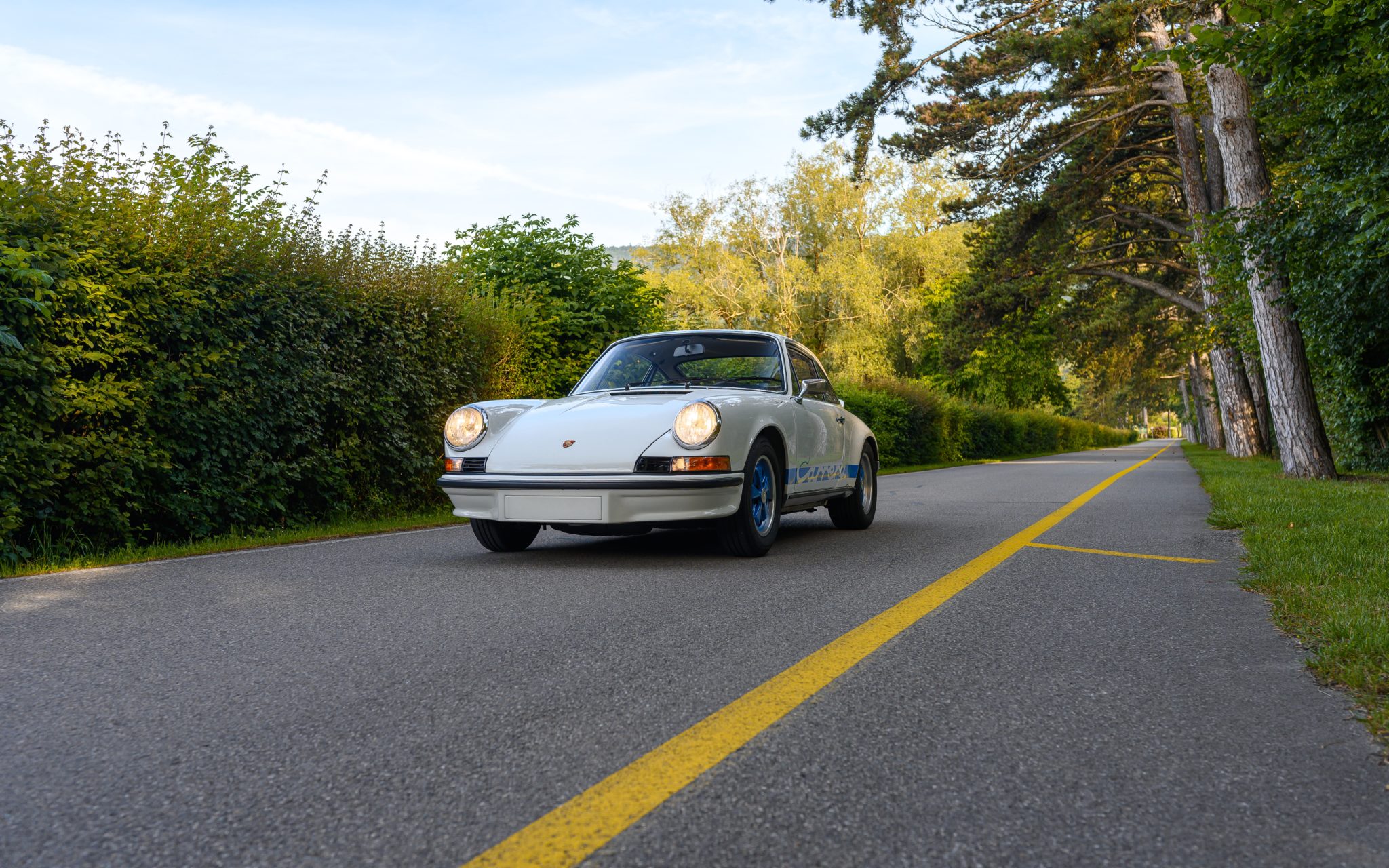
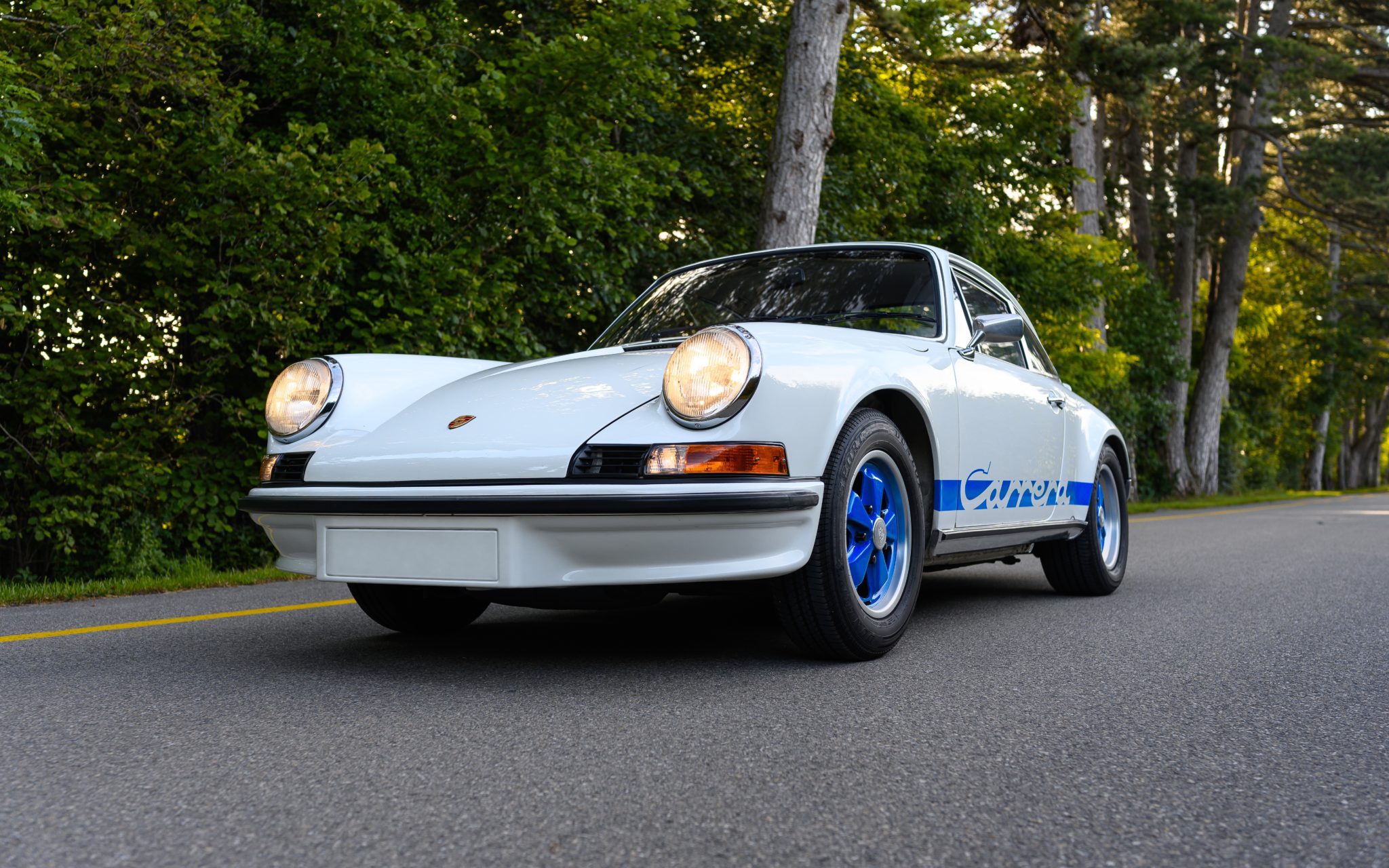
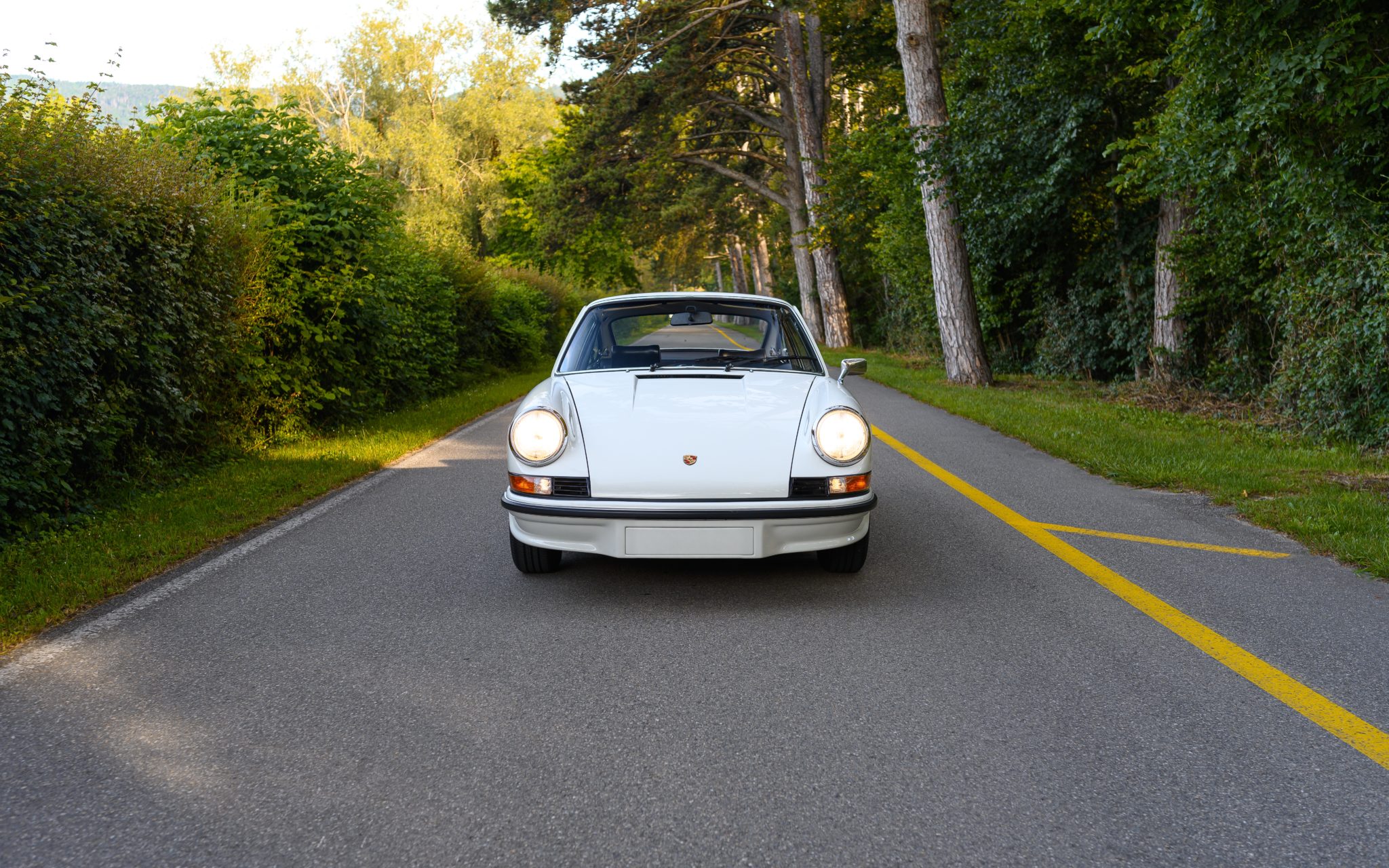
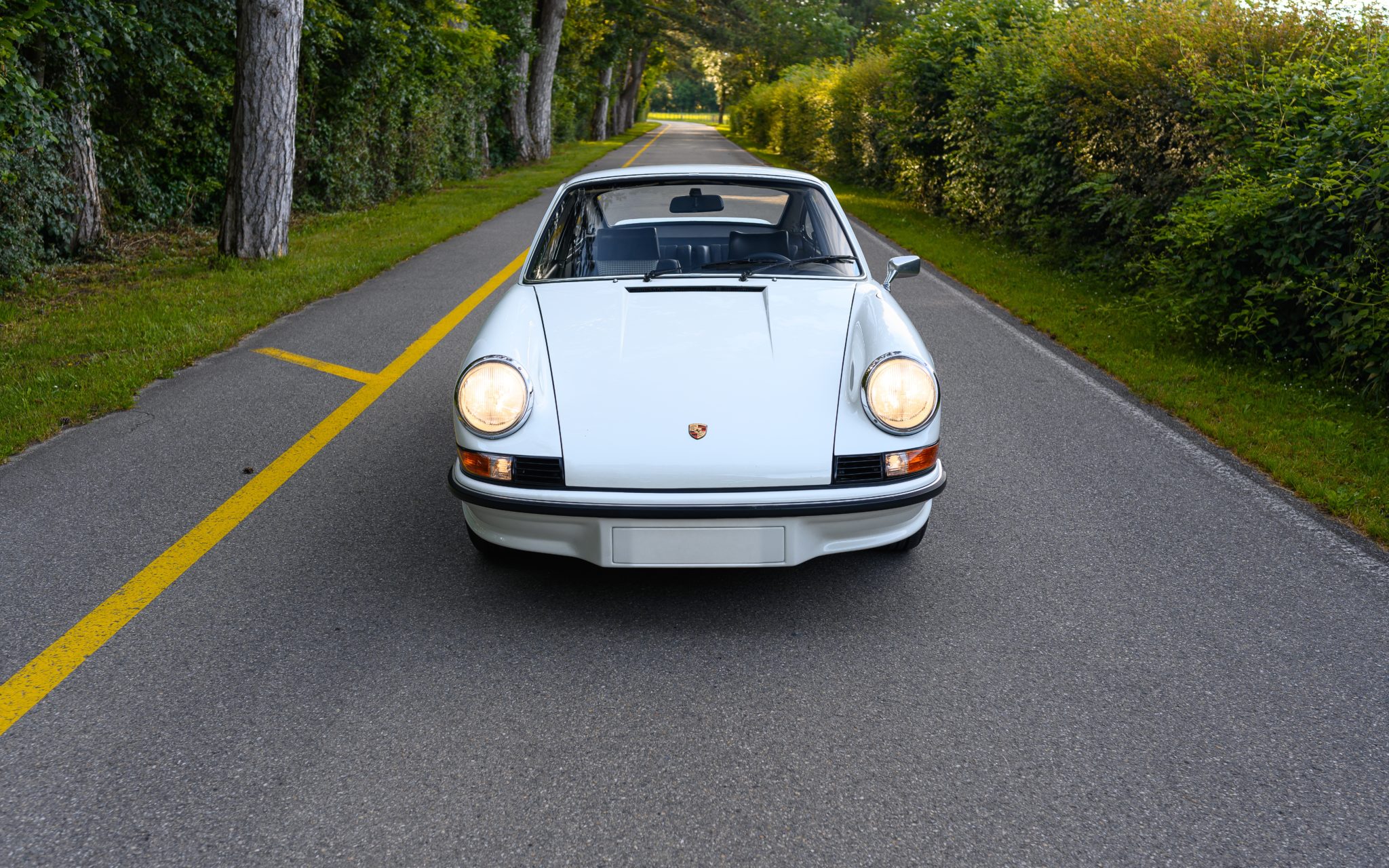
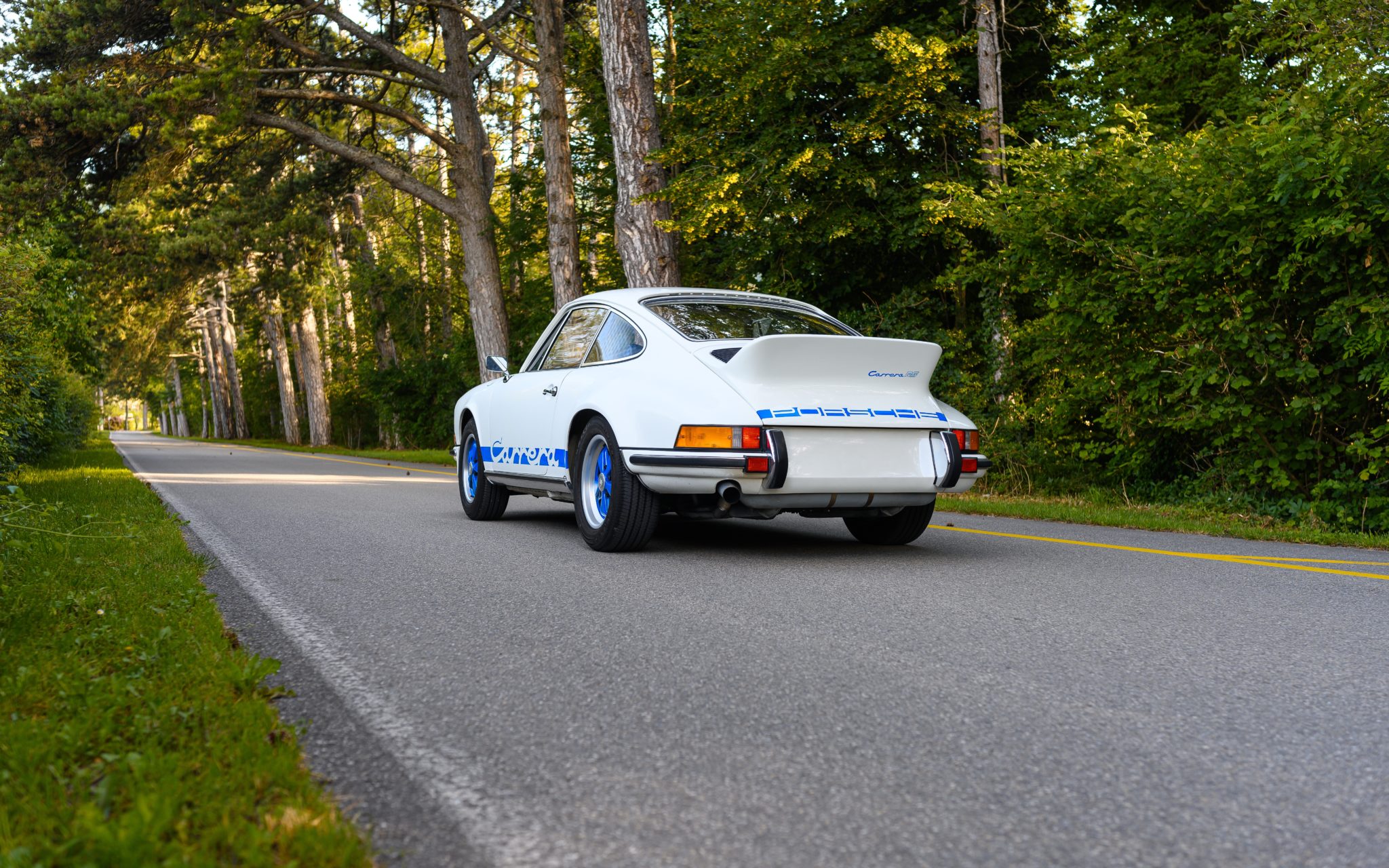
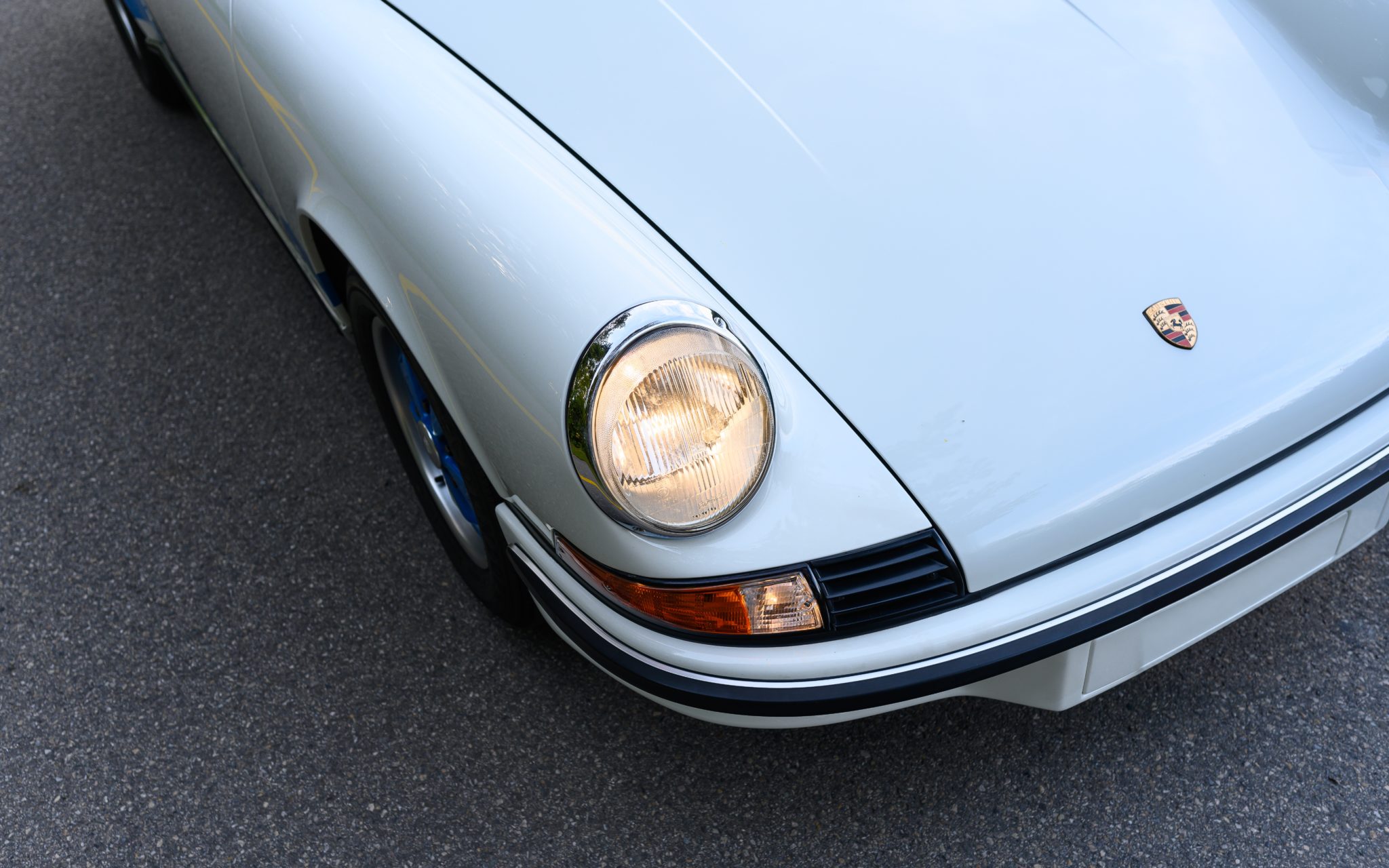
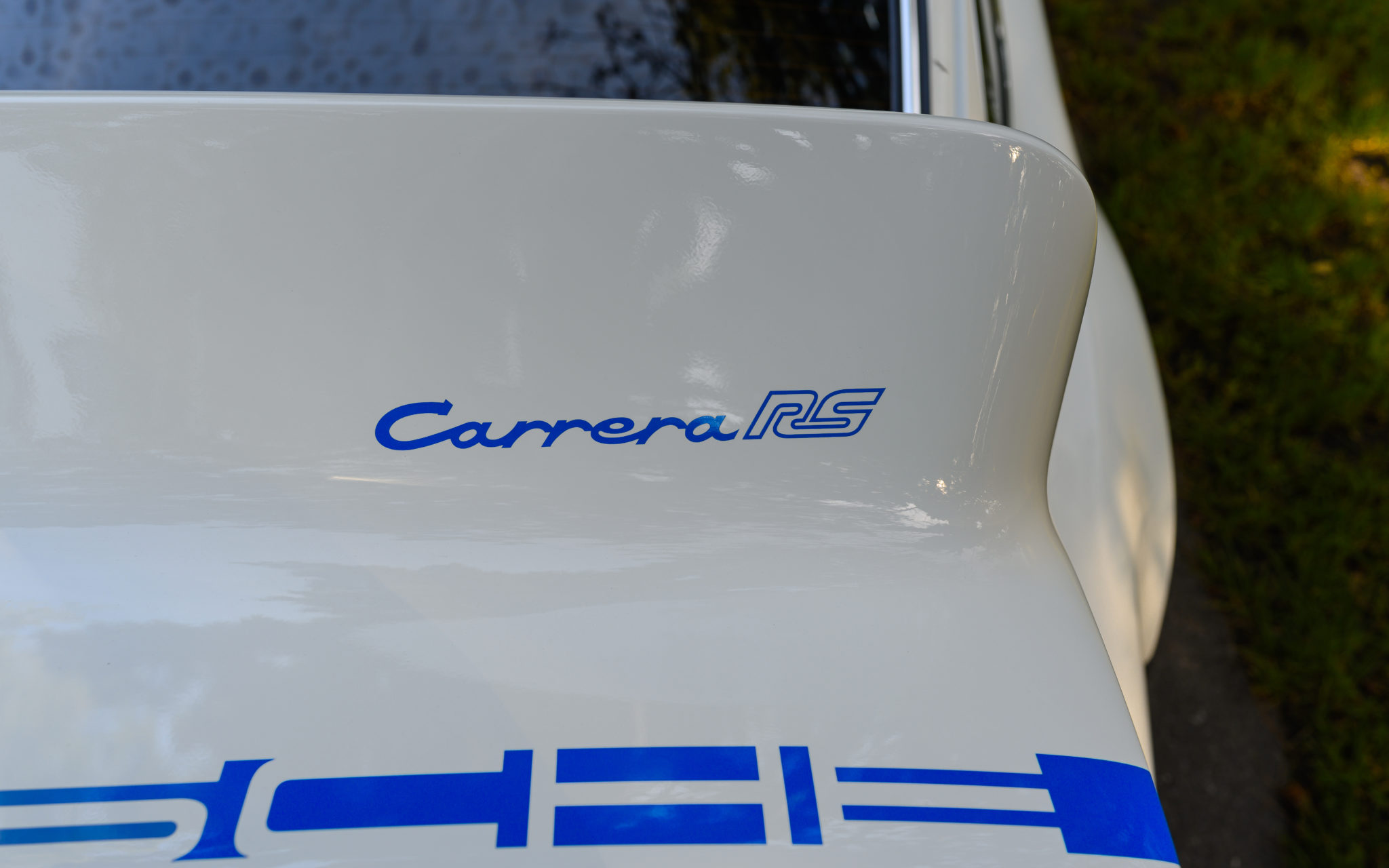
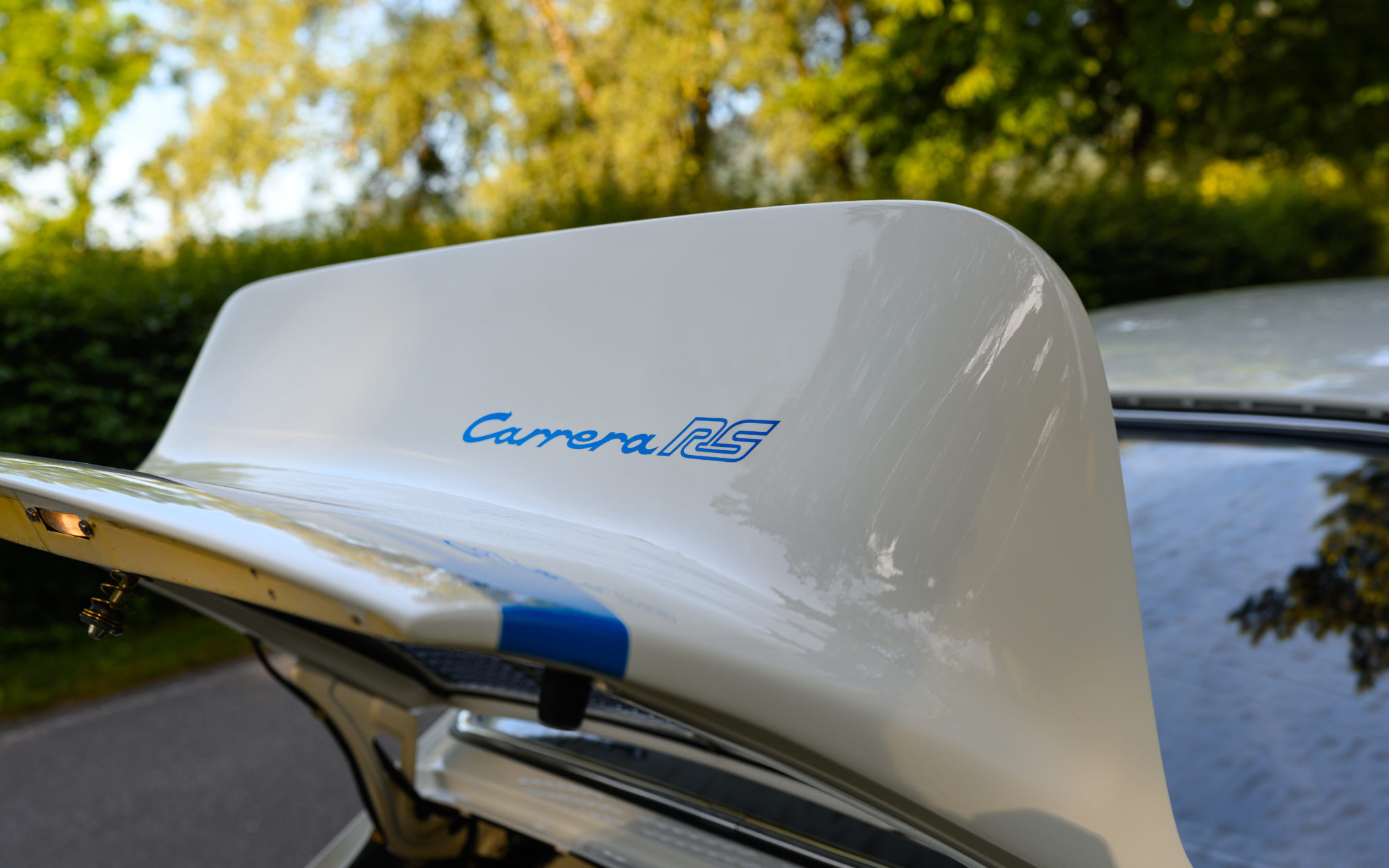
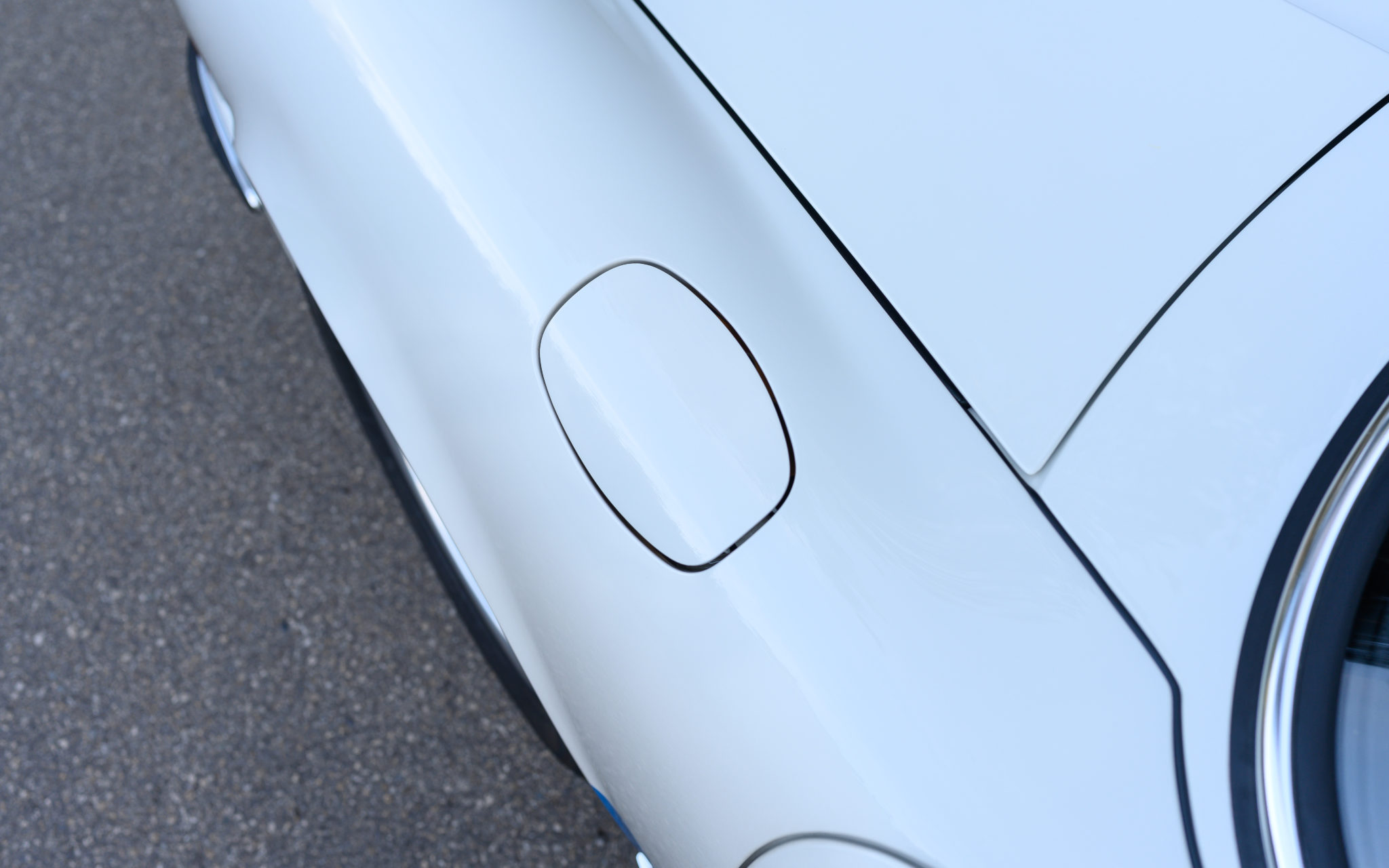
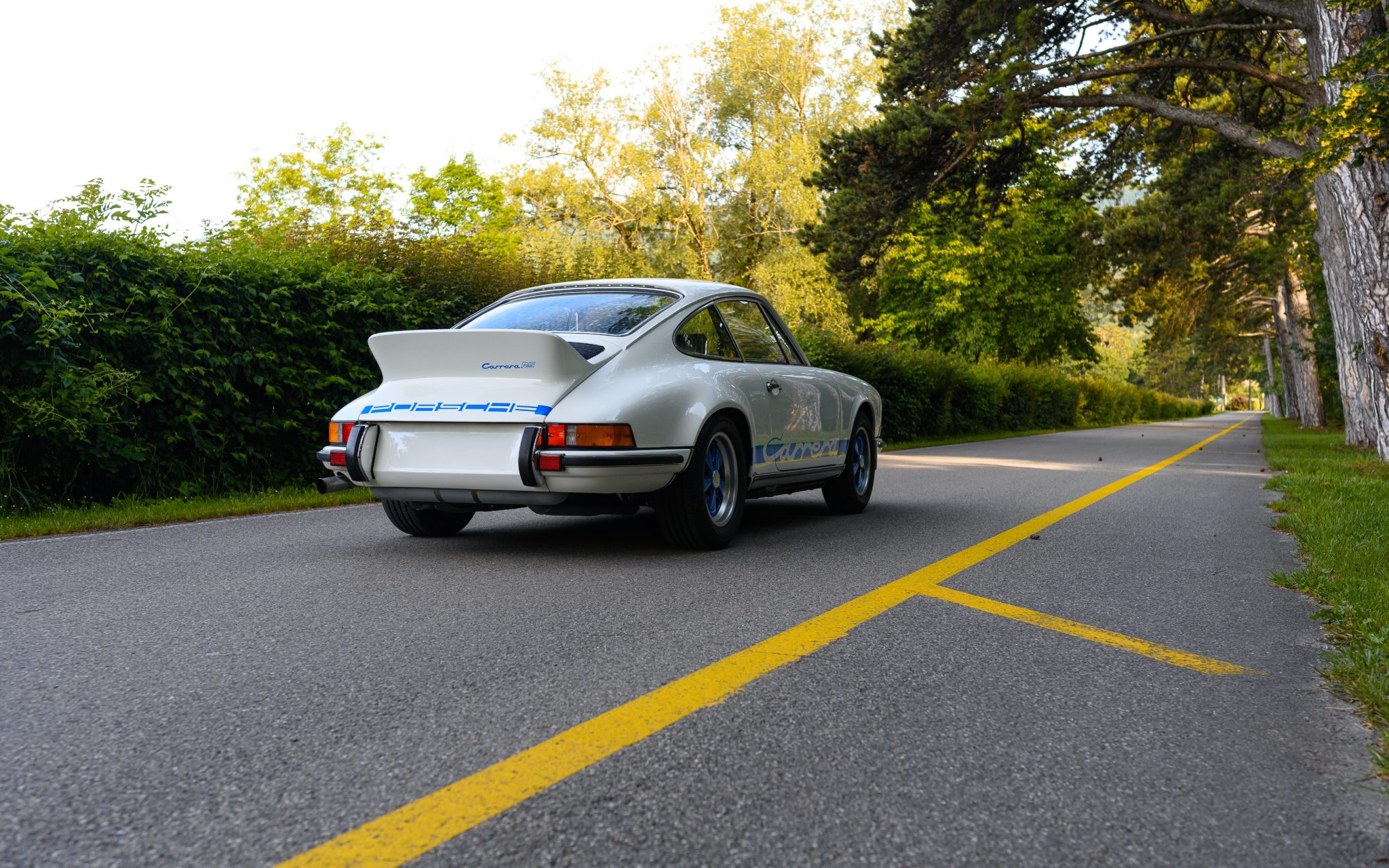
The 1973 Porsche 911 Carrera RS 2.7 looks as though someone took a perfectly tidy 911 and gave the back of it a small upward tug. That ducktail, the wider rear arches and the blue Carrera script give the game away. Here is chassis 9113600536 in white and blue, photographed on a wooded road with the lamps on. Porsche developed the RS to qualify for racing. It ended up with a road car so convincing that the original 500 had sold before the winter of 1972 had properly begun.
How the 911 Carrera RS 2.7 earned its name
Porsche took the 911 Carrera RS 2.7 to the Paris Motor Show in October 1972 with a plan to sell 500. That was the number it needed for homologation. By the end of November, all 500 had been spoken for. Production eventually reached 1,580 by July 1973. It is a pleasing reversal: to go racing, Porsche first had to persuade ordinary people to buy a rather extraordinary road car.
The 911 Carrera RS 2.7 was the first 911 to wear the Carrera name. RS stood for Rennsport, and the brief was unusually clear. Lighten the car, find more grip and make the tail behave at speed. Porsche answered with a larger flat-six, wider rear tyres and a lump on the engine lid that looked as if the designer had been interrupted halfway through drawing a duck. It turned out he had drawn precisely the thing the engineers needed.
The 911 Carrera RS 2.7 took its name from the Carrera Panamericana, the Mexican road race that had already given Porsche a name for its faster road cars. The badge had appeared on earlier Porsches. Putting it on the 911 gave the new model a connection to the company’s racing history that was more than a stripe painted down the doors.
Why the ducktail matters
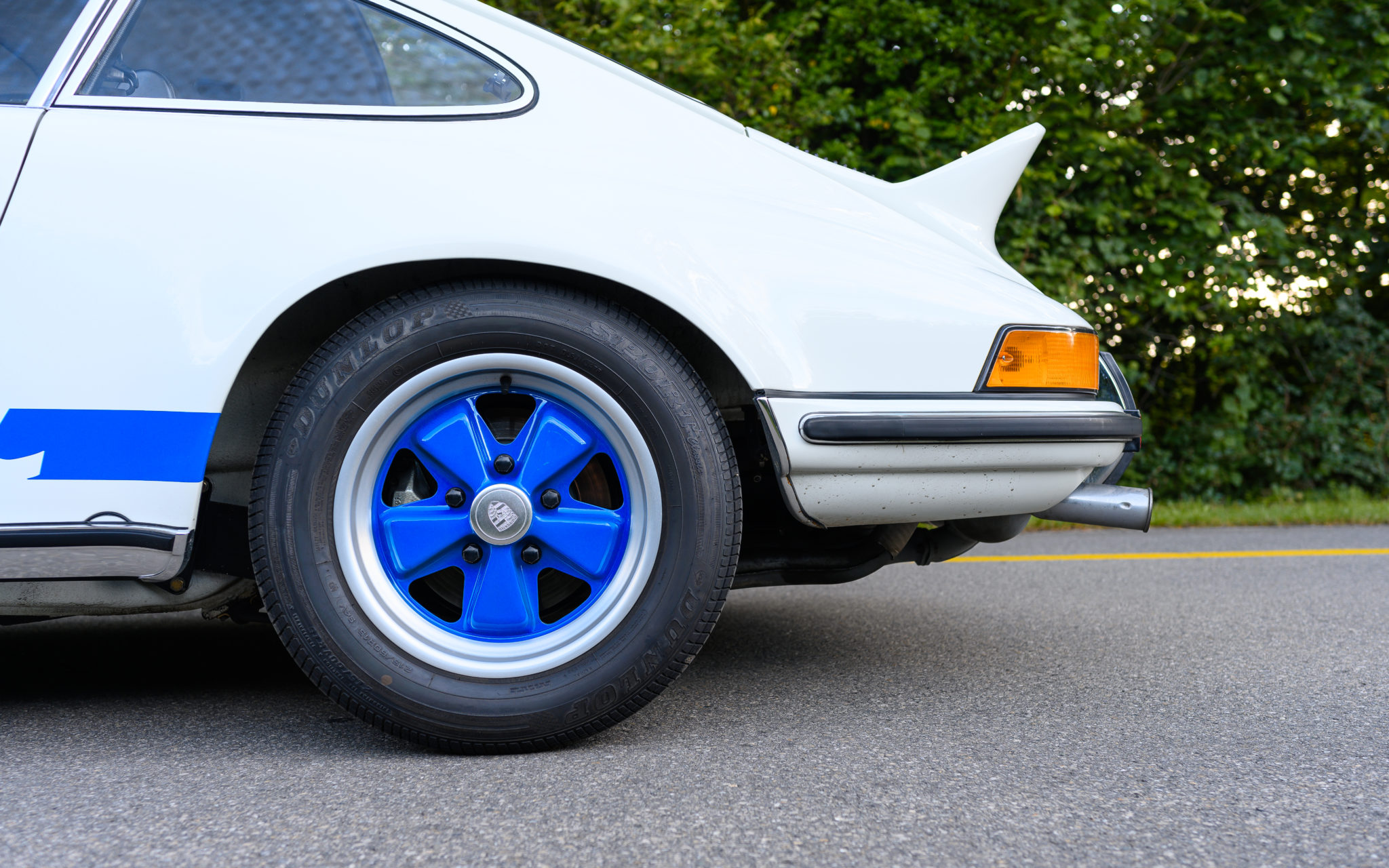
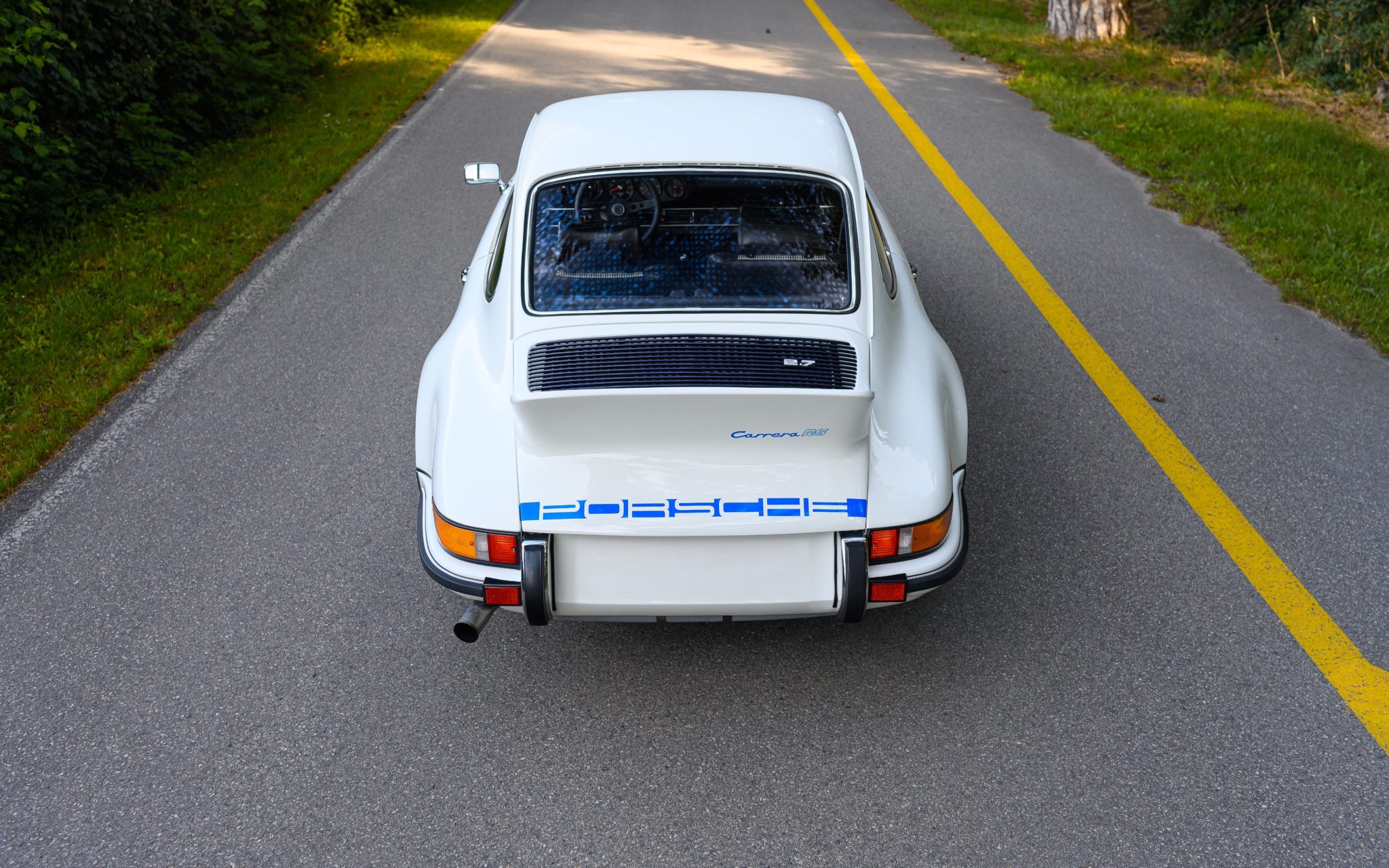
The ducktail is the first thing the eye goes to in the rear three-quarter photographs of this 911 Carrera RS 2.7. Its shape reduced lift at the rear and helped guide air towards the engine. What makes it interesting is how neatly it fits its surroundings. The lid still follows the familiar 911 roofline for most of its length. Then the last few inches rise to a lip that changes the whole profile. The front spoiler is considerably less theatrical. On the 911 Carrera RS 2.7, it helped balance the changes to the airflow at the rear.
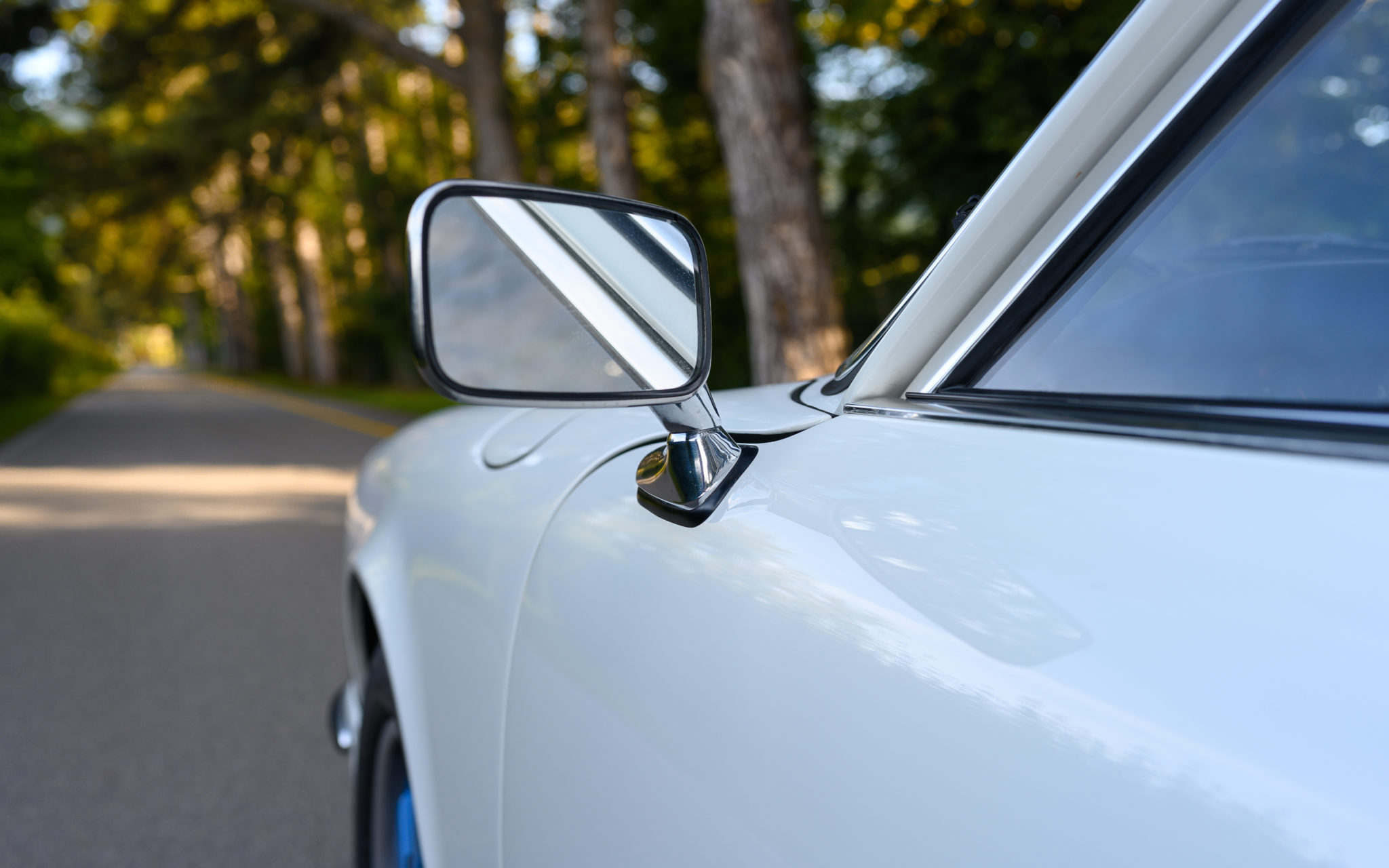
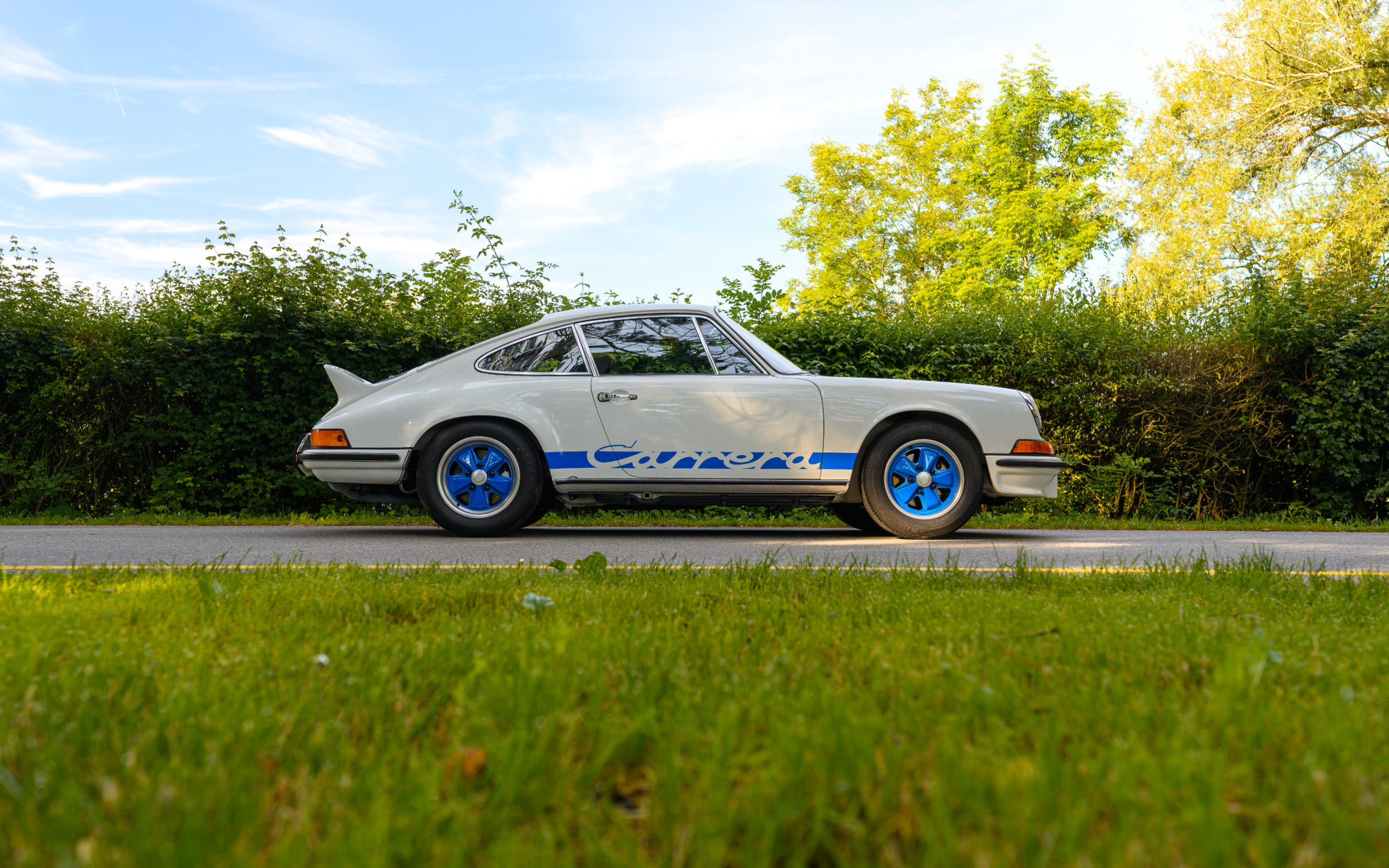
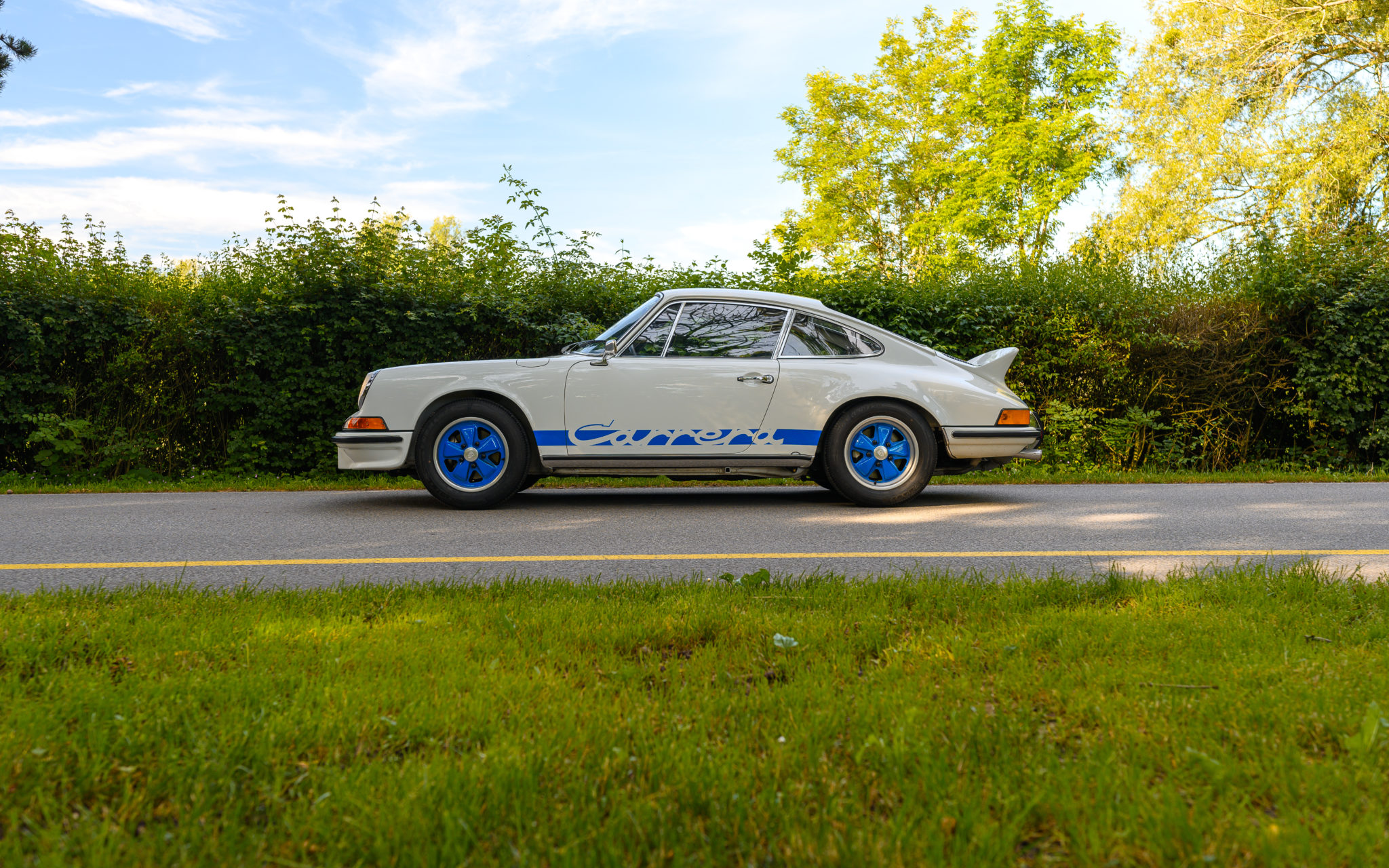
Porsche fitted the 911 Carrera RS 2.7 with wider tyres at the back than at the front, and the rear arches had to grow to make room. Look at the side view and you can see how little bodywork was needed to make that change. The cabin, the round lamps and the sweep over the rear wheels still belong to the early 911. The shape tells you where the work went: a little at the nose, rather more over the driven wheels, and that unmistakable kick at the tail.
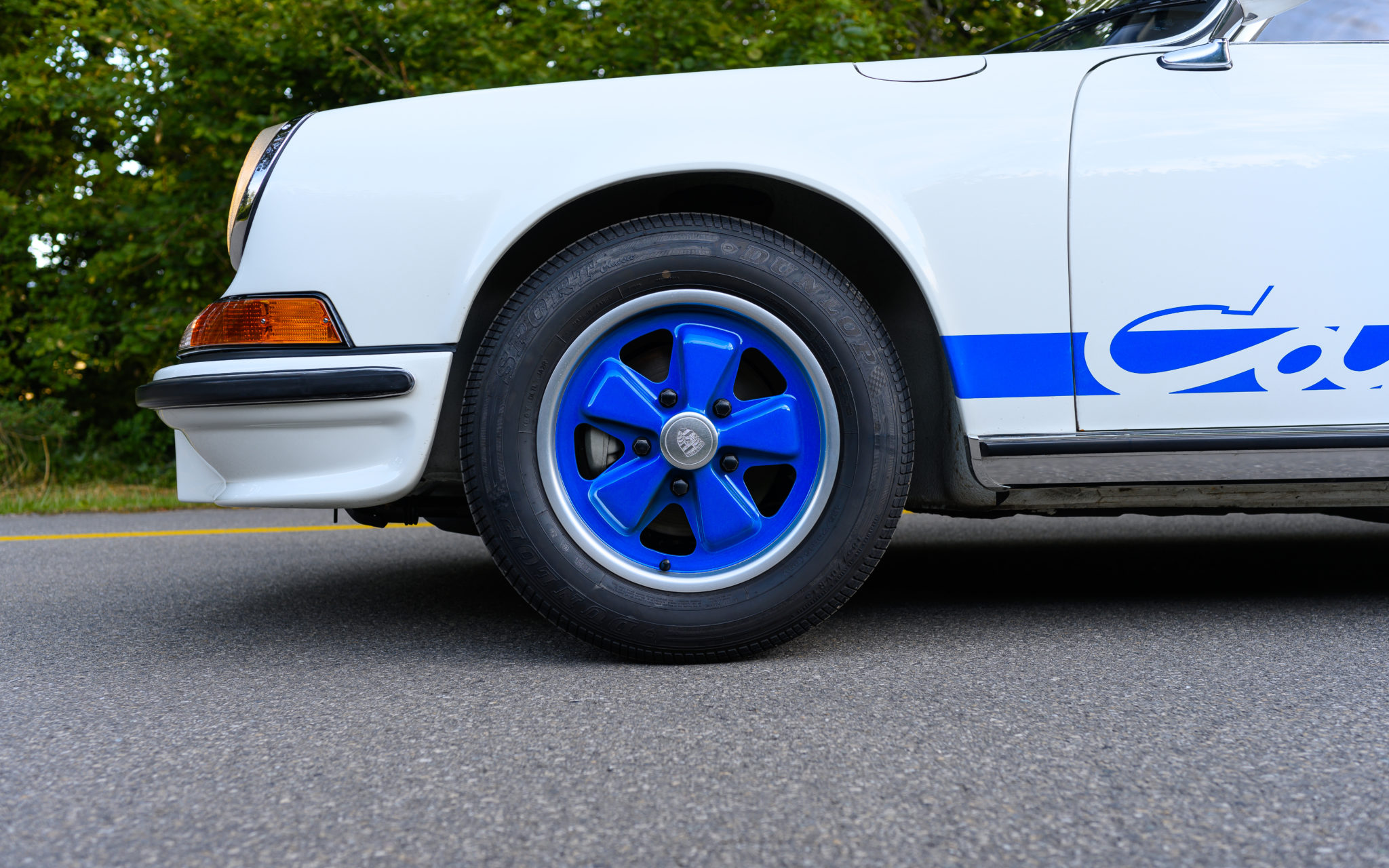
The wheel sizes tell the story in numbers. The 911 Carrera RS 2.7 left the factory on six-inch front and seven-inch rear Fuchs wheels, with 185/70 front tyres and 215/60 rears. Porsche widened the body by 42 mm around the rear arches. It was one of those changes that looked modest on the drawing board and became unmistakable on a road car.
The wind-tunnel work on the 911 Carrera RS 2.7 was just as important. Porsche found a way to reduce rear lift and drag at the same time. The ducktail also sent more air towards the engine. A curious thing to achieve with such a small piece of bodywork, particularly when its most memorable feature is the way it looks.
The 911 Carrera RS 2.7 flat-six
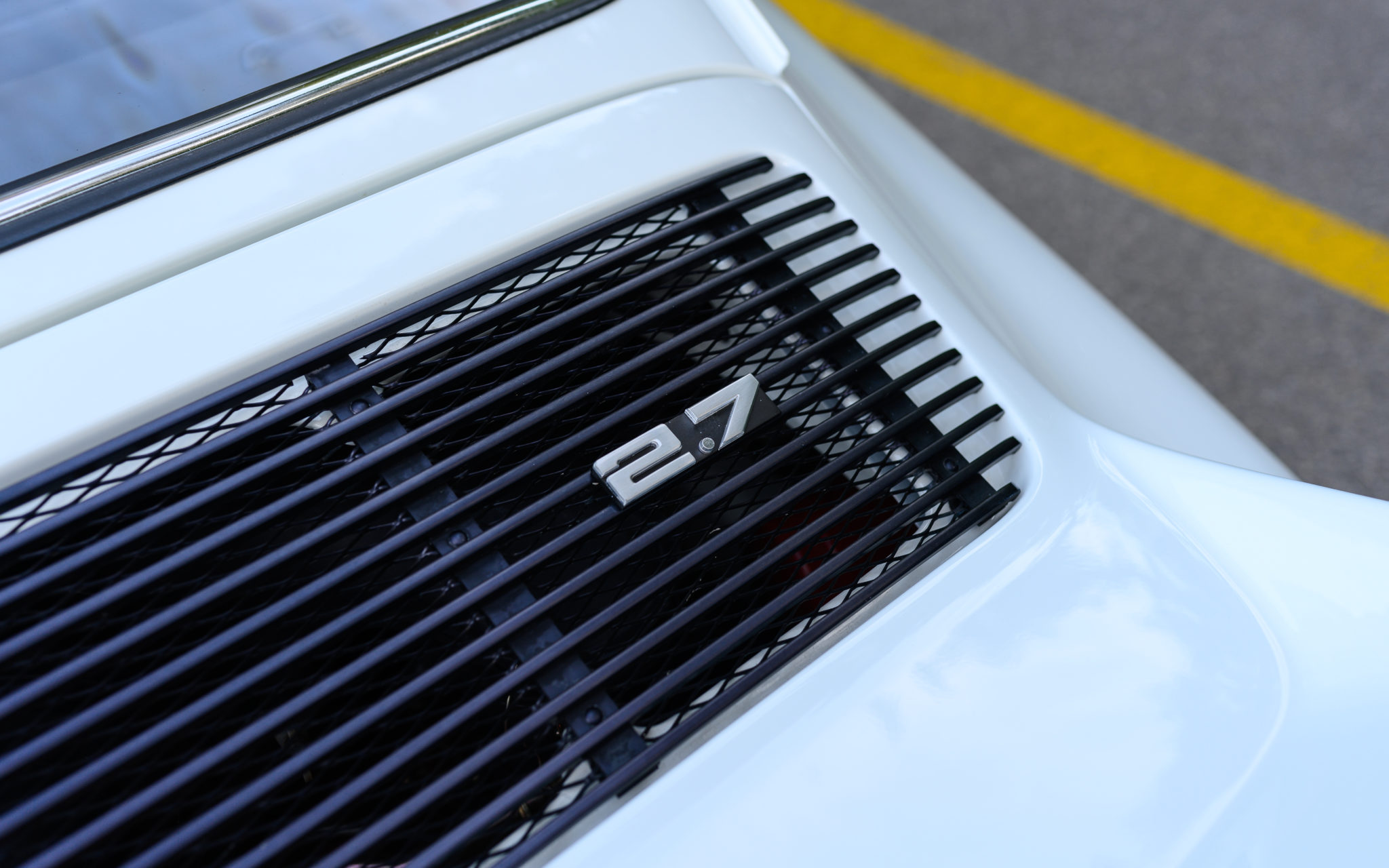
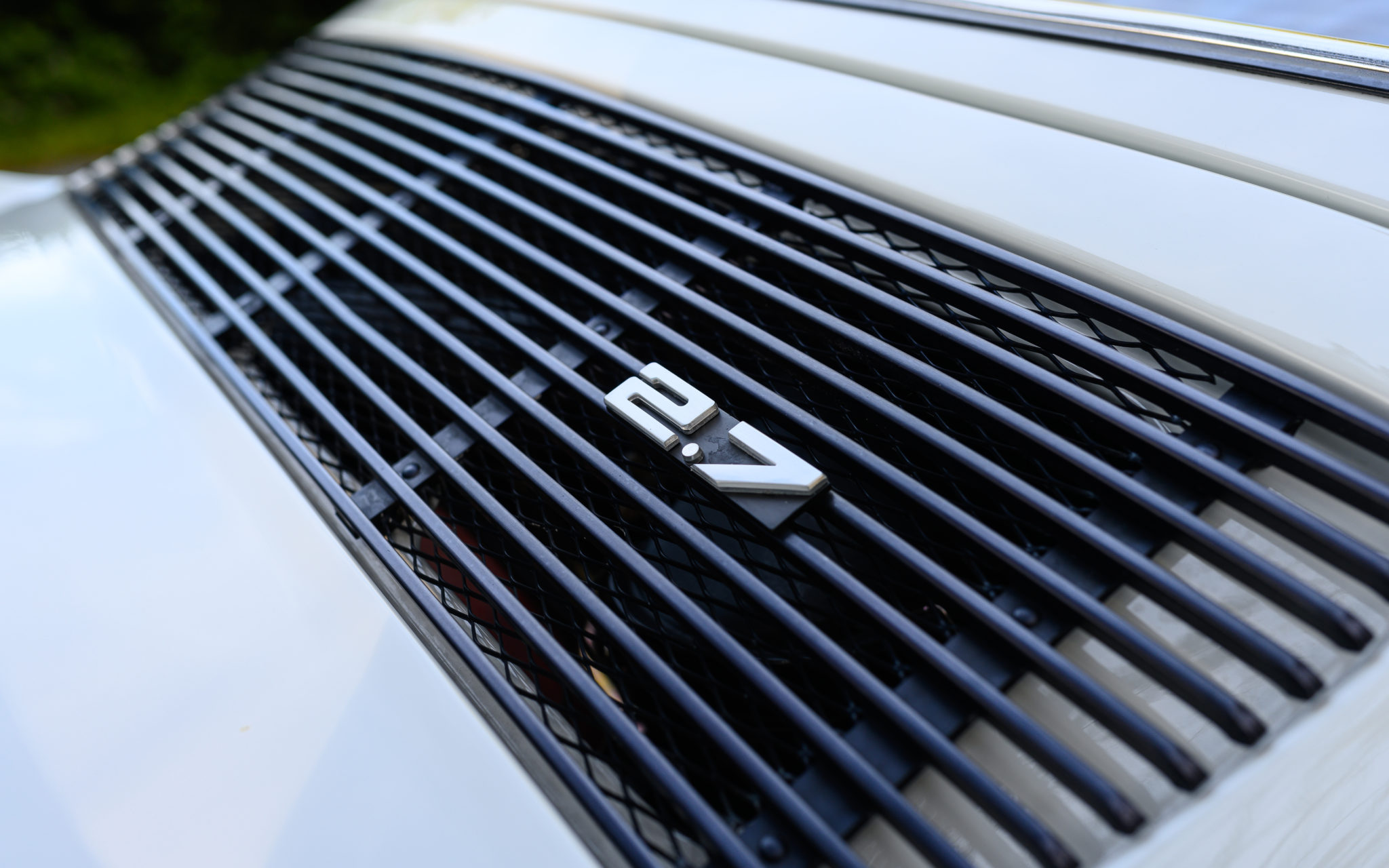
The air-cooled engine displaces 2,687 cc and uses Bosch mechanical fuel injection. Porsche rated the 911 Carrera RS 2.7 at 210 PS at 6,300 rpm, with 255 Nm at 5,100 rpm. A five-speed manual sends the power to the rear wheels. Those figures explain why the engine is such a large part of the car’s character. Much of its best work takes place high enough in the rev range that the driver has a reason to use all five gears.
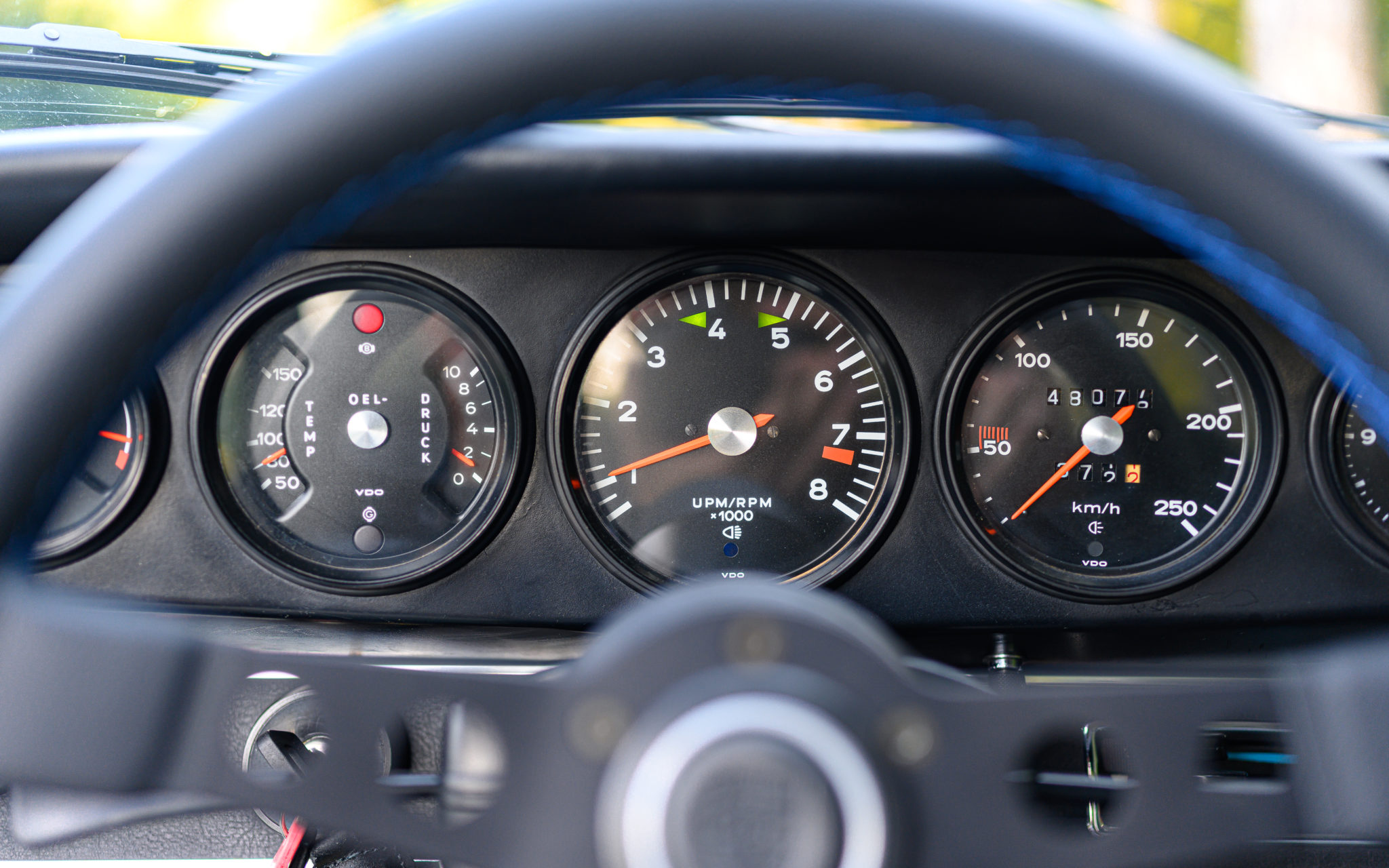
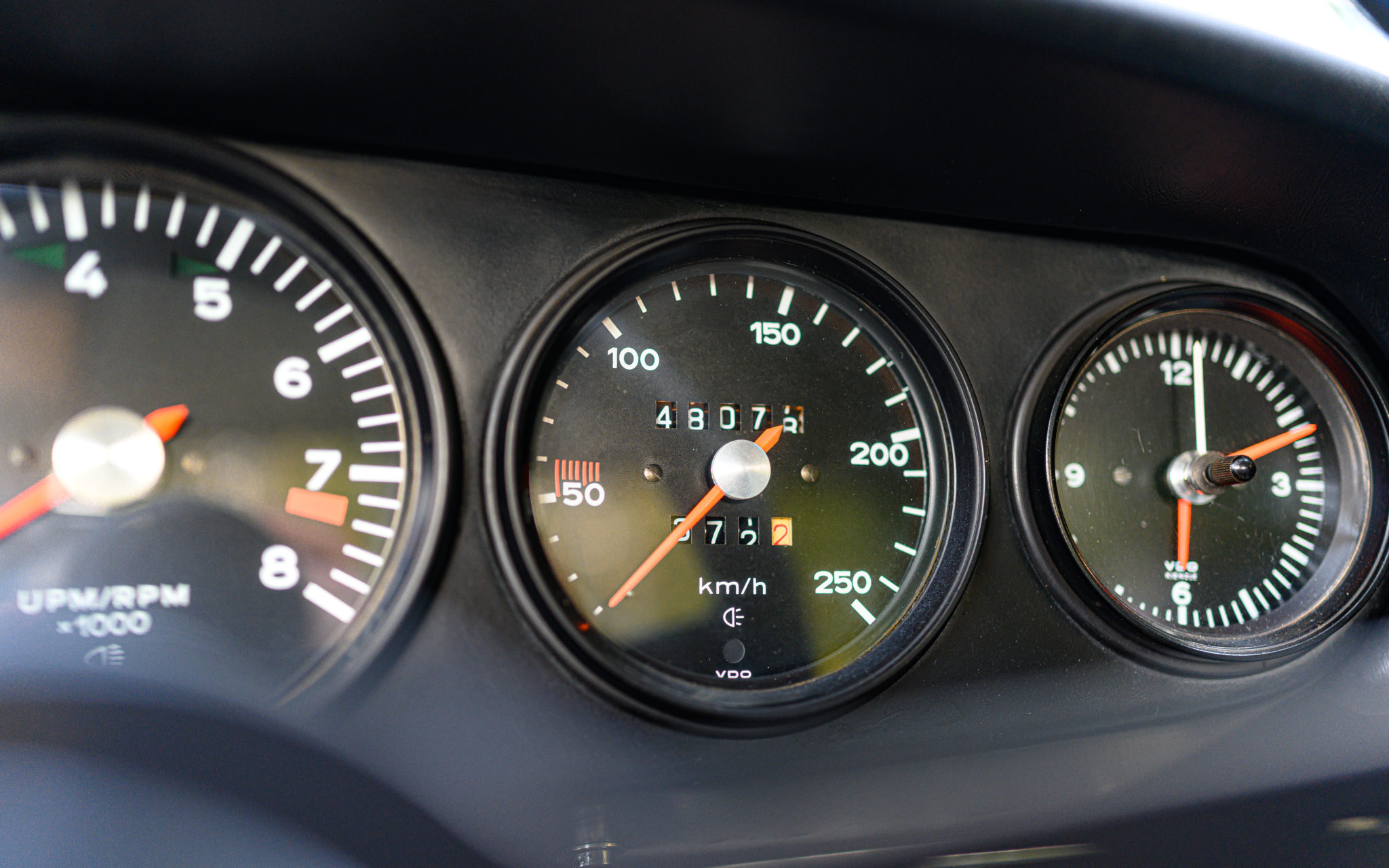
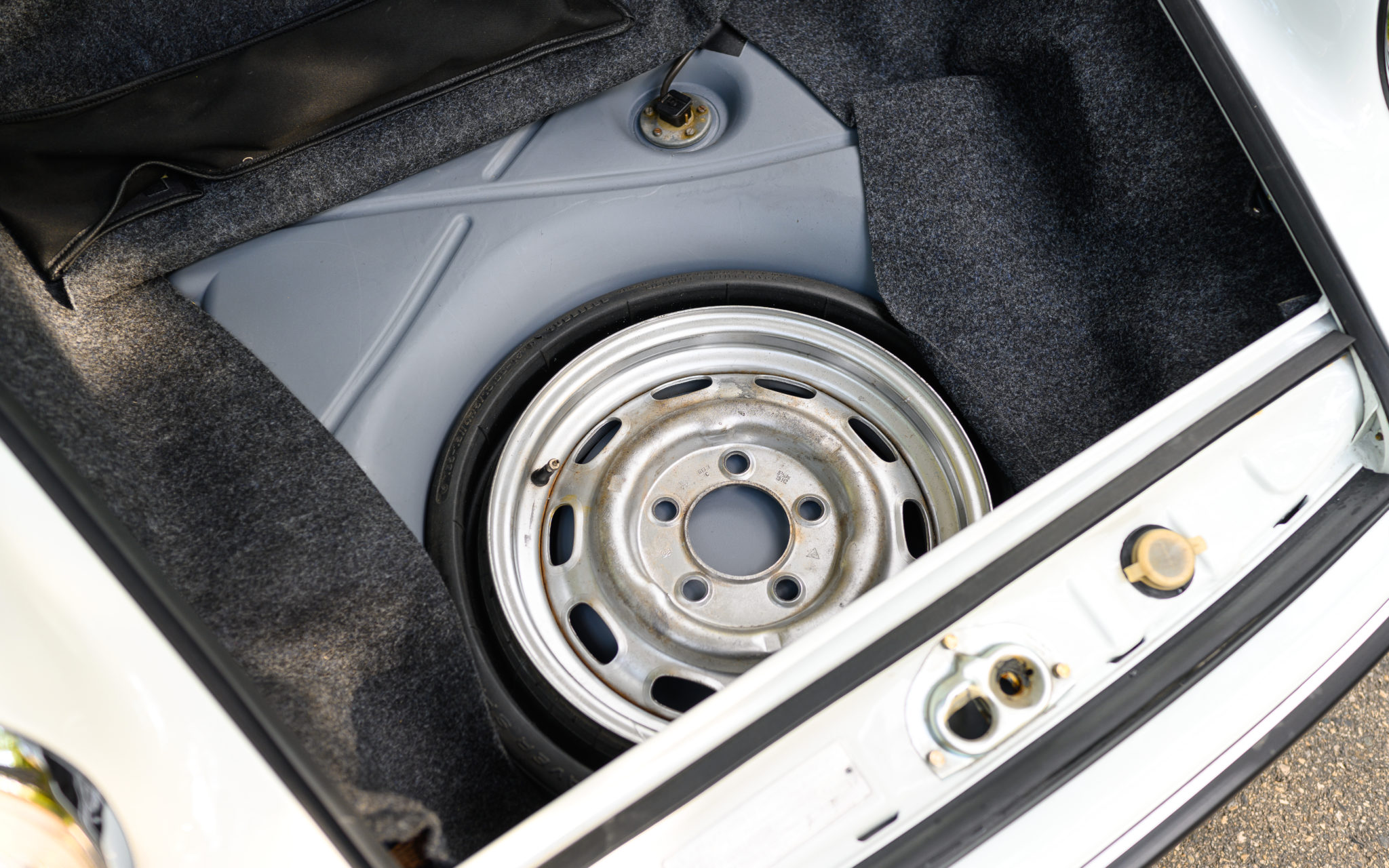
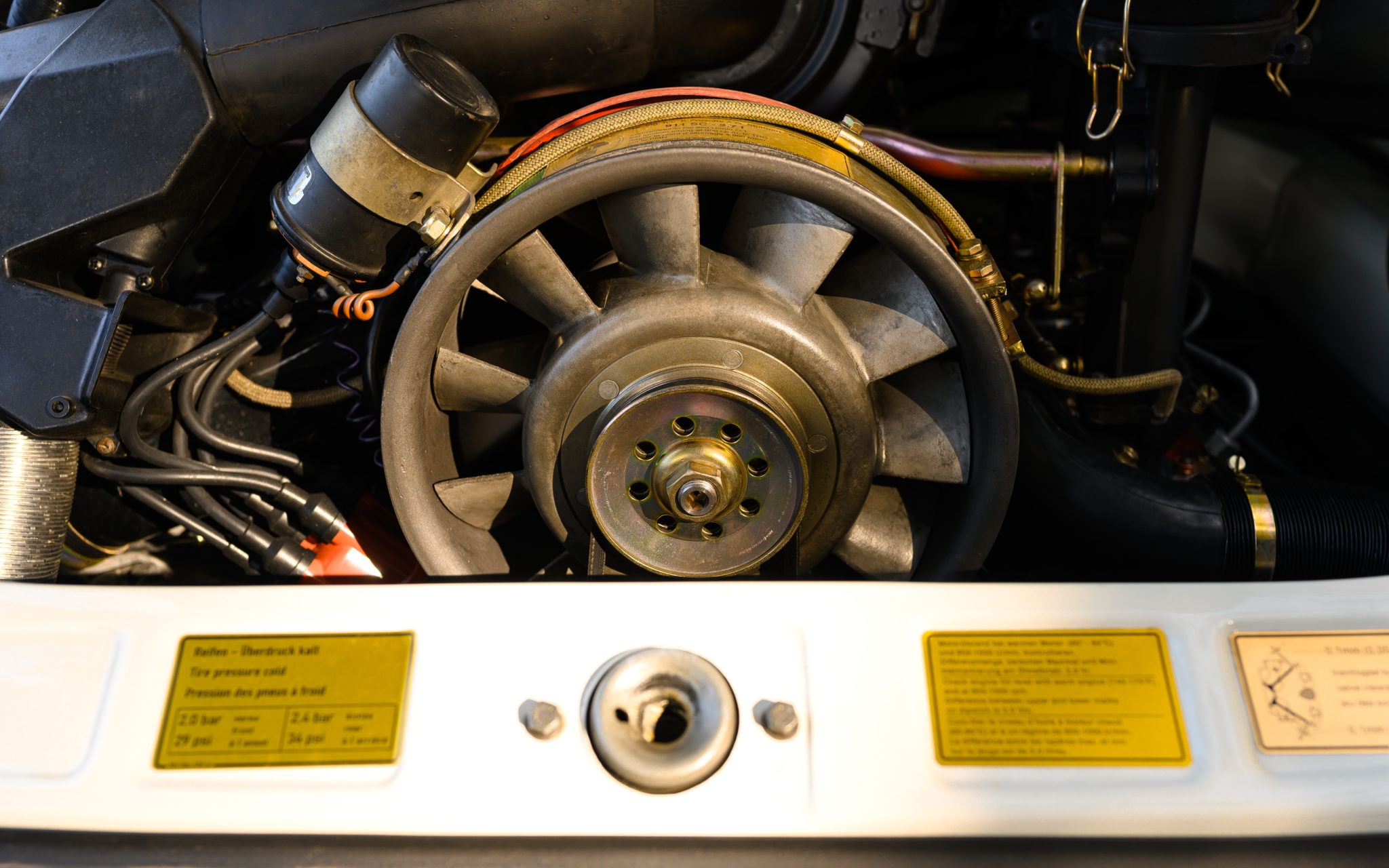
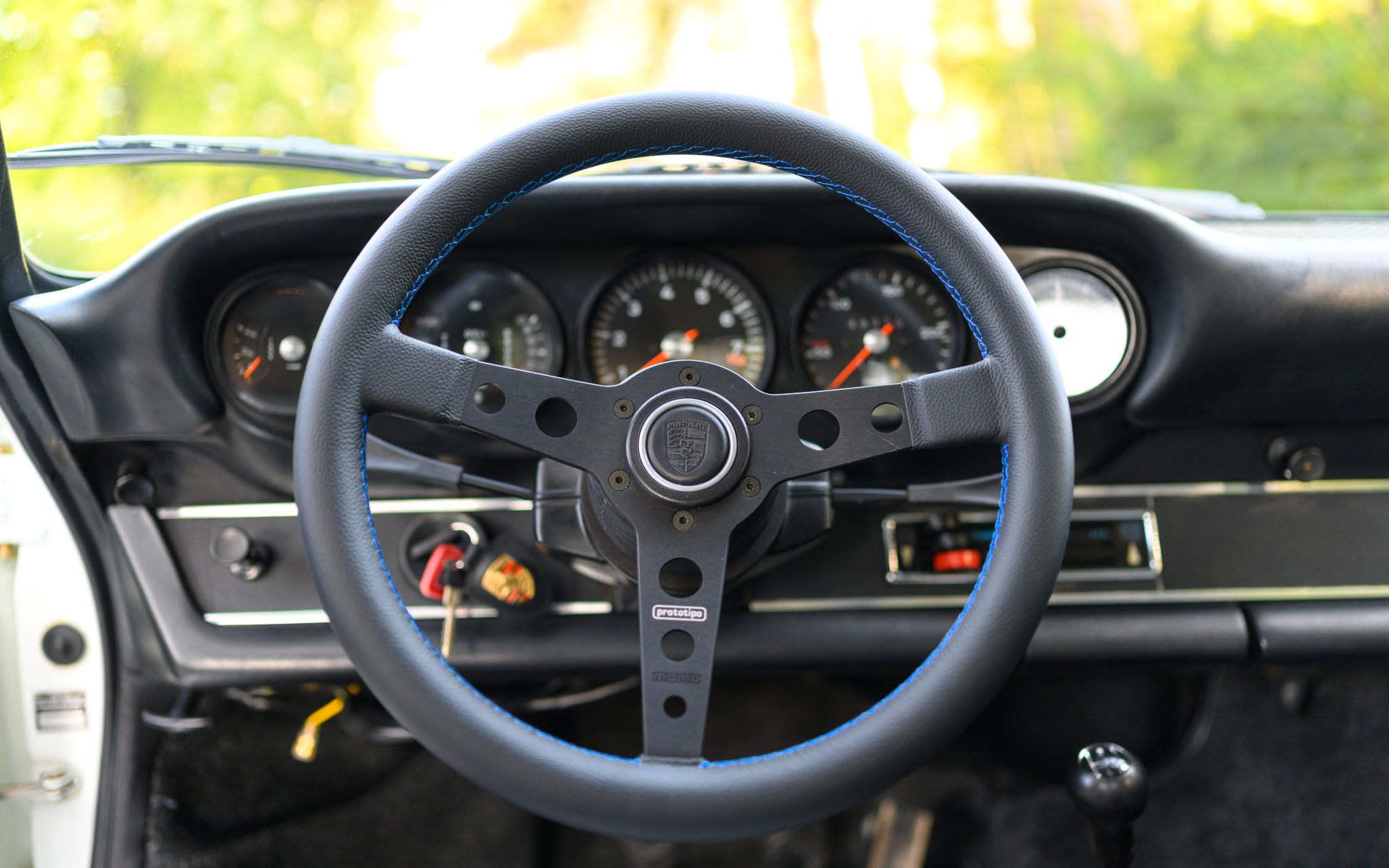
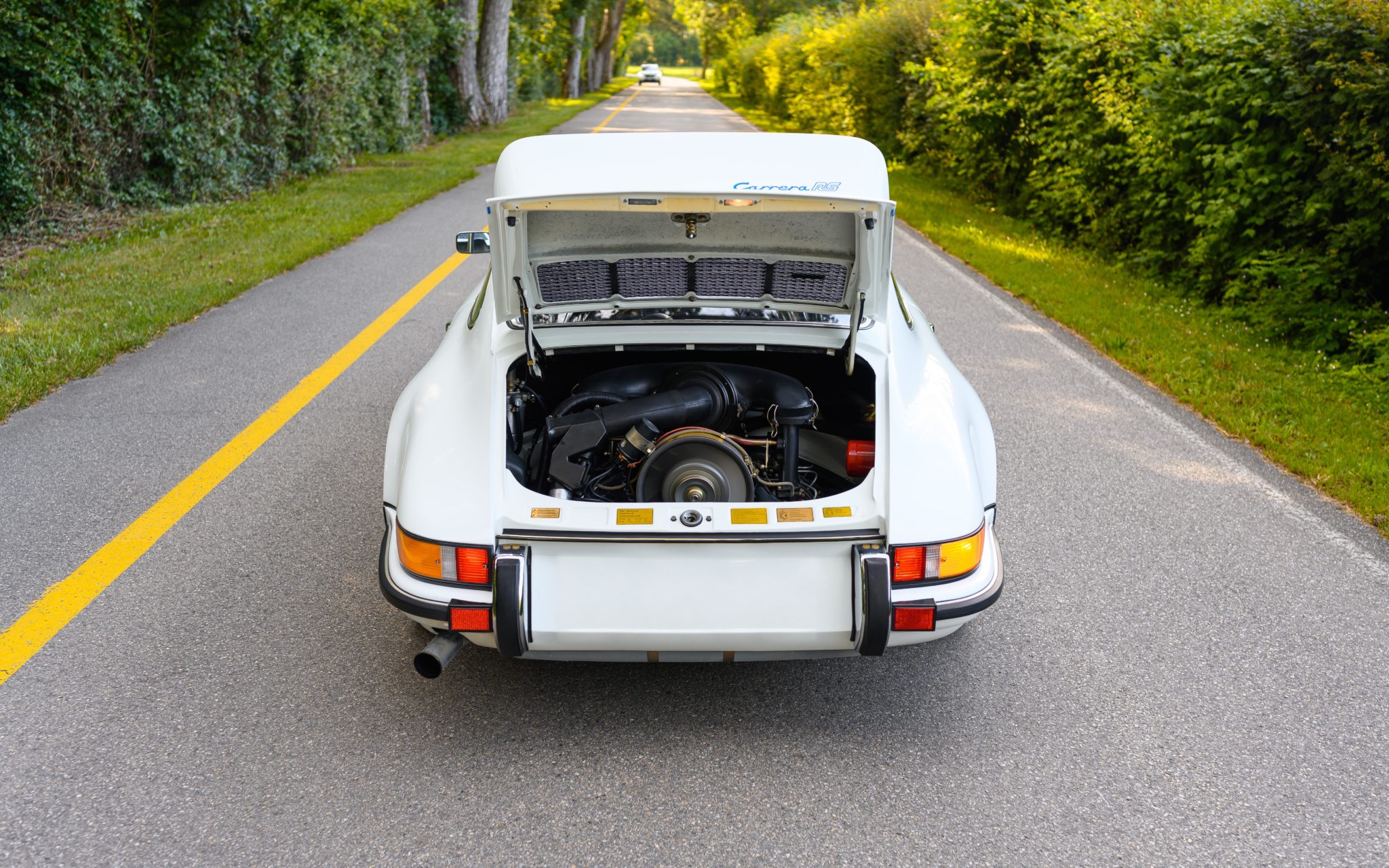
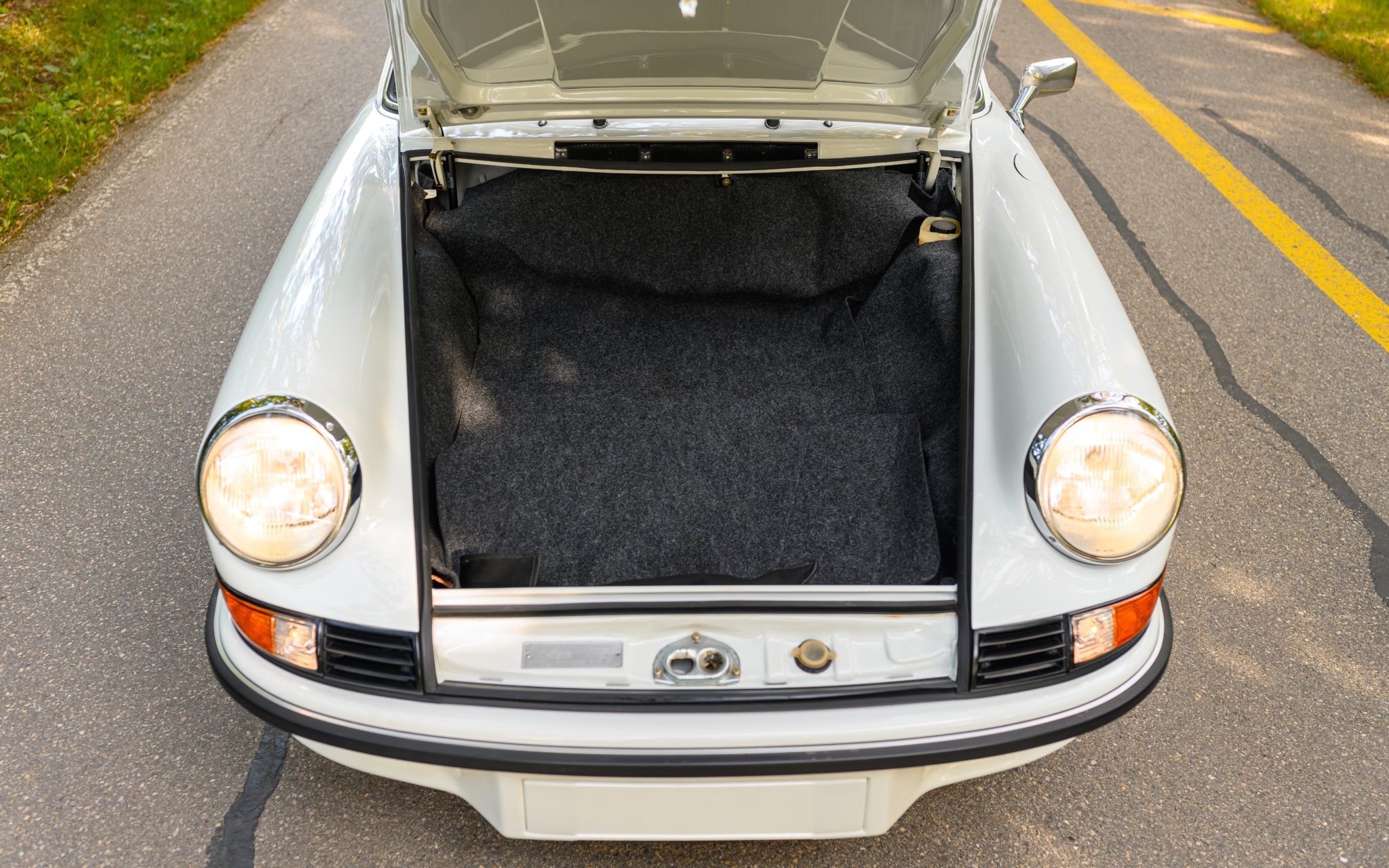
Open the rear lid of the 911 Carrera RS 2.7 in the gallery and the cooling fan sits in full view. Hoses, clamps and period labels give the engine bay the appearance of a place where a mechanic could get to work. The luggage compartment is at the opposite end, with the spare tucked below. Inside, the five instruments sit in a row behind the steering wheel, the tachometer where your eyes fall first. Porsche made a surprisingly good case for putting only the things a driver needs within easy reach.
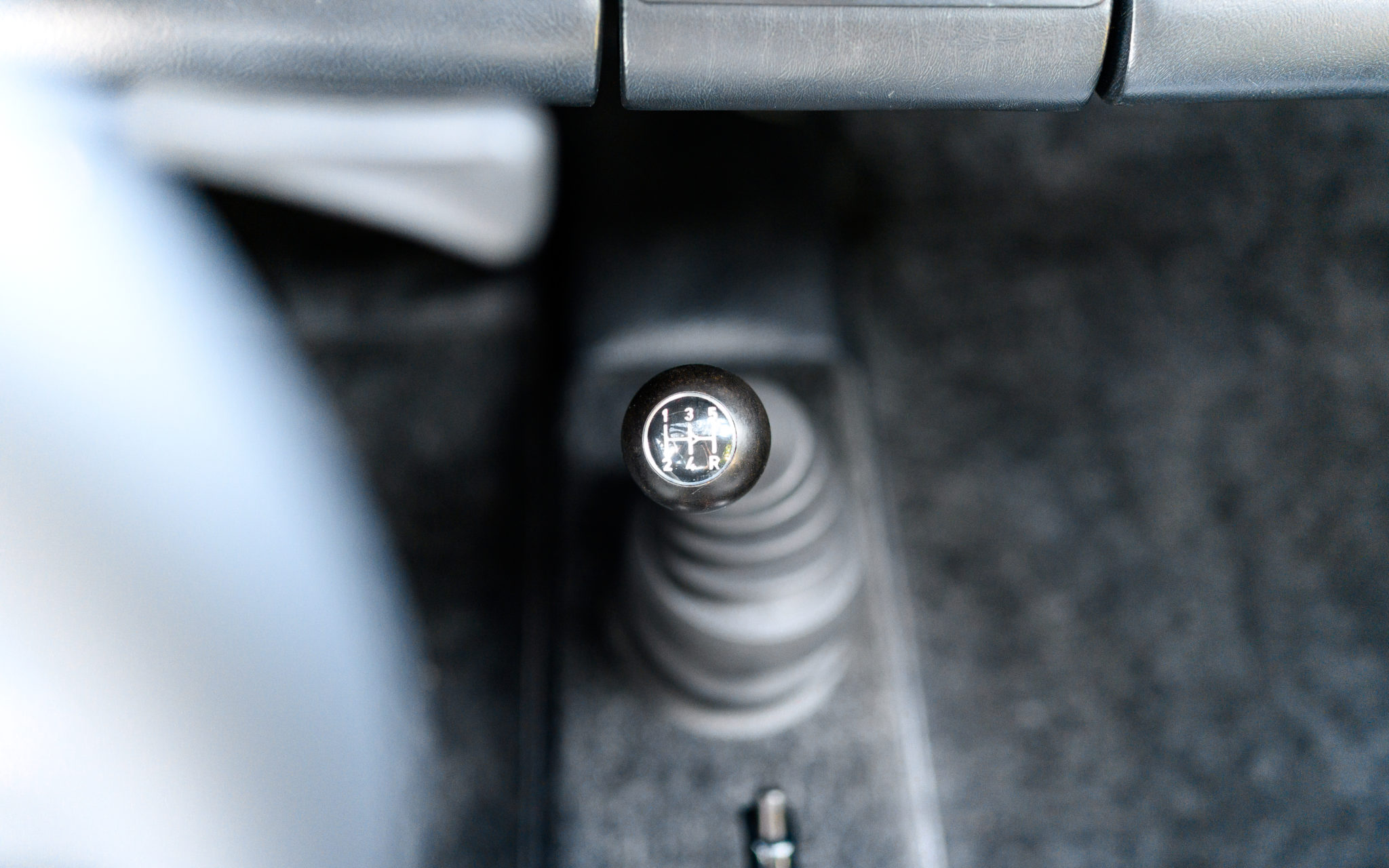
Porsche used mechanical injection on the 911 Carrera RS 2.7, so the link between the right pedal and the flat-six was still a matter of hardware. The factory’s figures put peak torque at 5,100 rpm and peak power higher still. On paper alone, that makes a good argument for keeping the lever close to hand.
Sport and Touring in the 911 Carrera RS 2.7
The 911 Carrera RS 2.7 was offered in several forms. Porsche built 1,308 Touring cars and 200 Sport cars, alongside 55 racing versions and 17 base cars. In Sport specification it weighed 960 kg. Porsche gives 5.8 seconds to 100 km/h and a top speed above 245 km/h. The 1,075 kg Touring retained more of the road car’s equipment, and Porsche quotes 6.3 seconds and 240 km/h. Those numbers show the spread between editions of the 911 Carrera RS 2.7. The same shape served drivers who wanted very different things from a Sunday morning.
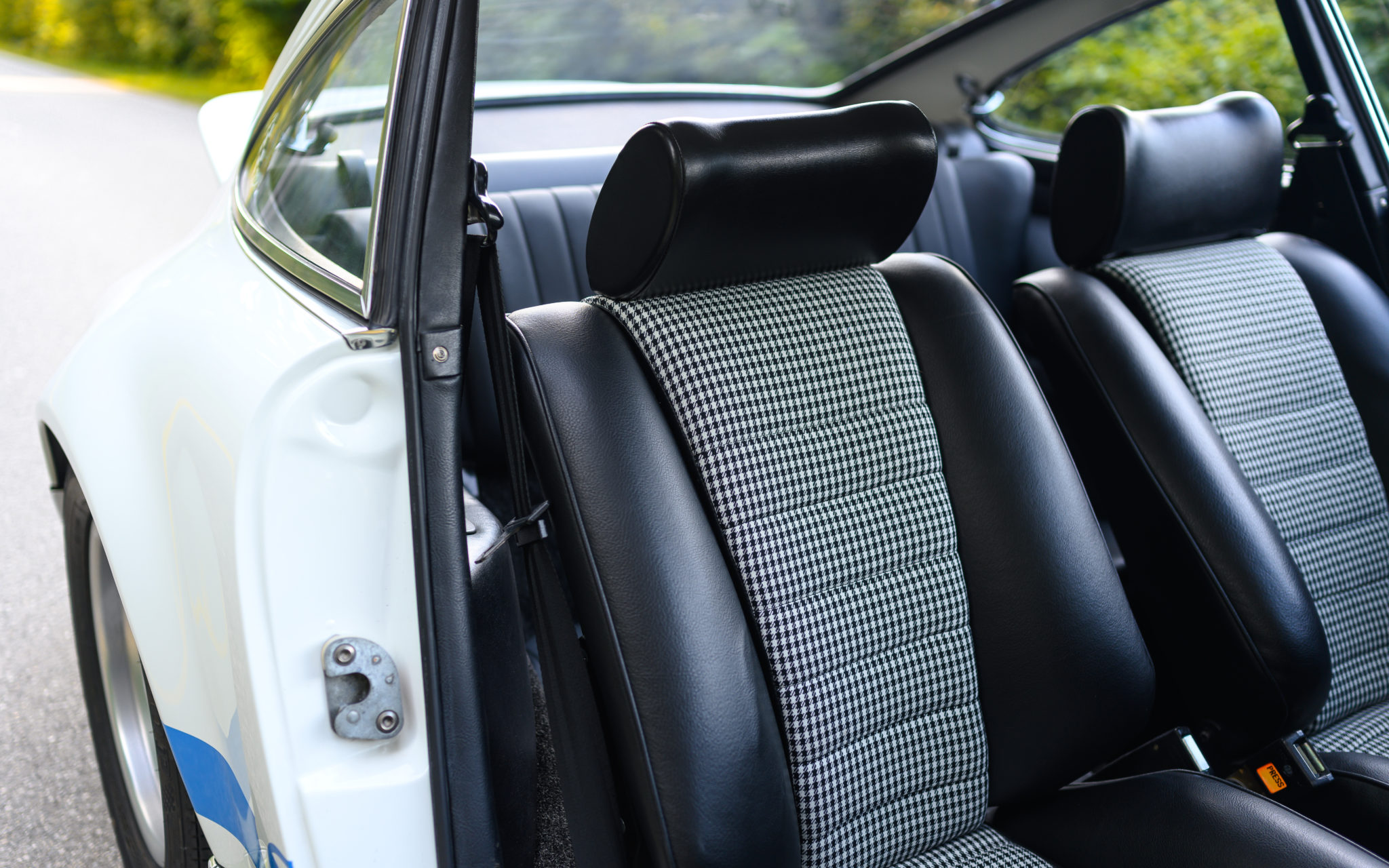
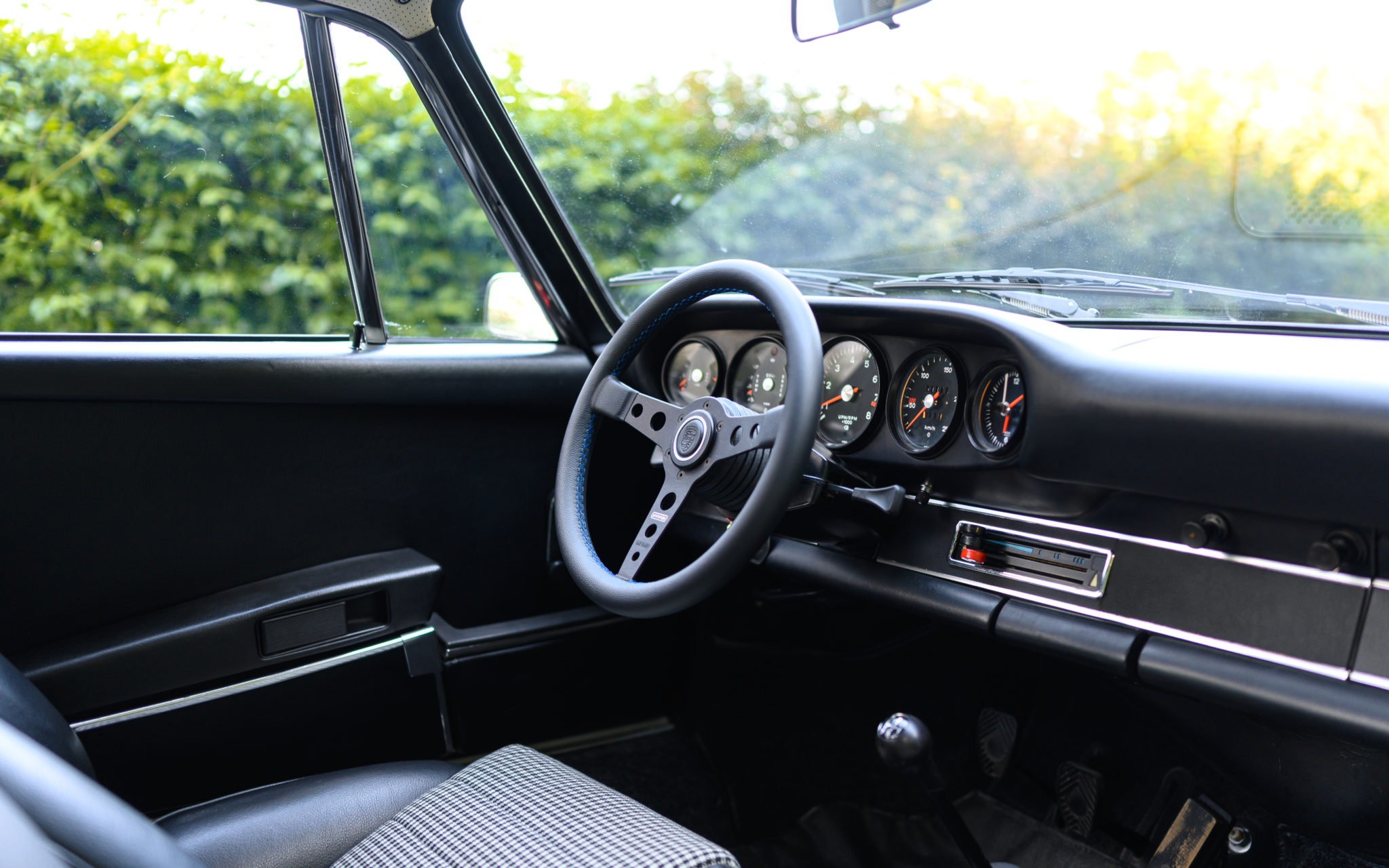
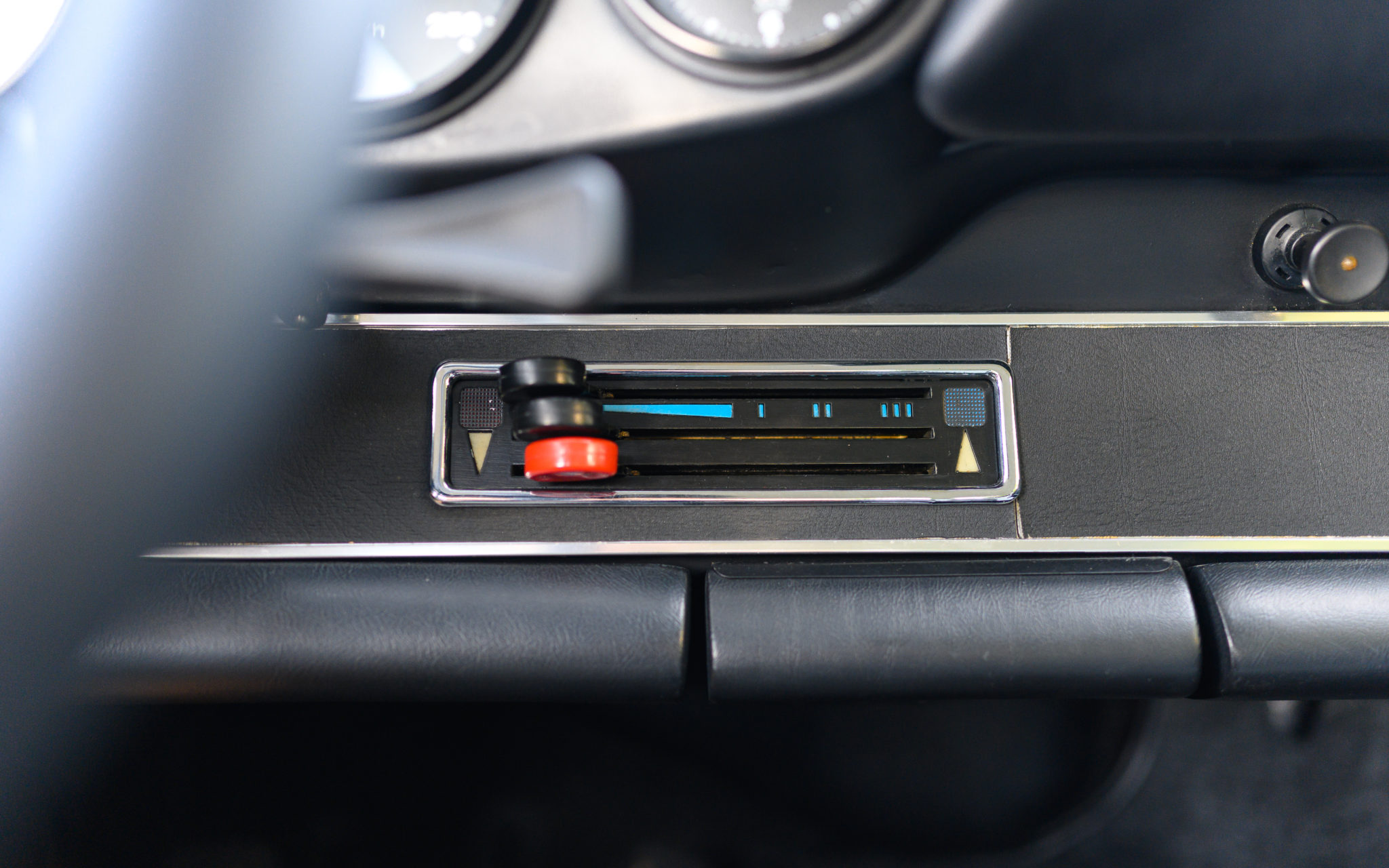
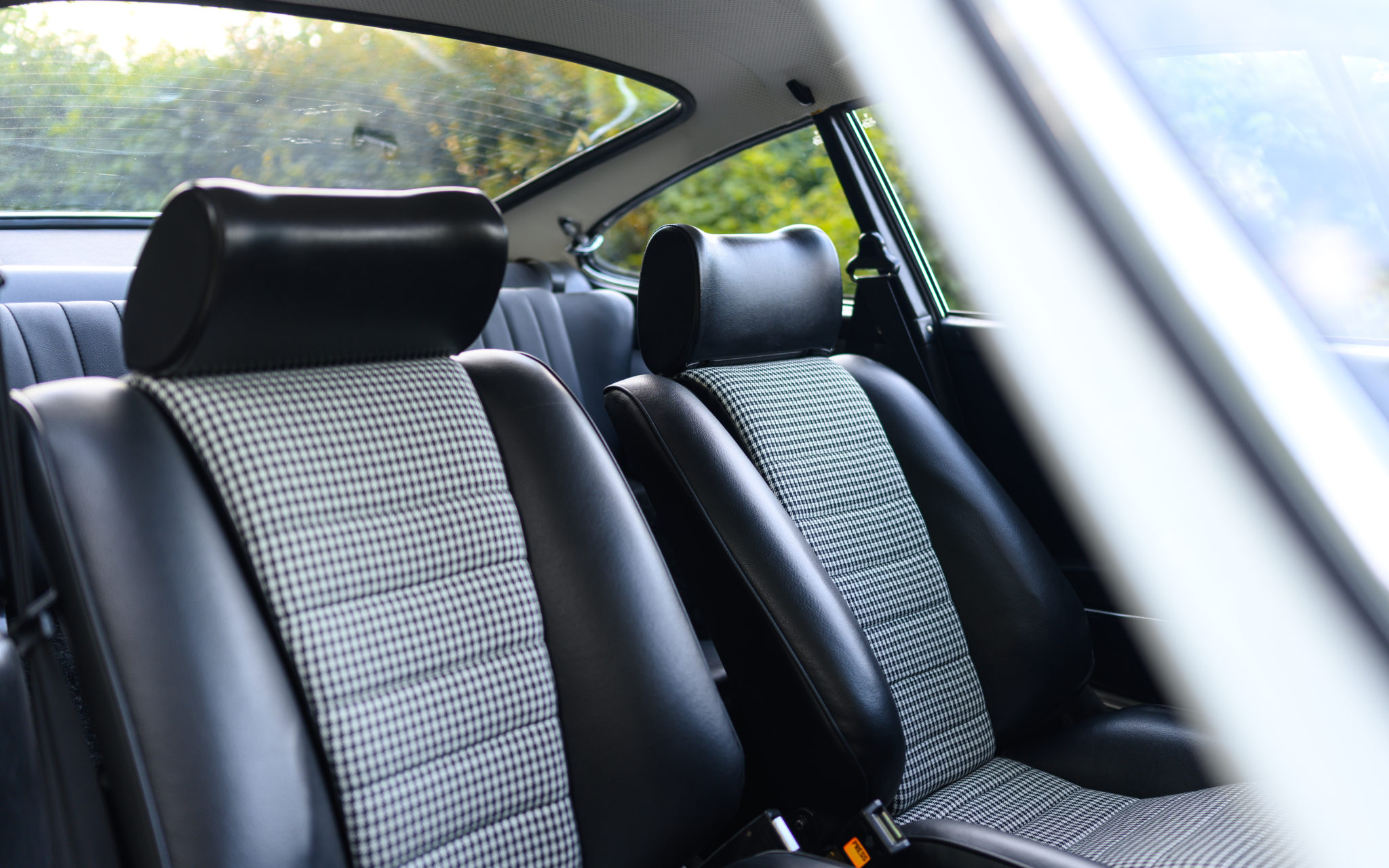
The 911 Carrera RS 2.7 in these photographs is chassis 9113600536. The white body, blue Carrera script and blue wheel centres are visible from both sides. In the cabin, black trim meets patterned cloth seat centres, and the close-ups take in the instruments, the gear lever and the cabin fittings. The specifications below give the published model figures and identify the two versions where the numbers differ.
The weight difference on the 911 Carrera RS 2.7 was the cumulative result of decisions about ordinary things. Porsche pared back equipment in the Sport, including the rear seats, sound insulation and trim. The Touring kept the more familiar cabin treatment. How much noise and comfort a driver wanted on the road mattered as much to the choice as the numbers in the brochure.
The cabin photographs of this 911 Carrera RS 2.7 are useful for another reason. They show how neatly the hardware fits in a compact car. Look at the low gear lever, the narrow pair of front seats and the simple door fittings. The view has aged rather better than most of the dashboard ideas that have followed it.
Where the 911 Carrera RS 2.7 fits between the 356 and the 930
Spend a minute with the Porsche 356 A and you can see how much the early 911 inherited in spirit: a compact body, clear instruments and an air-cooled engine behind the driver. The 911 Carrera RS 2.7 develops that idea into a car with a specific competition brief. You can follow the next chapter with the 1976 911 2.7 Coupé, a later G-Series road car that shares the displacement and has a character of its own.
The G-Series also gave us the Turbo. Drive Vintage’s 1986 911 Turbo 930 and 1989 911 Turbo 930 show where Porsche took the rear-engined formula in the turbocharged era. Their flared arches and broad tail make a good comparison with the earlier 911 Carrera RS 2.7. Start at the back and work forwards. The family resemblance holds up beautifully, even as the solutions to getting power onto the road change.
For a closer look at what the 911 Carrera RS 2.7 put on the road, start with the straight rear view and then open one of the side profiles. The rear view gives you the width of the arches. The profile shows the way the ducktail sits at the end of the engine lid and why it suits the proportions of the early car.
The history and performance figures for the 911 Carrera RS 2.7 come from the Porsche archive on the Carrera RS and the FIA homologation records. For an enquiry about the car photographed, contact Drive Vintage.

SPECIFICATIONS
NUMBER PRODUCED
1,580 examples
PRODUCTION YEARS
1972–1973
CHASSIS TYPE
Steel monocoque, two-door coupé
LENGTH
4,102 mm
WIDTH
1,652 mm
HEIGHT
1,320 mm
WEIGHT
960 kg Sport / 1,075 kg Touring
ENGINE
2,687 cc air-cooled flat-six, Bosch mechanical injection
POWER
210 PS (154 kW) at 6,300 rpm
TORQUE
255 Nm at 5,100 rpm
0–100 KM/H
5.8 s Sport / 6.3 s Touring
TOP SPEED
Over 245 km/h Sport / 240 km/h Touring
GALLERY