VOLKSWAGEN
VOLKSWAGEN
Beetle 1200
1142718163
1142718163
The 1974 Volkswagen Beetle 1200 makes a decent case for getting there eventually. This cream example has black bumpers, plain steel wheels with polished hubcaps and the sort of big round speedometer you can read at a glance. The rear lid conceals an air-cooled flat-four, and the driver gets three pedals and a proper gear lever. On a narrow lane in autumn, that seems quite enough.
The Beetle 1200 in 1974
By 1974 Volkswagen’s little rear-engined saloon had spent decades being the default answer to a straightforward question. People needed a car they could use every day. The Beetle 1200 was the entry model, with a flat windscreen, a familiar rounded roof and a 1.2-litre engine. The rest of the range offered larger engines and increasingly elaborate trims. This one kept the basic recipe.
It was also the year Volkswagen introduced the Golf, with its engine and driven wheels at the front. The Beetle 1200 carried on alongside it. Volkswagen’s 1200 model register dates this generation of the standard 1200 from 1973 to 1977. The 1200 L continued later. That is part of why production dates depend on exactly which Beetle you are talking about.
A four-cylinder engine where the luggage usually goes
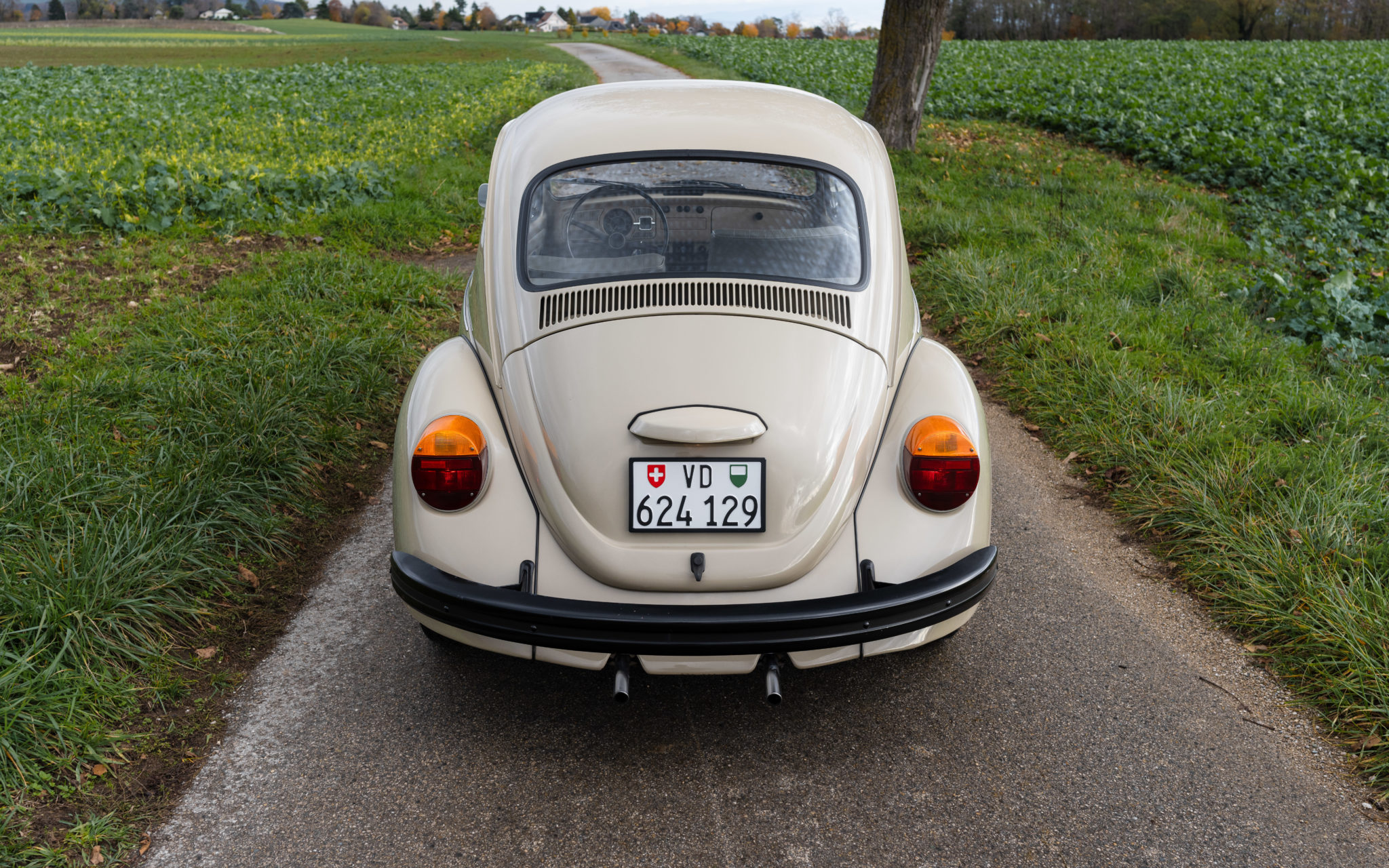
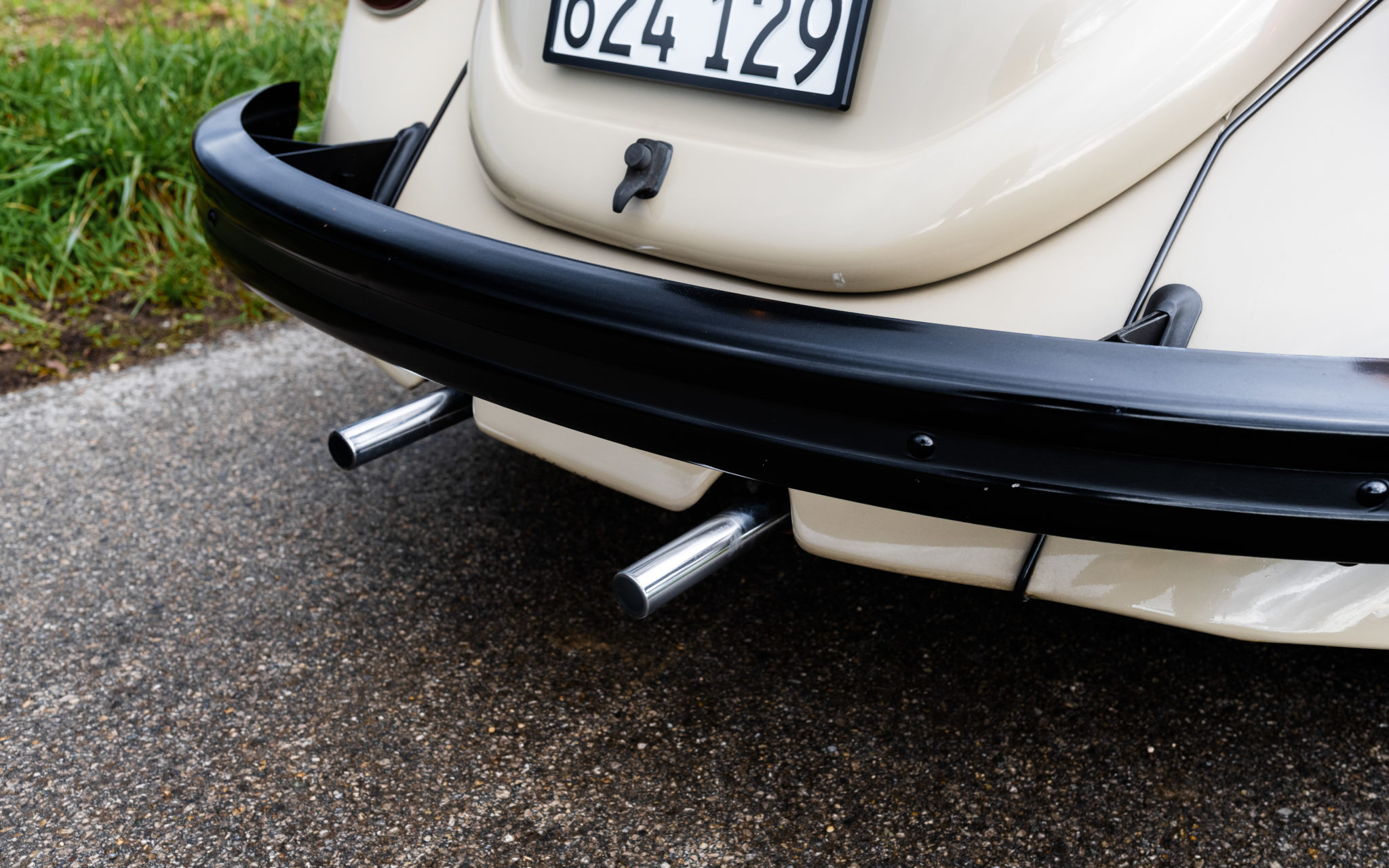
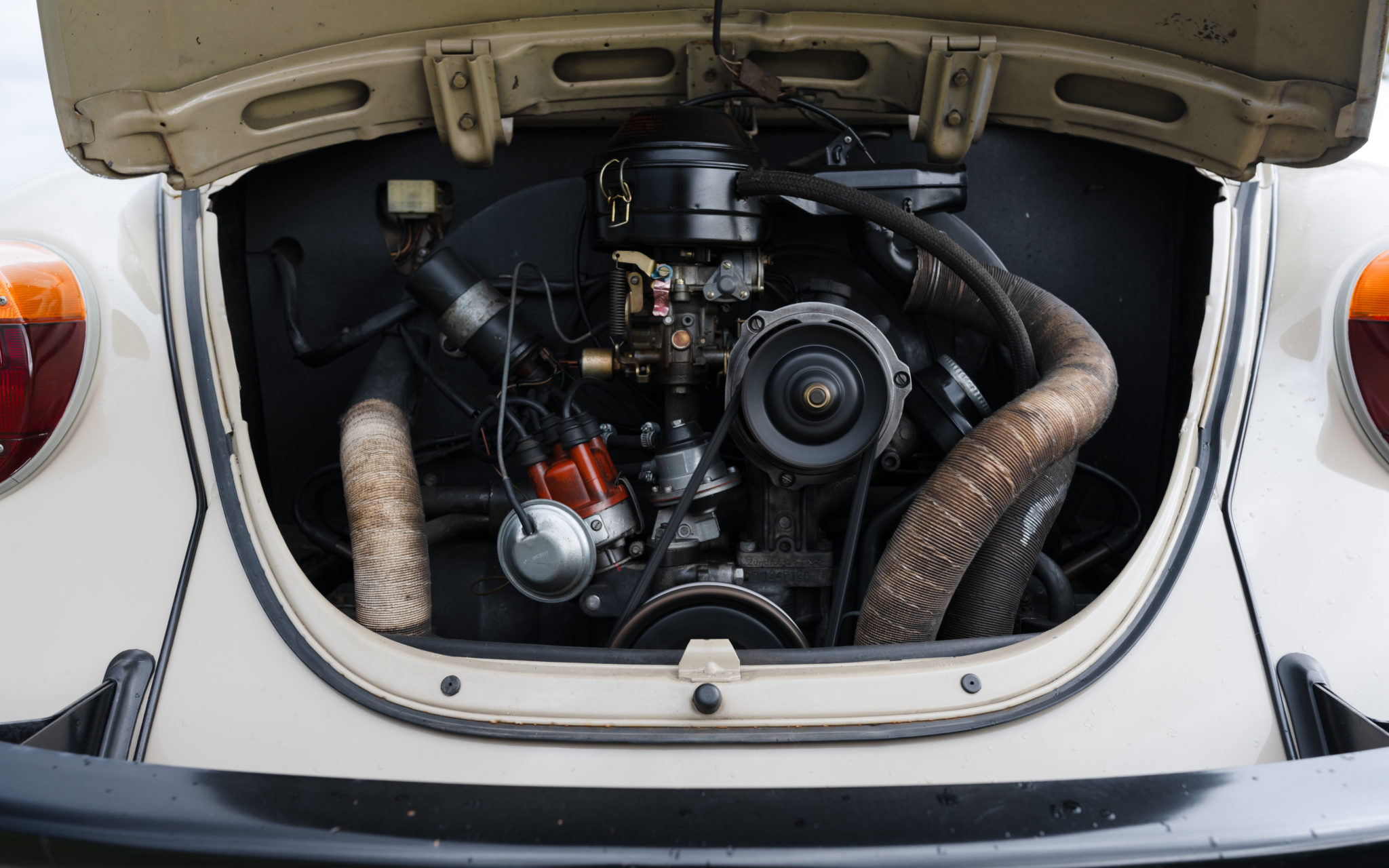
Lift the rear lid of the Beetle 1200 and the fan belt, pulleys and air cleaner are all in view. The air-cooled flat-four has two cylinders on either side, with the cooling fan and its shrouds directing air over the engine. The layout freed up space for luggage at the front. At the back, the two modest exhaust tips tucked below the bumper are about as theatrical as the 1200 gets.
Volkswagen’s 1974 German sales brochure lists 34 PS at 3,800 rpm for the Beetle 1200. A four-speed manual sends drive to the rear wheels. The same brochure quotes 115 km/h, which gives you time to consider the wisdom of any overtaking manoeuvre before committing to it.
The 1200’s chassis uses a platform with a central tunnel. The car is narrow by modern standards and the base model weighs just 760 kg in Volkswagen’s period figures. The manual gearbox, rear-wheel drive and drum brakes describe the catalogue specification. The photographs give a separate view of this example as it stands today.
The cream Beetle 1200 in the photographs
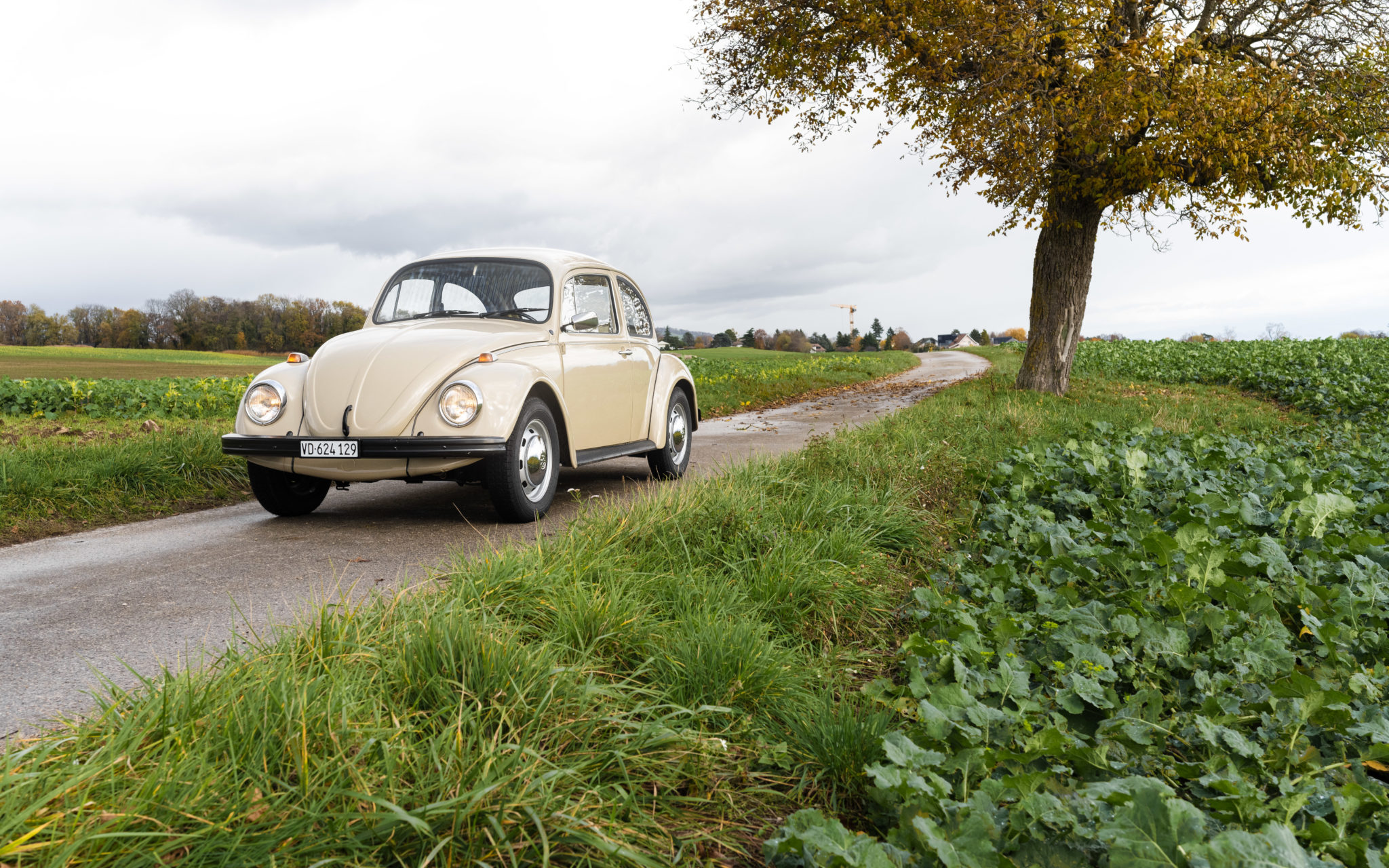
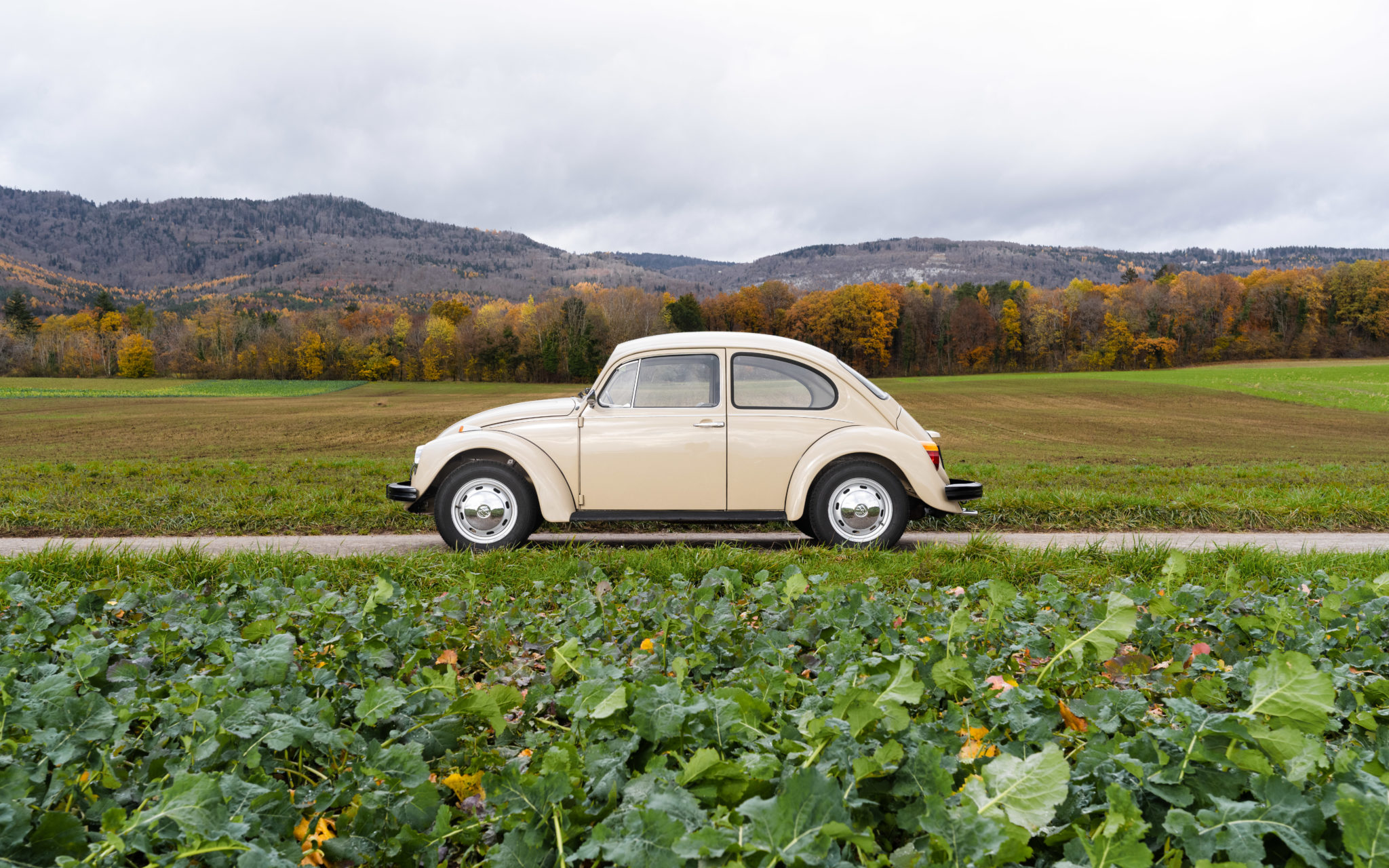
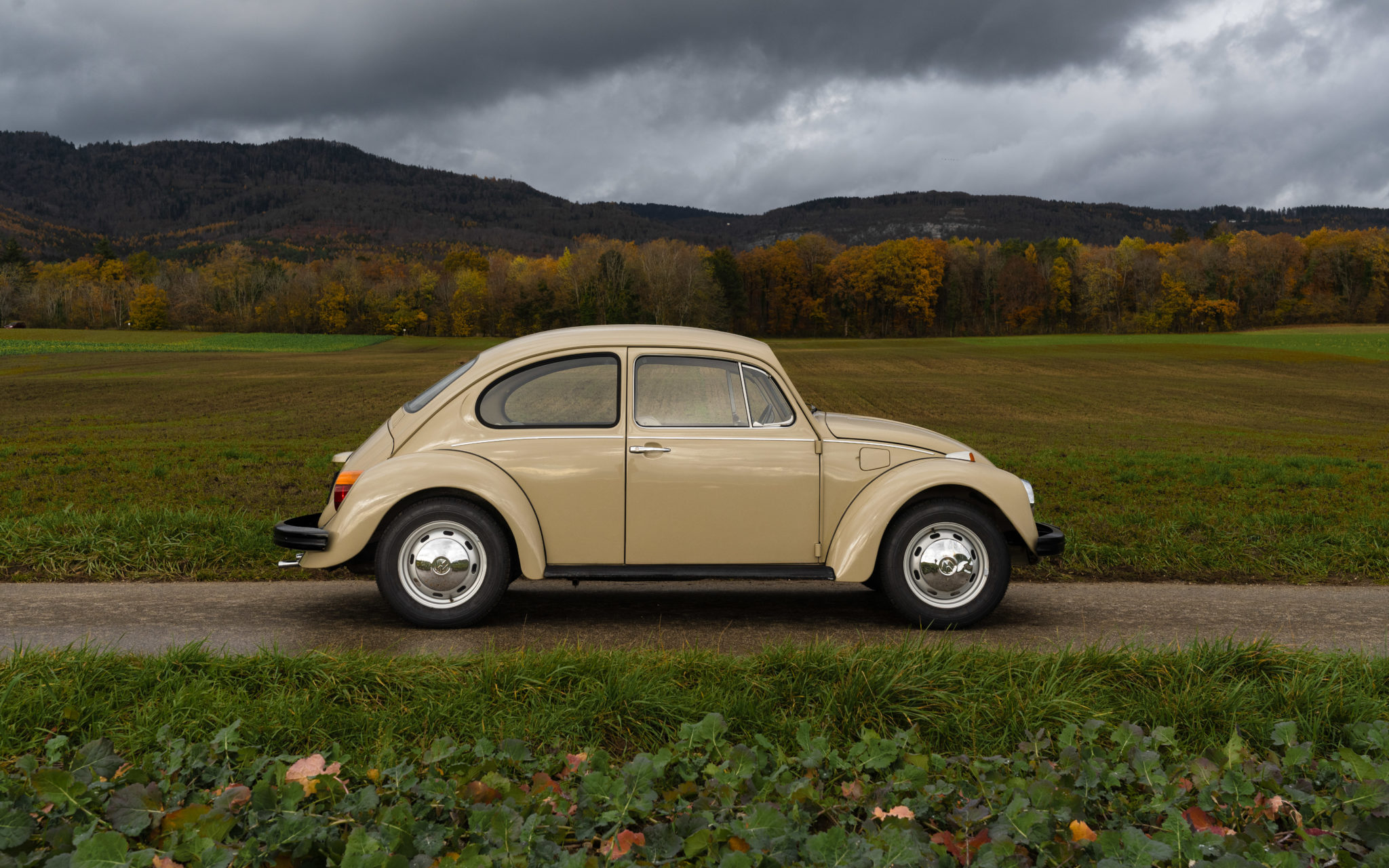
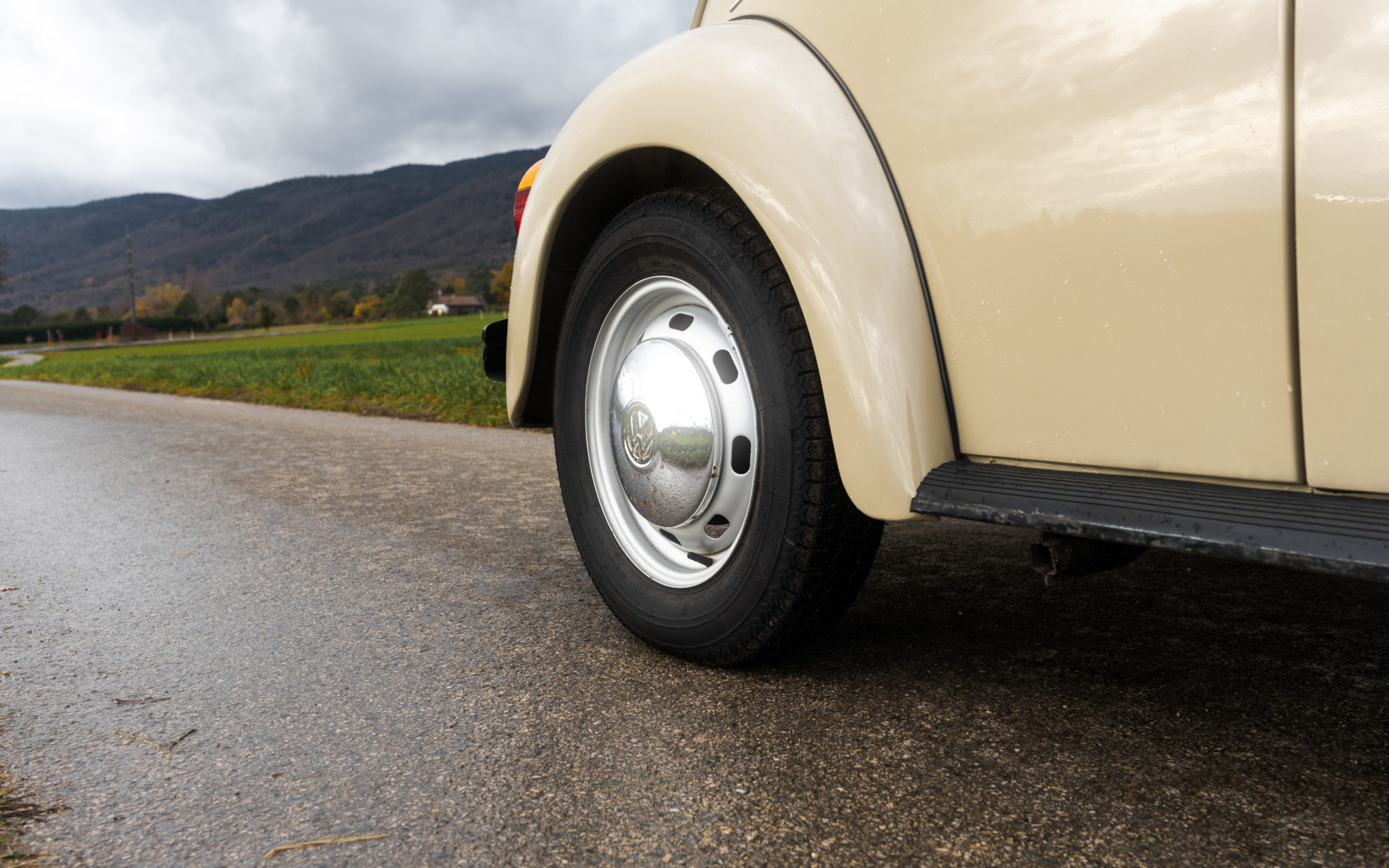
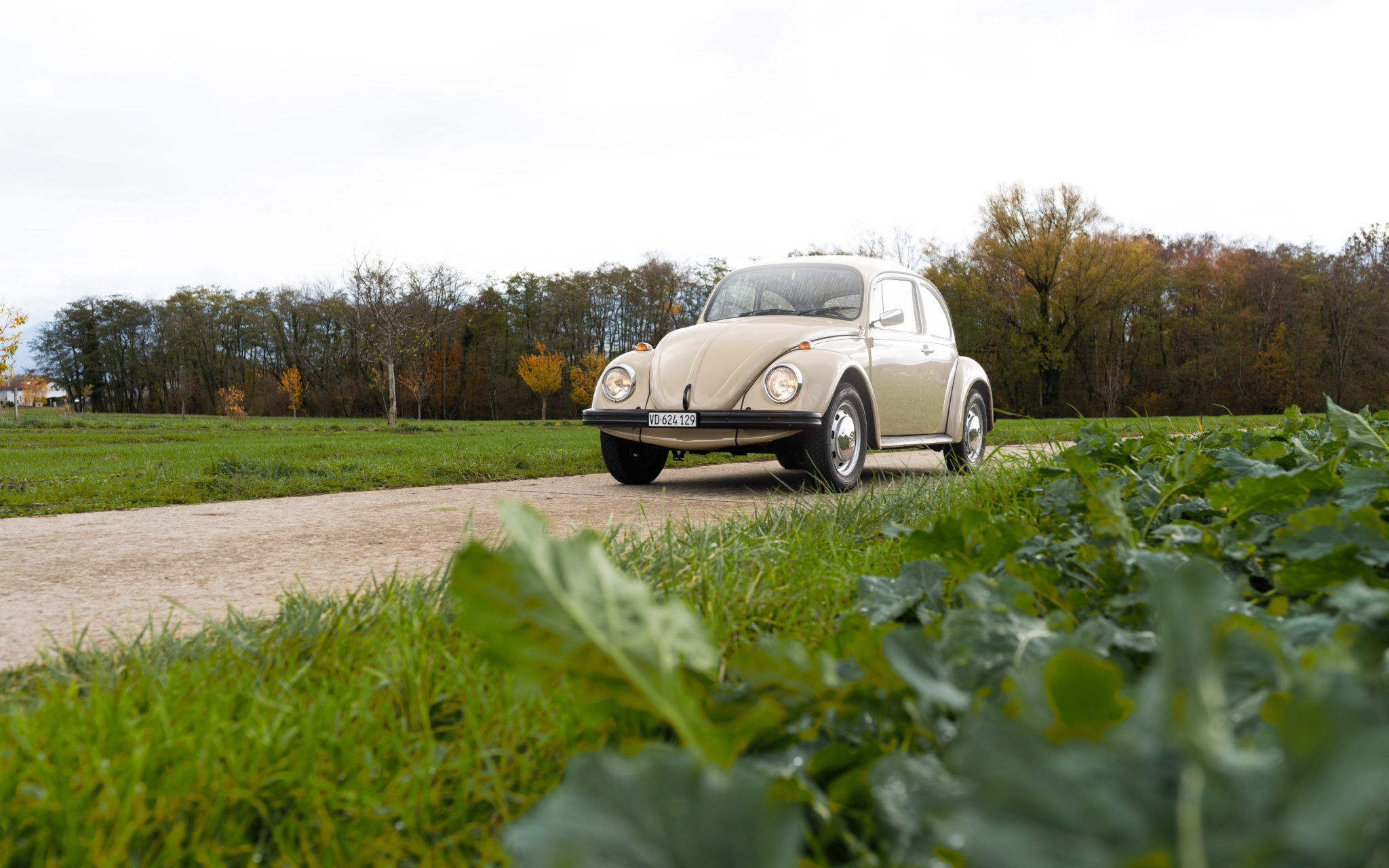
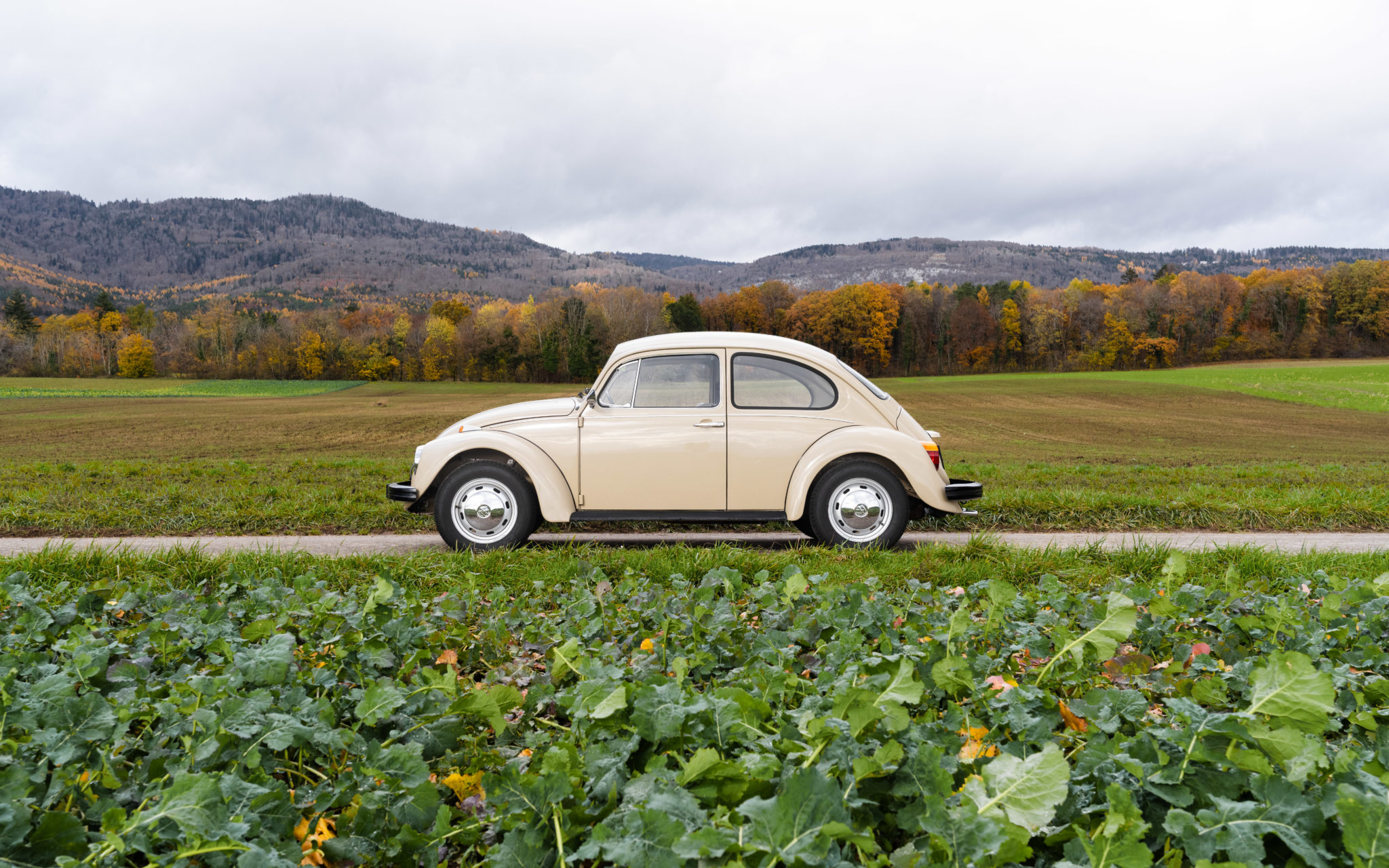
Look at the side profiles first. The high roof and separate-looking wings are what make the Beetle recognisable from the other side of a field. The black running board joins the two arches and the domed hubcaps catch what little light the weather was offering. The backdrop of green crops and autumn hills suits it.
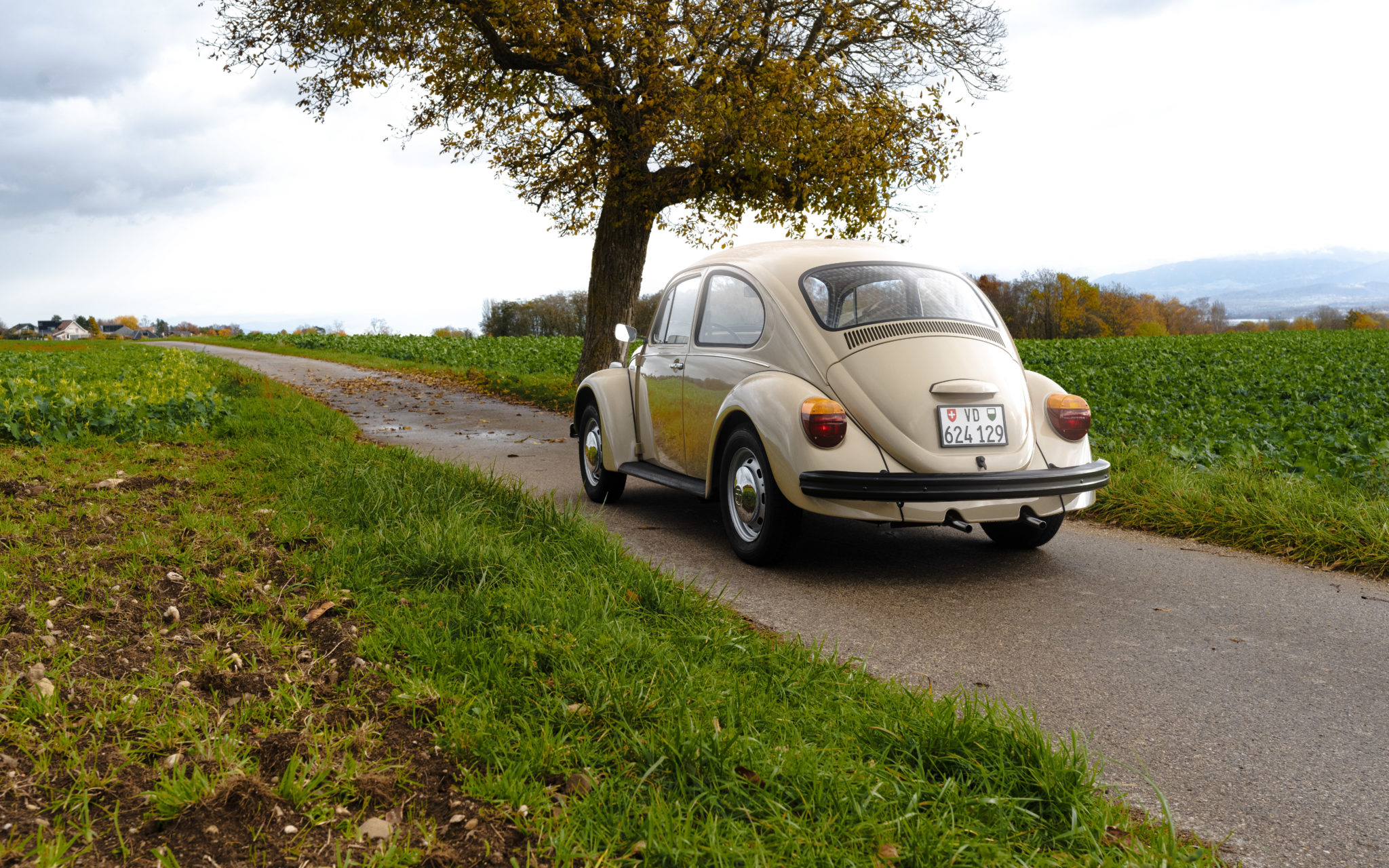
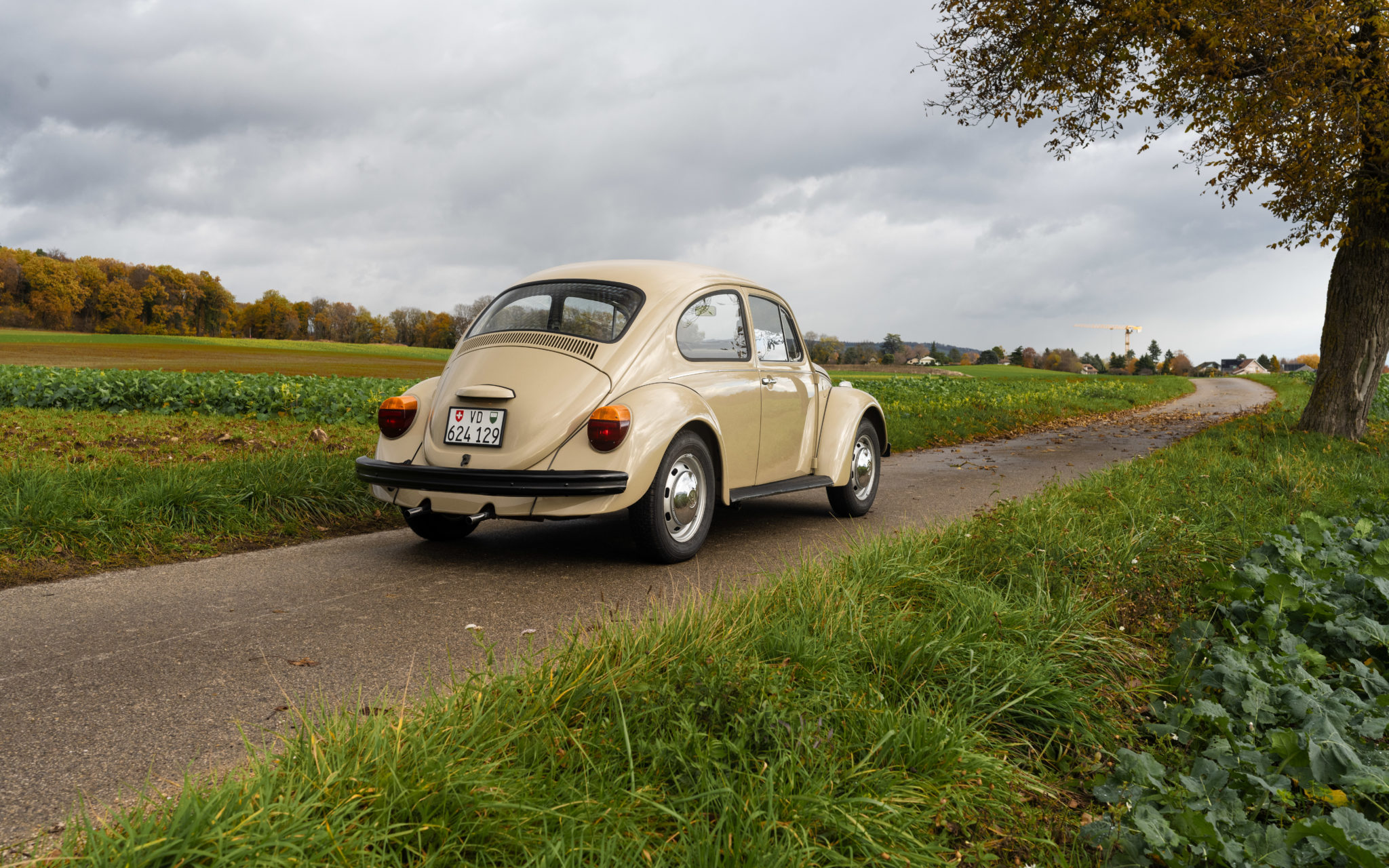
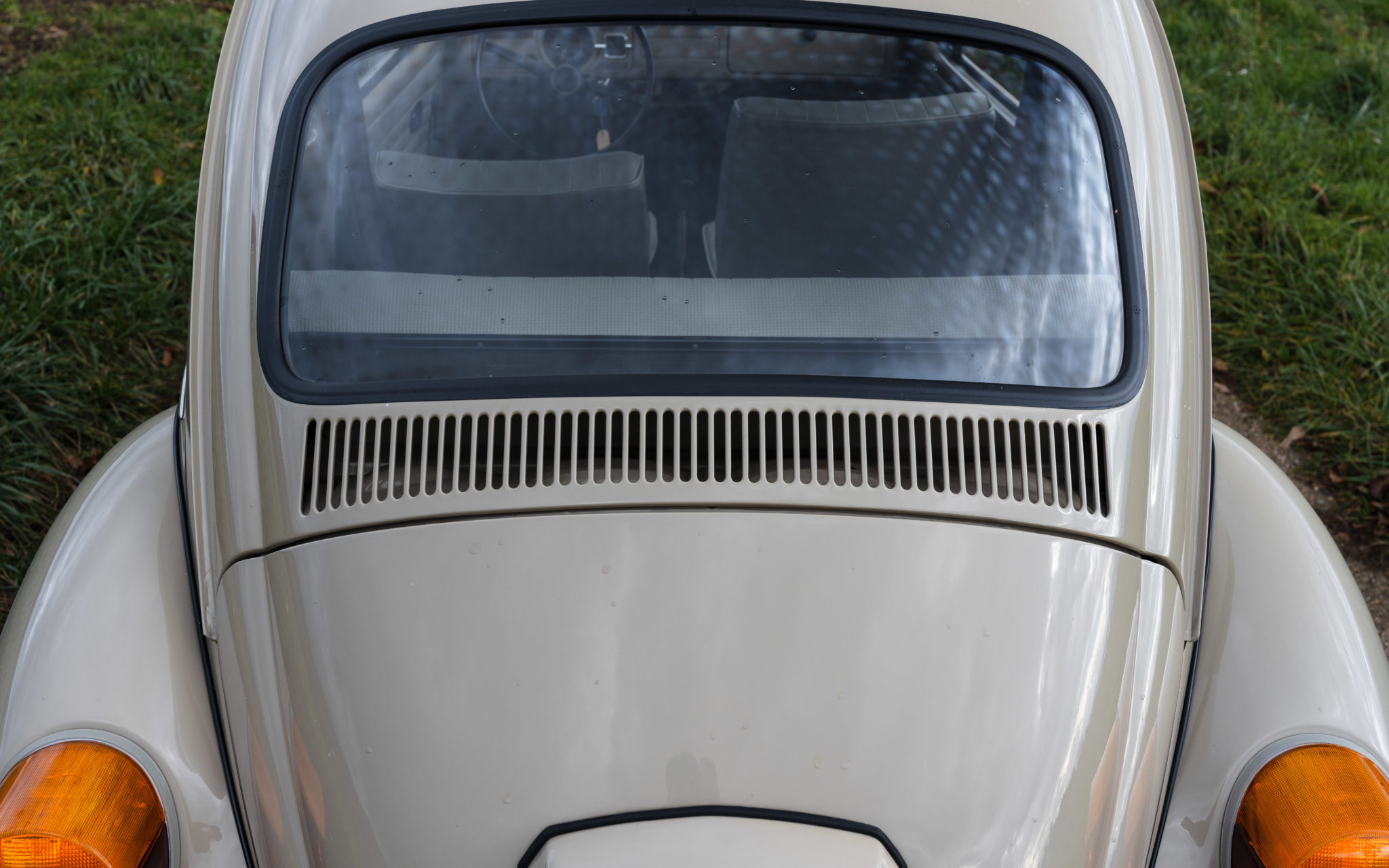
The rear photograph shows the large tail lamps and the bank of cooling slots below the back window. In the close-up, the lip of the black bumper runs across the frame above the polished exhaust tips. There is a great deal of shape to a Beetle 1200 even when you are looking at it perfectly square from behind.
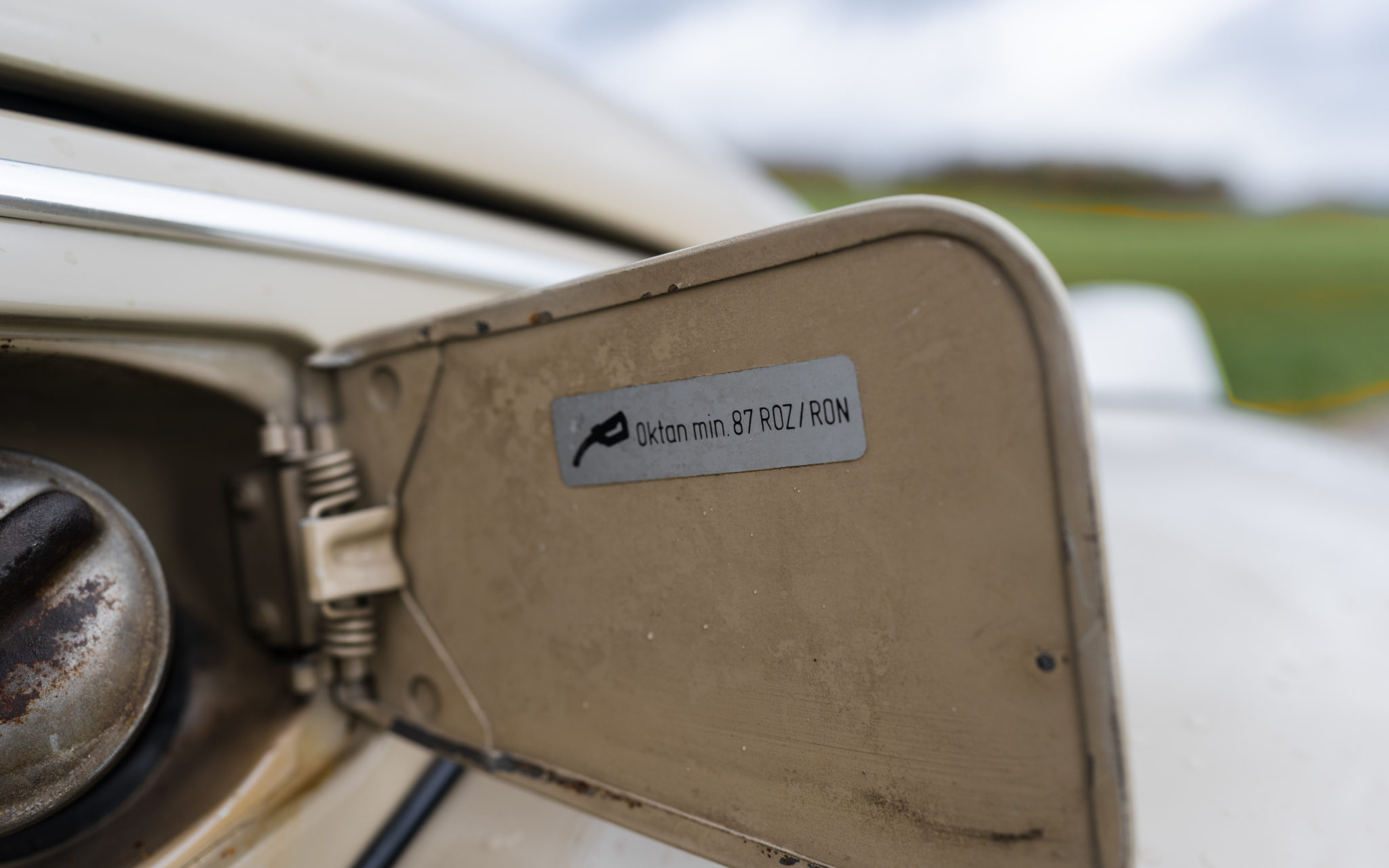
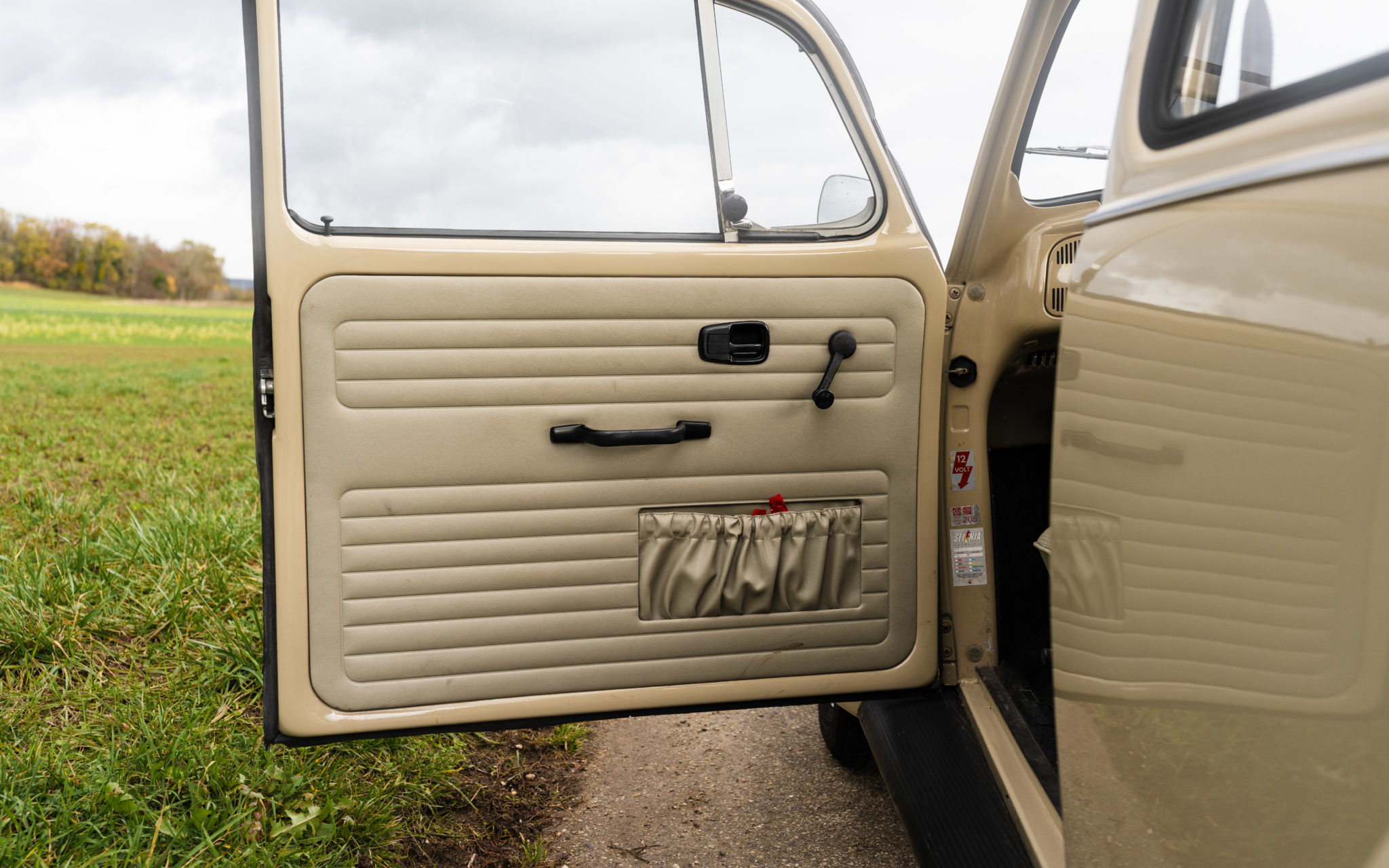
The car pictured is chassis 1142718163. The fuel flap, door pockets and cooling vents have each earned a close-up. They are the bits you would actually use, look past or put your hand on every day. That is a more revealing way to get to know a Beetle than another photograph of the bonnet badge.
A dashboard with very little to explain
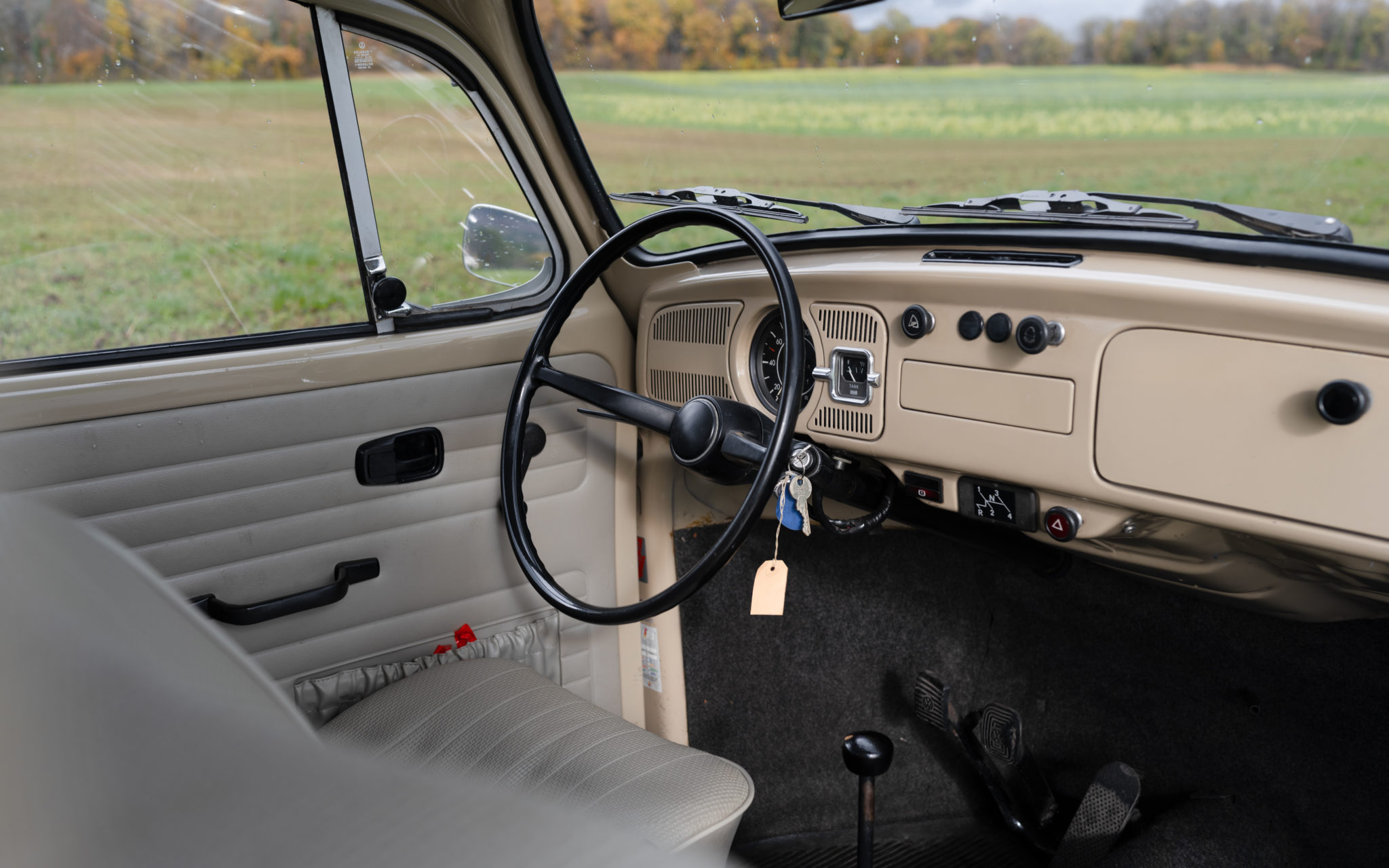
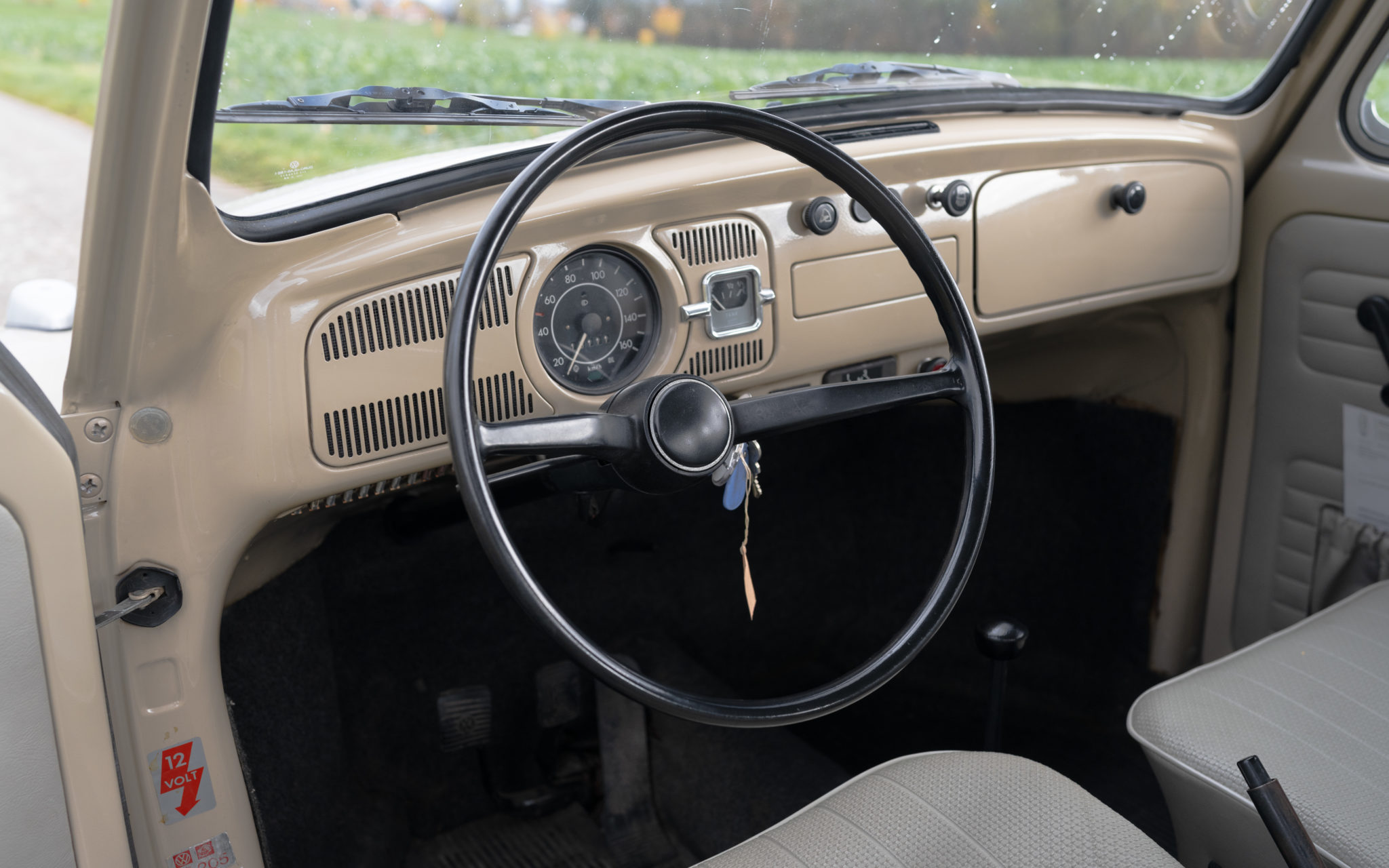
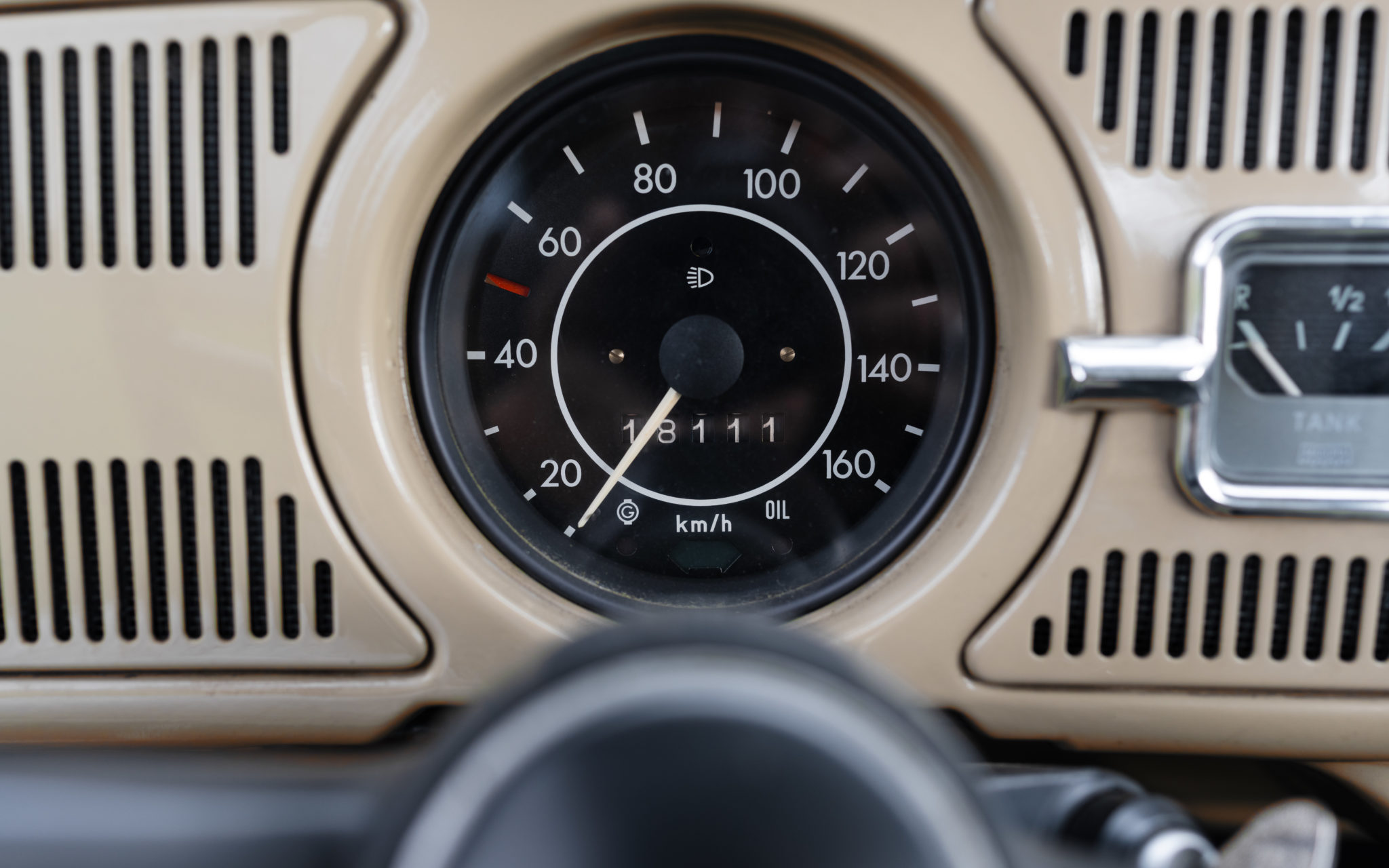
Inside this Beetle 1200, the painted dashboard is close in colour to the body. The steering wheel is thin and the round speedometer is the largest thing in front of the driver. It reads in kilometres per hour, with 160 neatly printed at the far end of the dial. Volkswagen appears to have allowed some room for optimism.
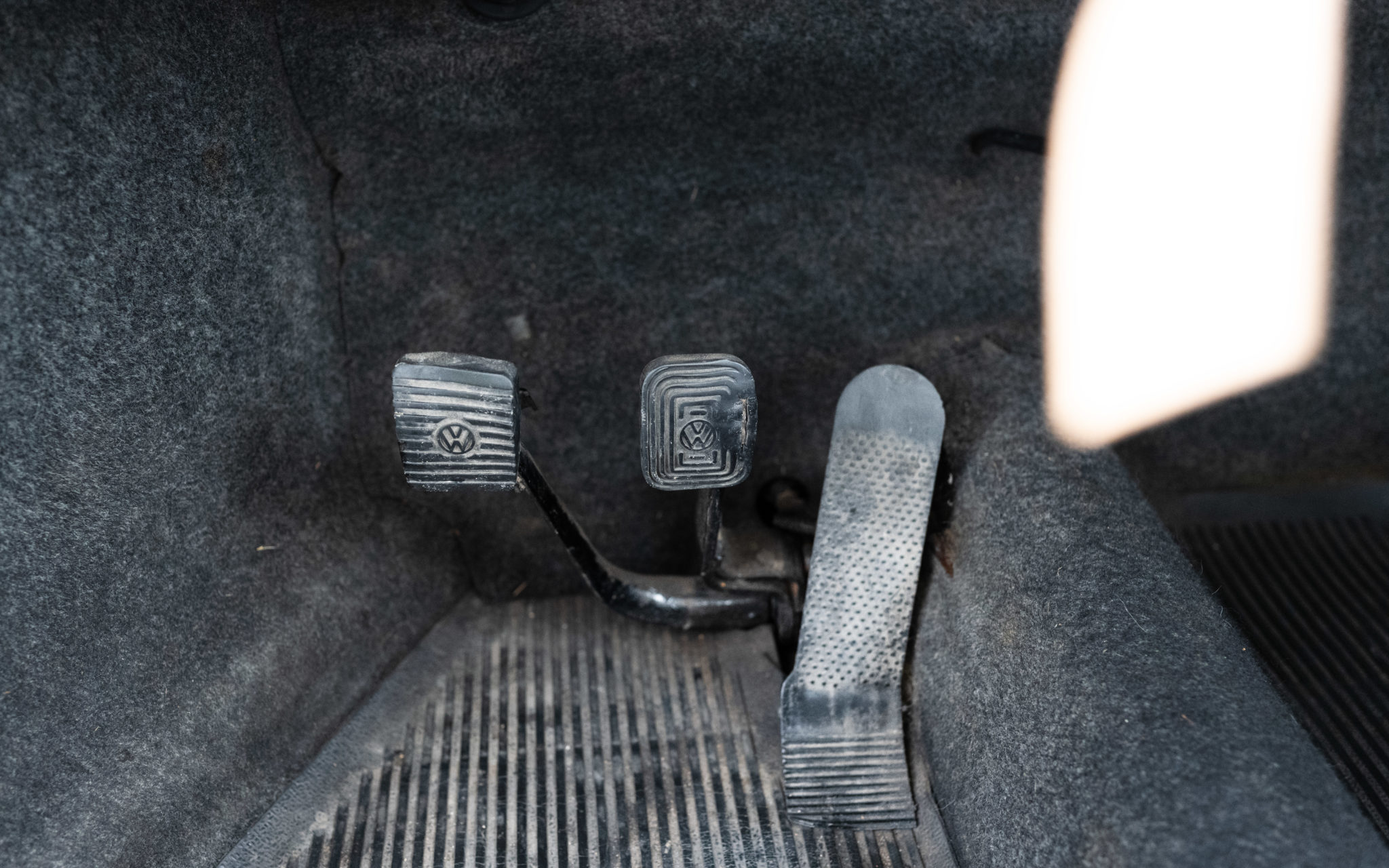
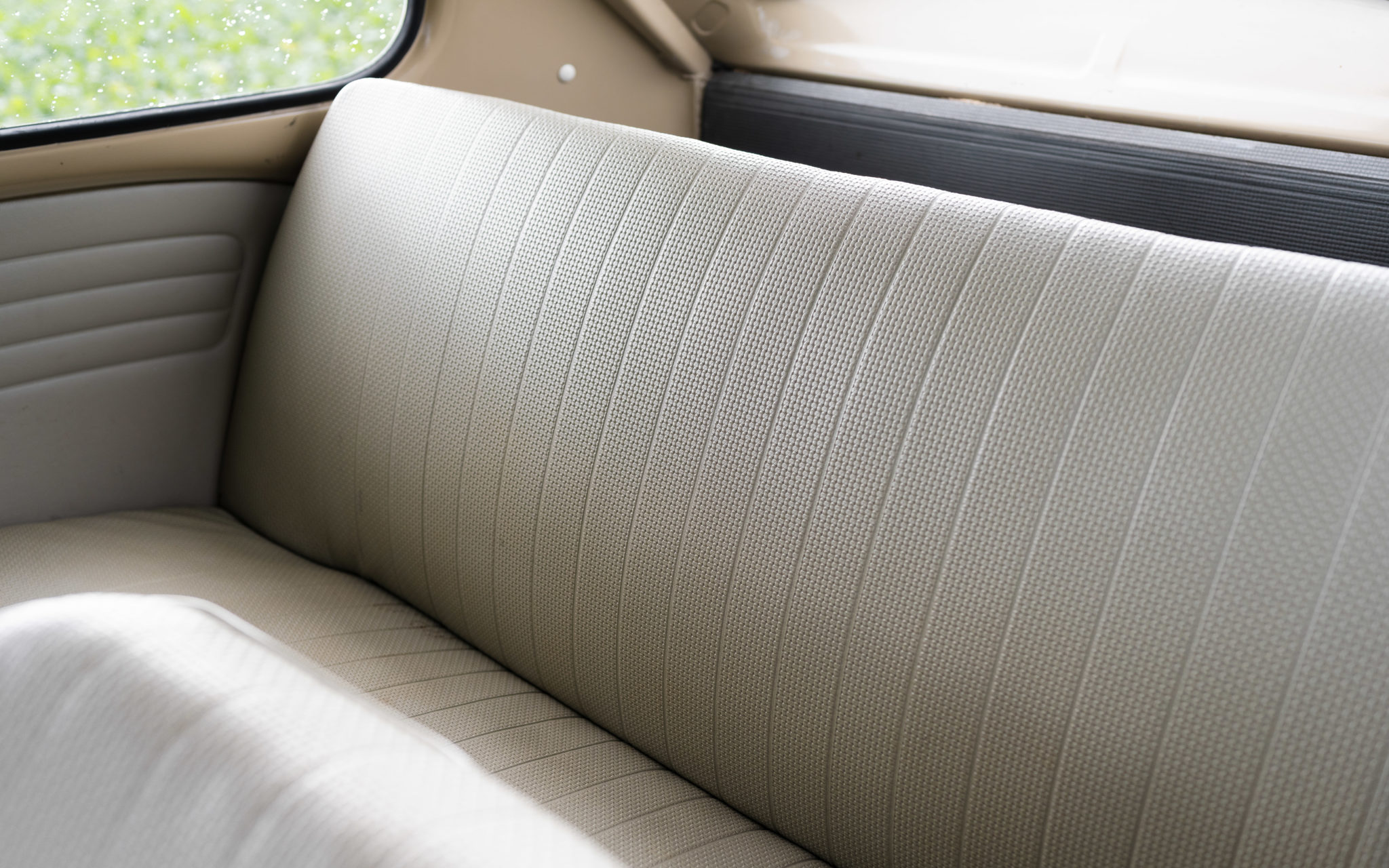
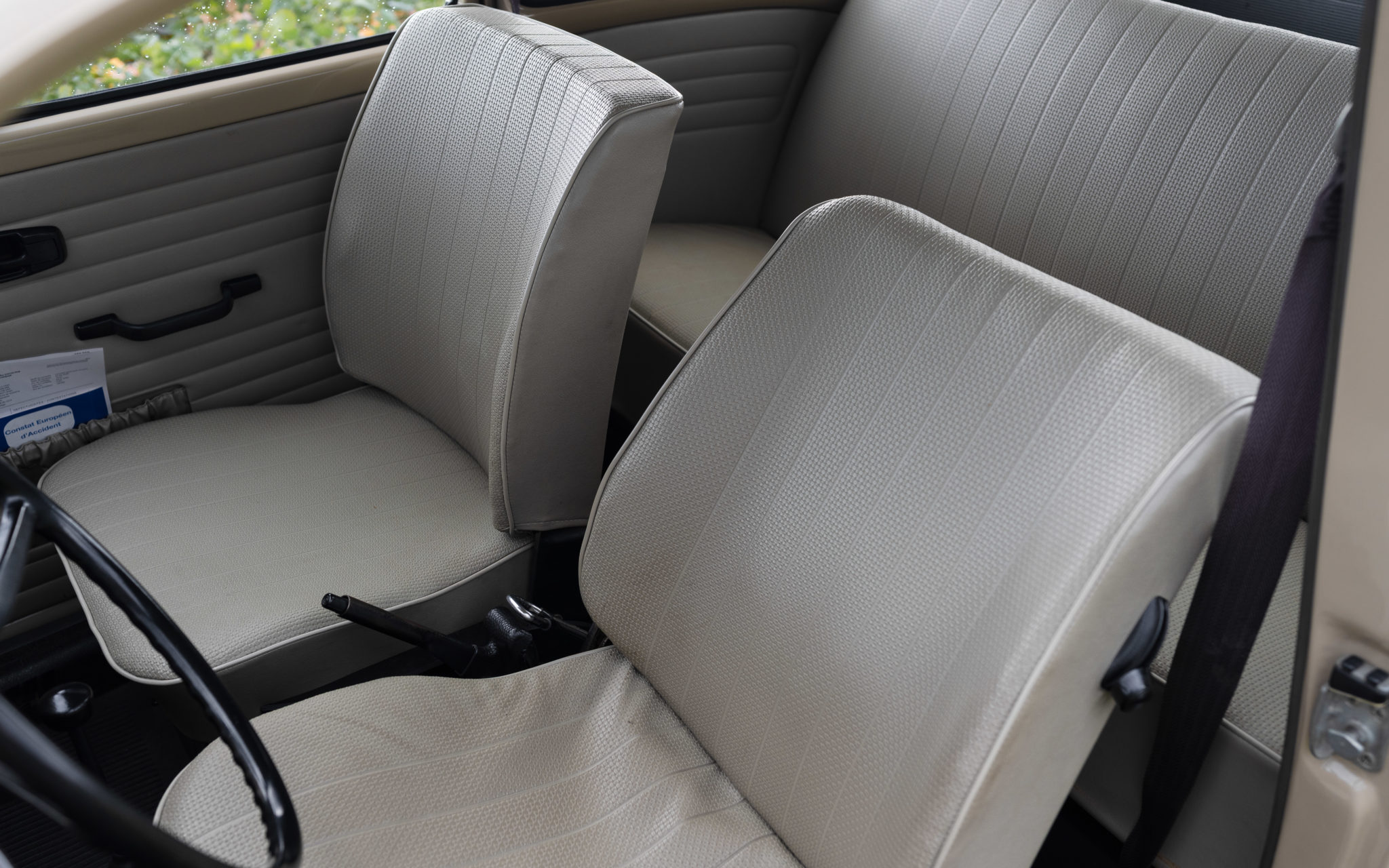
The close-up of the footwell shows a floor-mounted accelerator and the familiar clutch and brake. Open the door and there is a window crank, a simple pull and a small pocket in the trim. There are pale front seats and a similarly upholstered rear bench. The levers sit in plain view on the floor, exactly where a driver expects to find them.
The Beetle 1200 and Volkswagen’s air-cooled range
The underlying idea travelled rather well. The Volkswagen MicroBus DeLuxe in the Drive Vintage collection puts a related air-cooled, rear-engine layout to work in a very different body. The MicroBus uses that arrangement to create space for a group of passengers. The little 1200 uses it to make a compact saloon with a remarkably distinctive shape.
The period also produced the 911 Carrera RS 2.7, another famous example of air cooling and an engine behind the rear axle. Its flat-six and competition remit were very different from those of a Beetle 1200. The two are worth putting side by side when looking at how widely that basic layout could be applied.
A closer look at the 1974 Beetle 1200
The front three-quarter photograph shows how high the headlights sit in their wings, well clear of the slim black bumper. The second view, taken from low beside the crops, makes the roof look taller still. There is nothing complicated about the view. The curved bonnet, upright glass and clean edges of the wheel arches do most of the work.
The specifications below use Volkswagen’s period figures for the standard Beetle 1200. The year shown above is the year of this car. The production years refer to its model generation. In the photographs, the most persuasive details are still the simple ones, from the round speedometer to the pair of polished exhausts just visible beneath the rear bumper.

SPECIFICATIONS
BODY STYLE
Two-door saloon
PRODUCTION YEARS
1973–1977
CHASSIS TYPE
Central-tunnel platform frame
LENGTH
4,060 mm
WIDTH
1,550 mm
HEIGHT
1,500 mm
WEIGHT
760 kg unladen
ENGINE
1,192 cc rear-mounted air-cooled flat-four
POWER
34 PS at 3,800 rpm
GEARBOX
Four-speed manual
DRIVETRAIN
Rear-wheel drive
TOP SPEED
115 km/h
GALLERY