PORSCHE
PORSCHE
911 2.7 Coupé
9116301584
9116301584
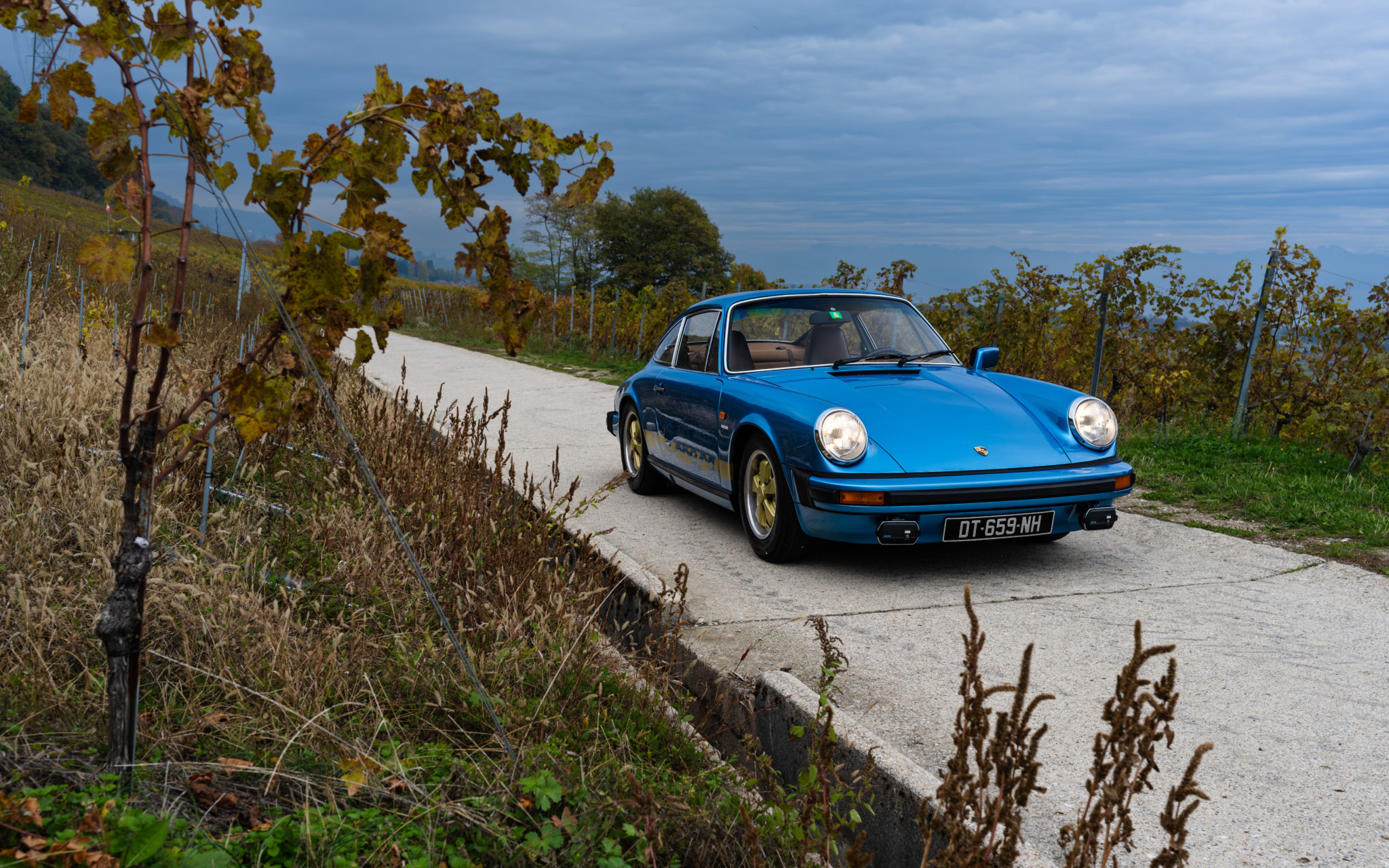
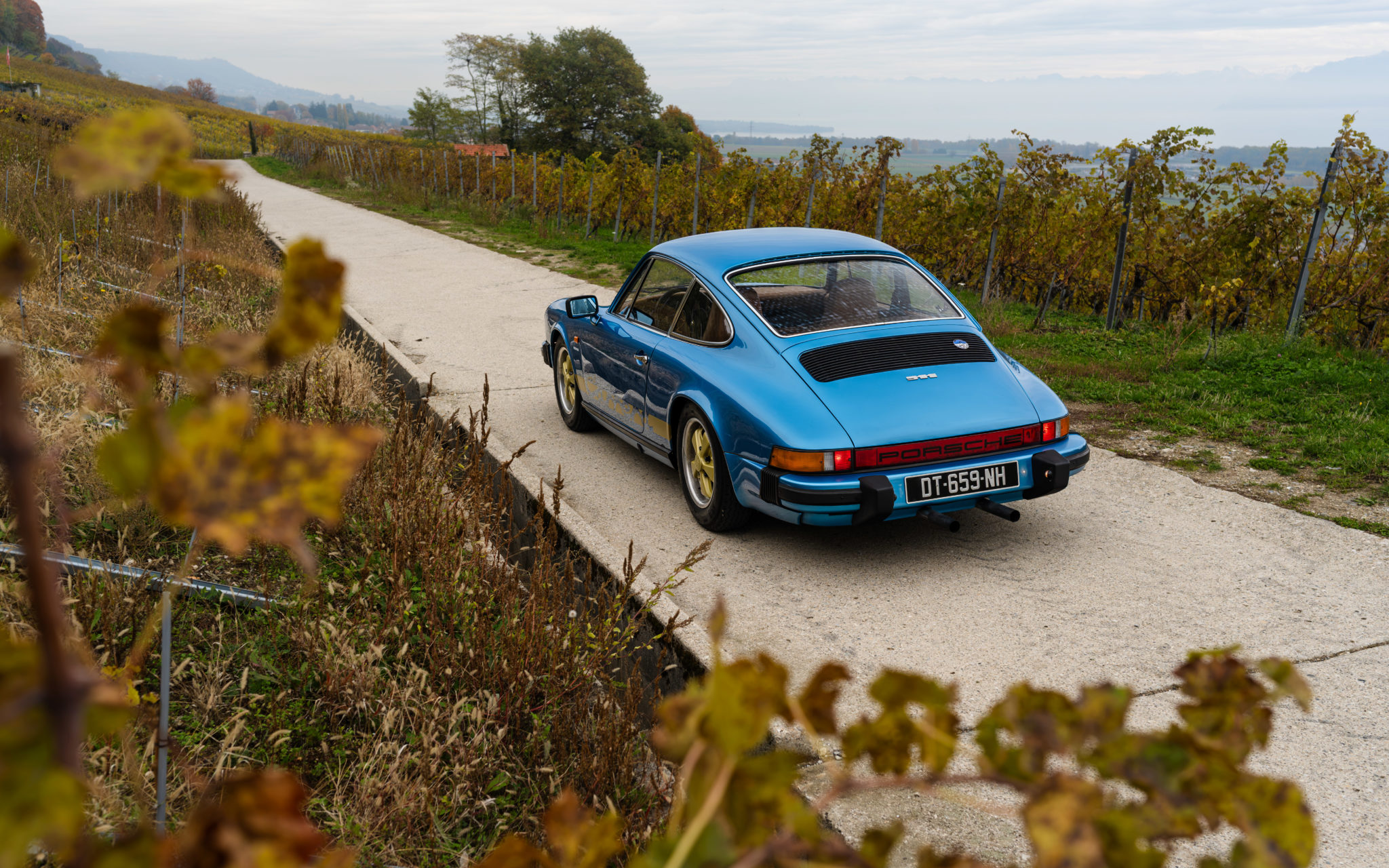
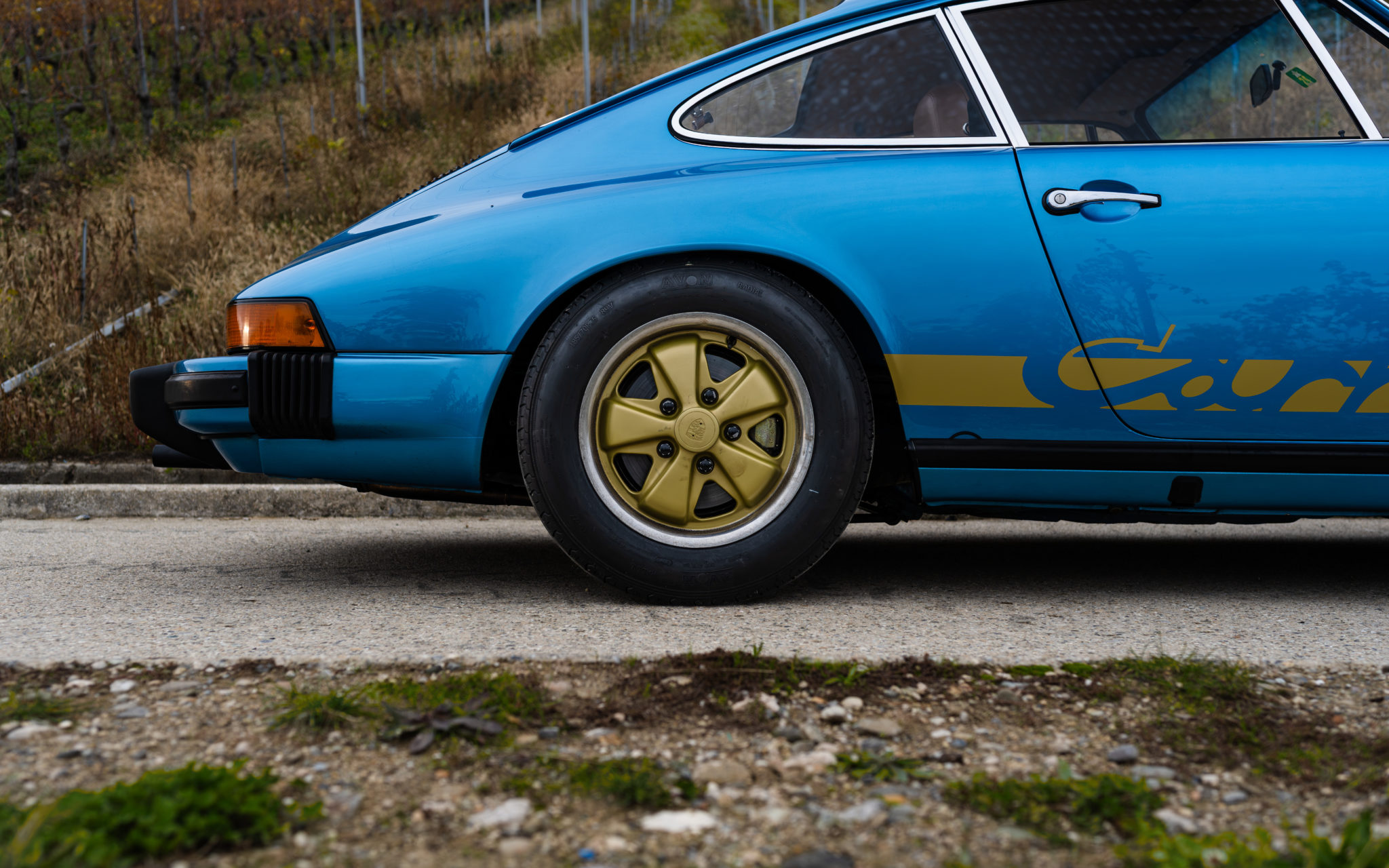
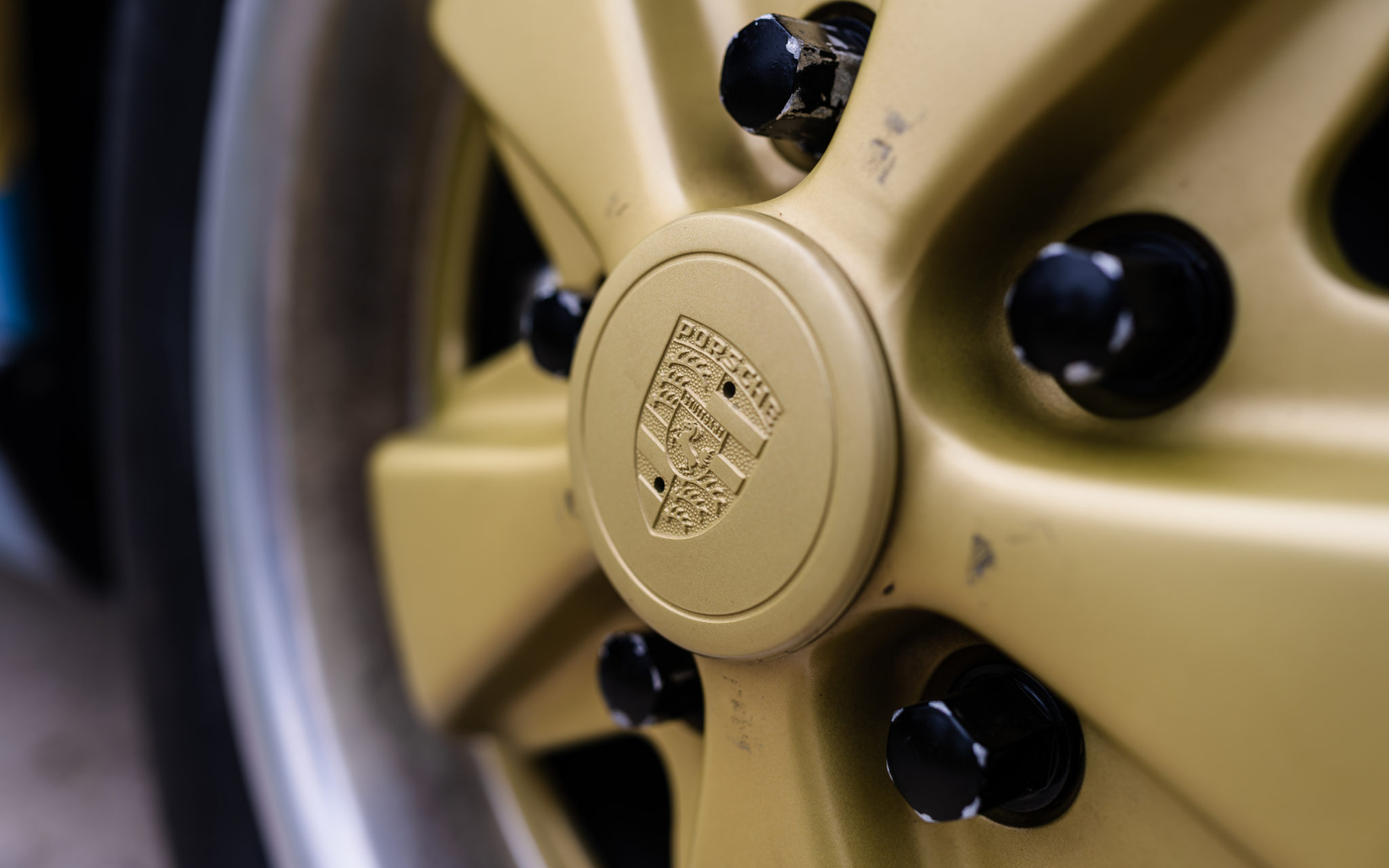
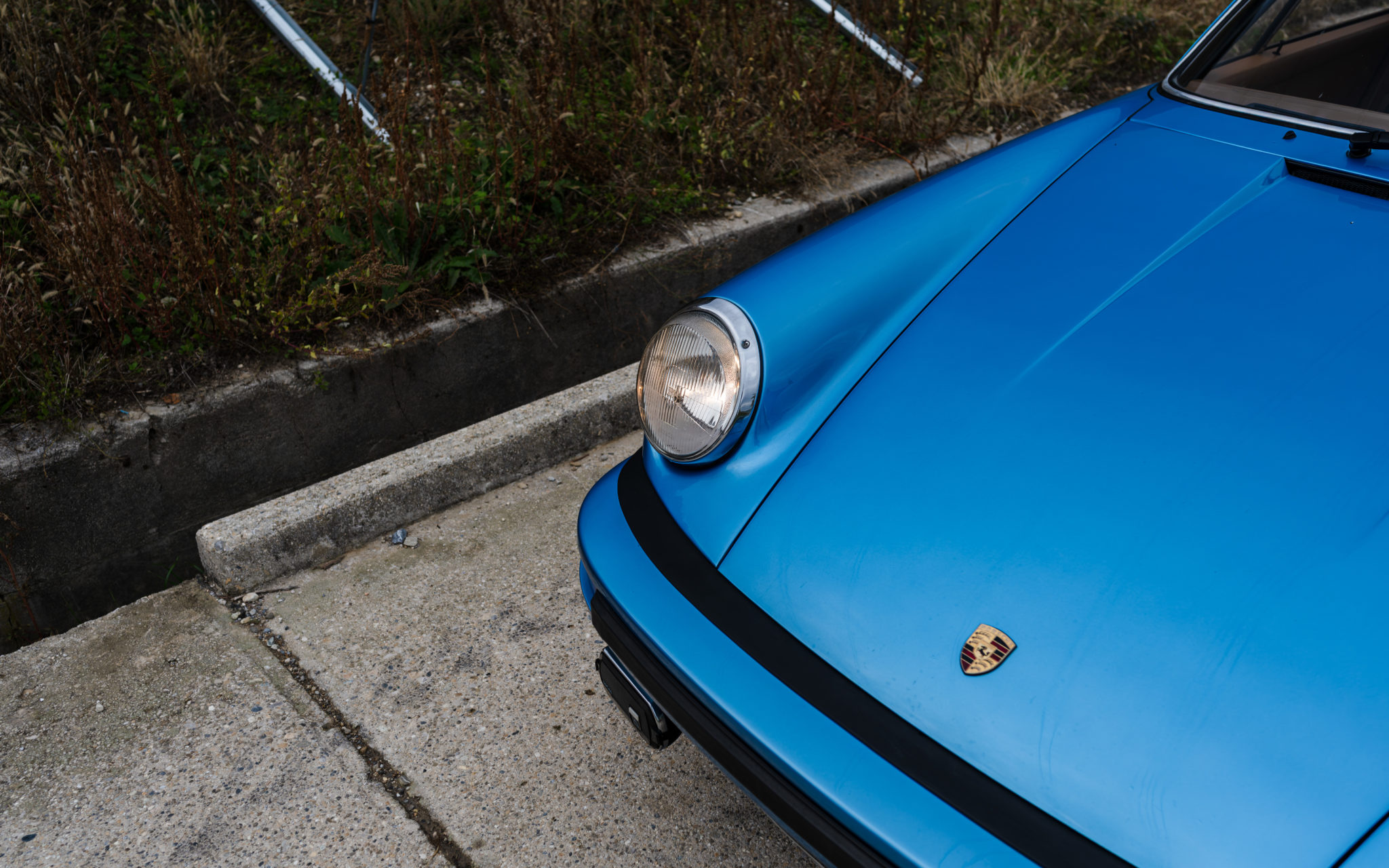
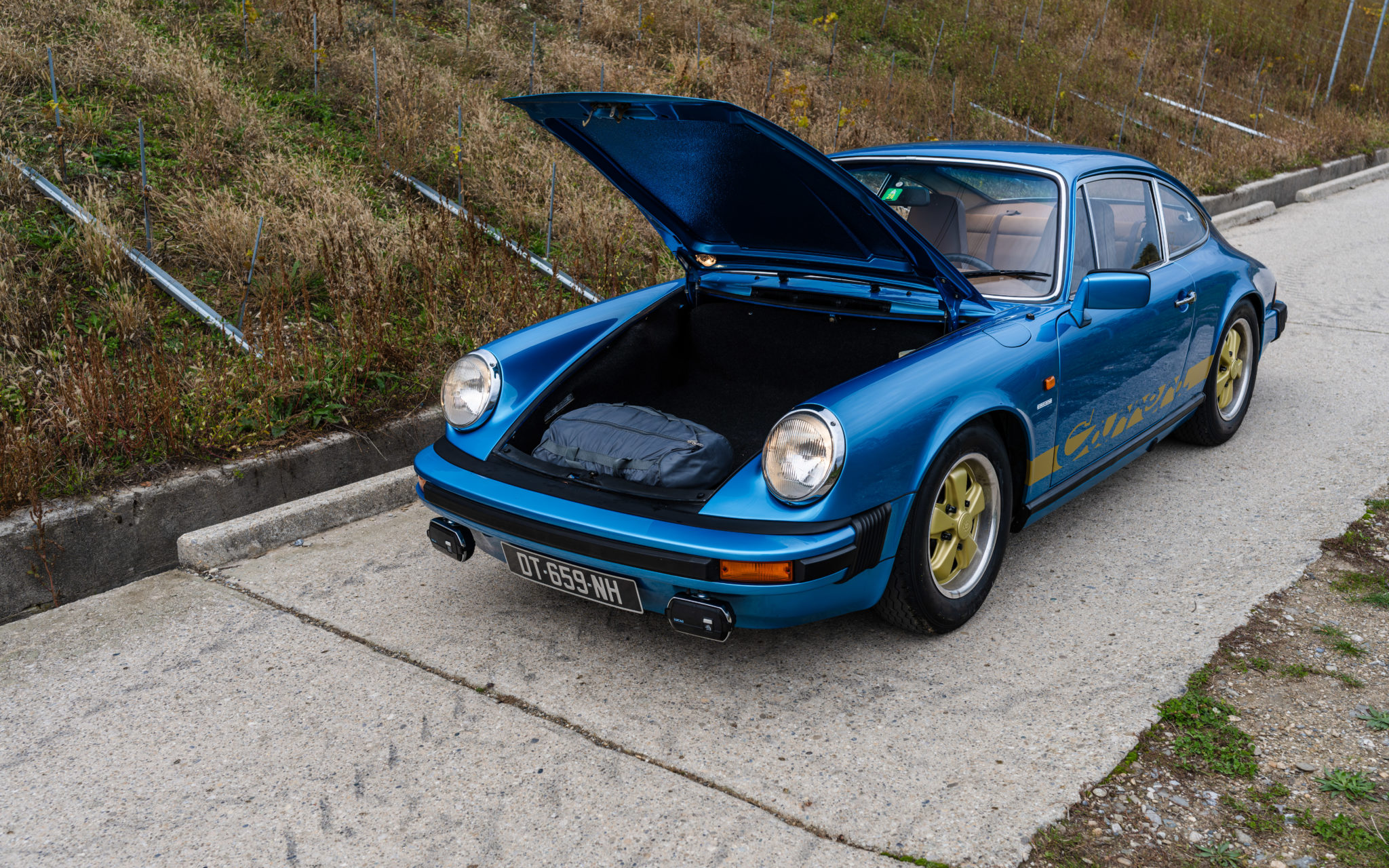
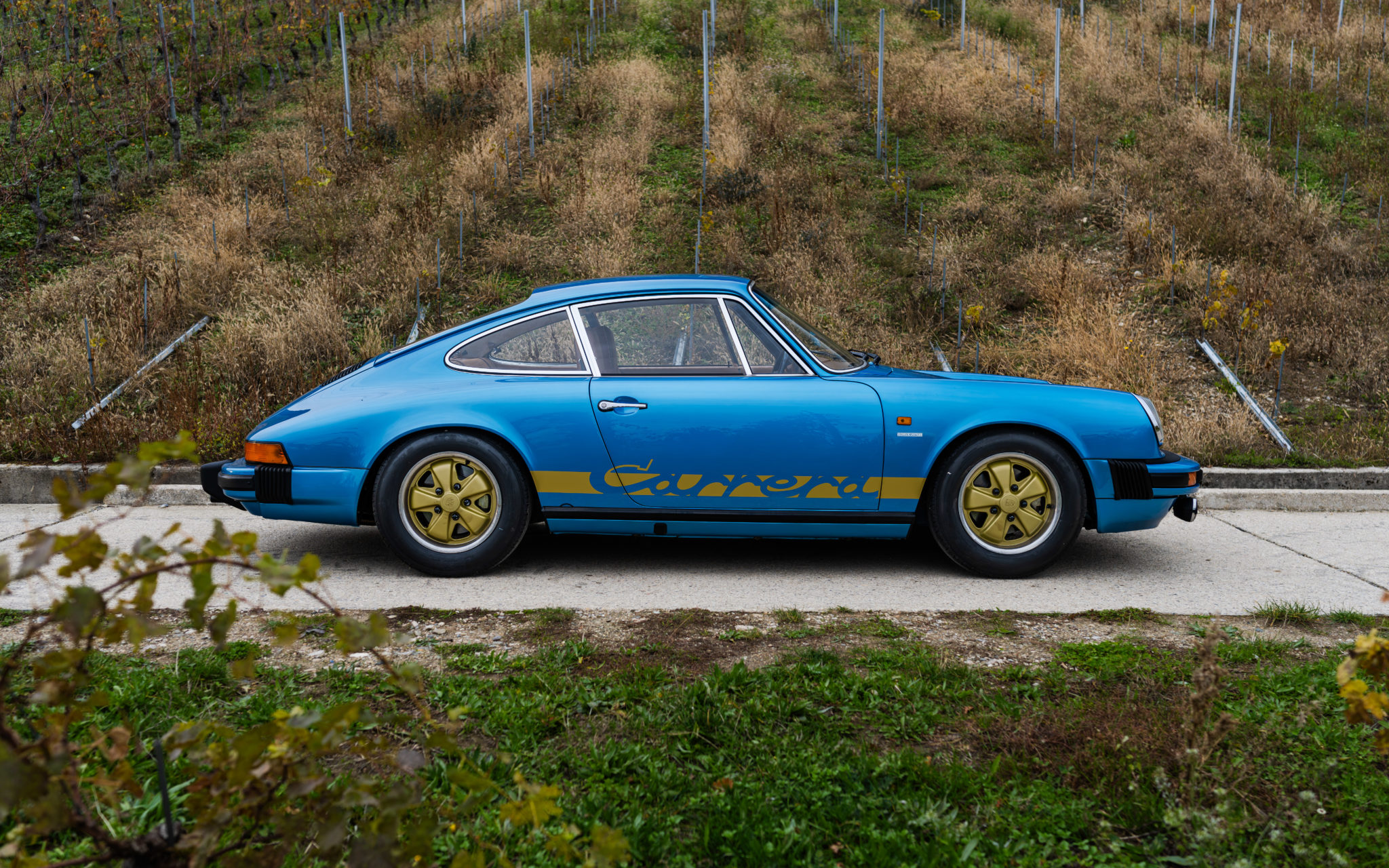
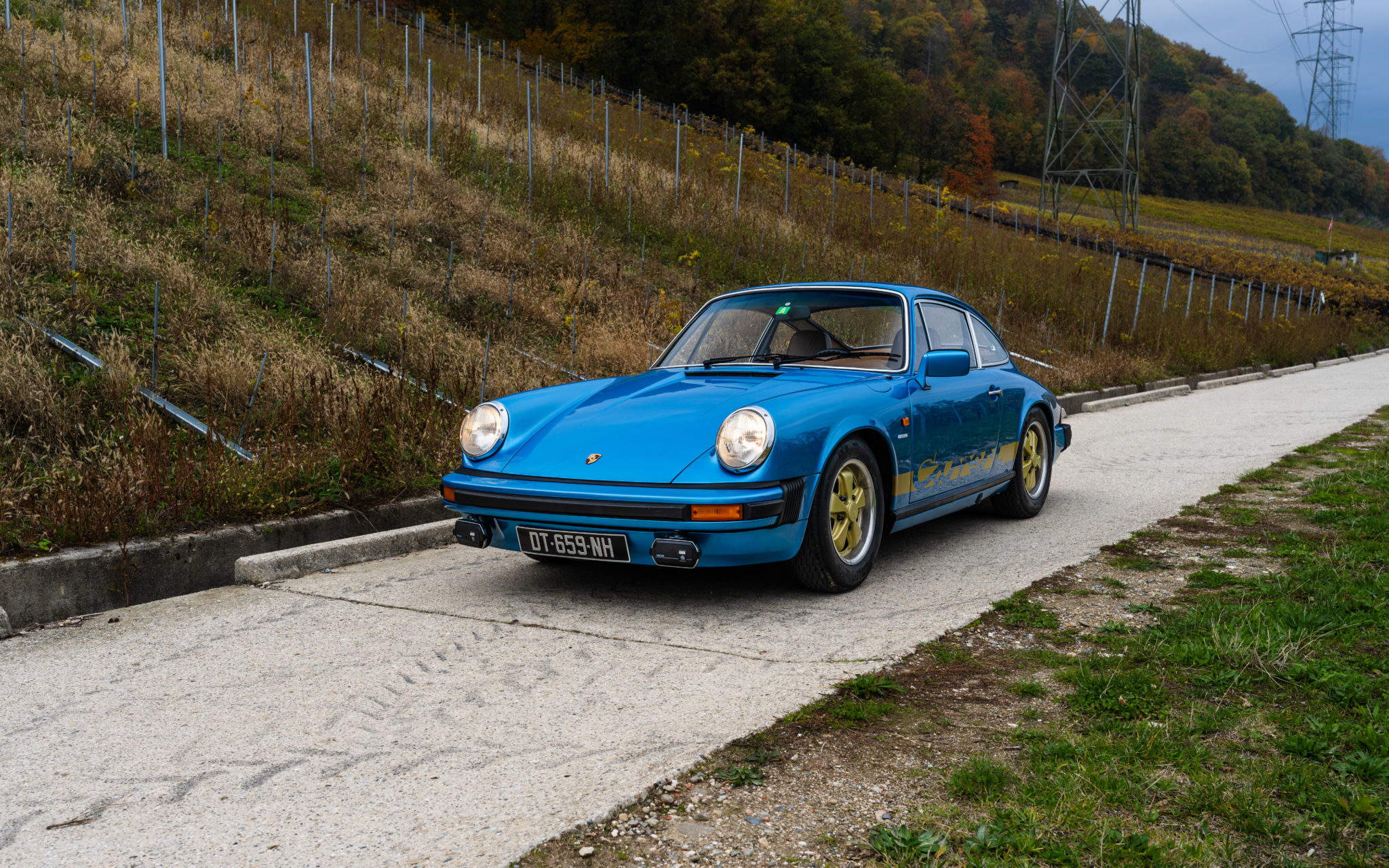
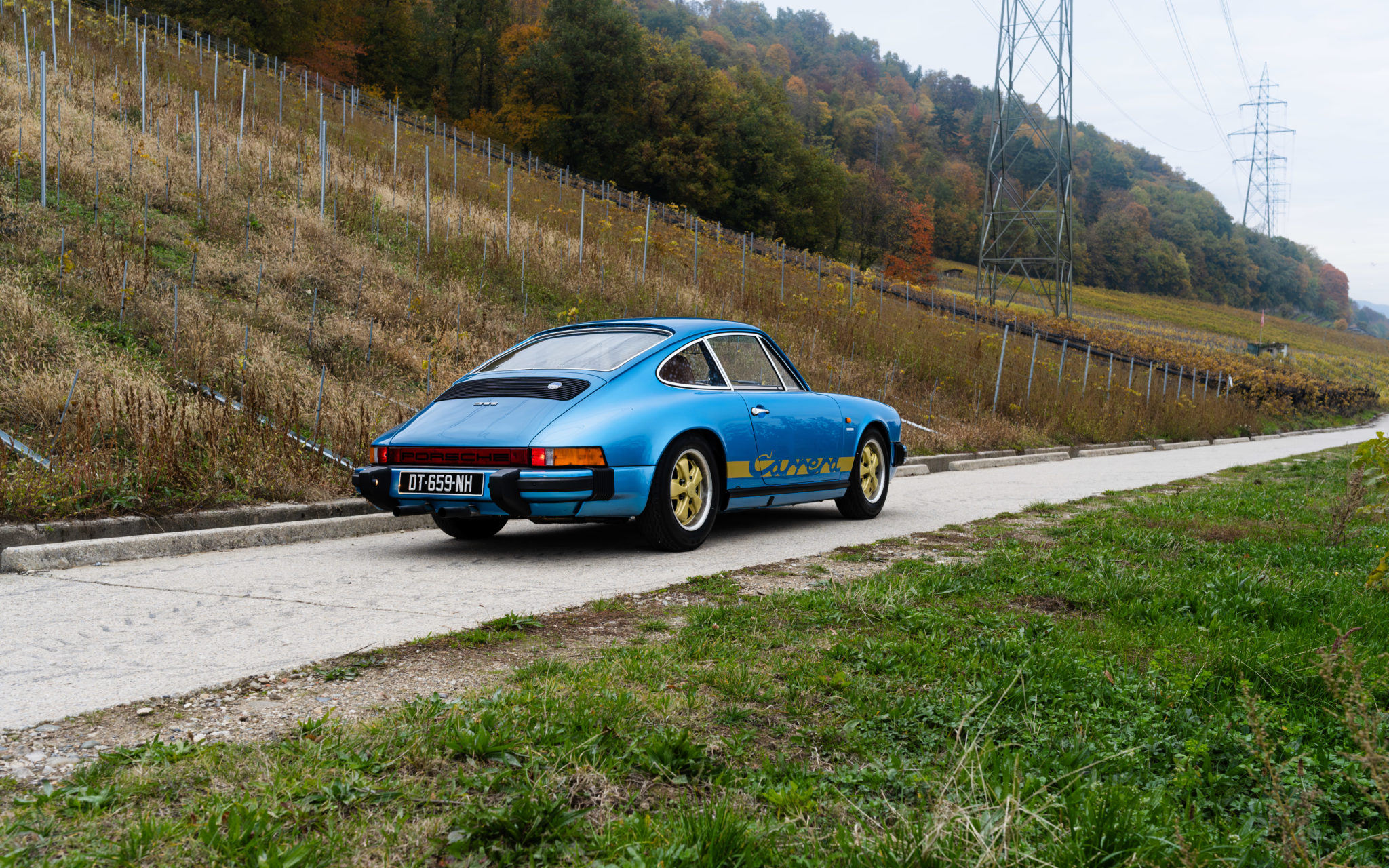
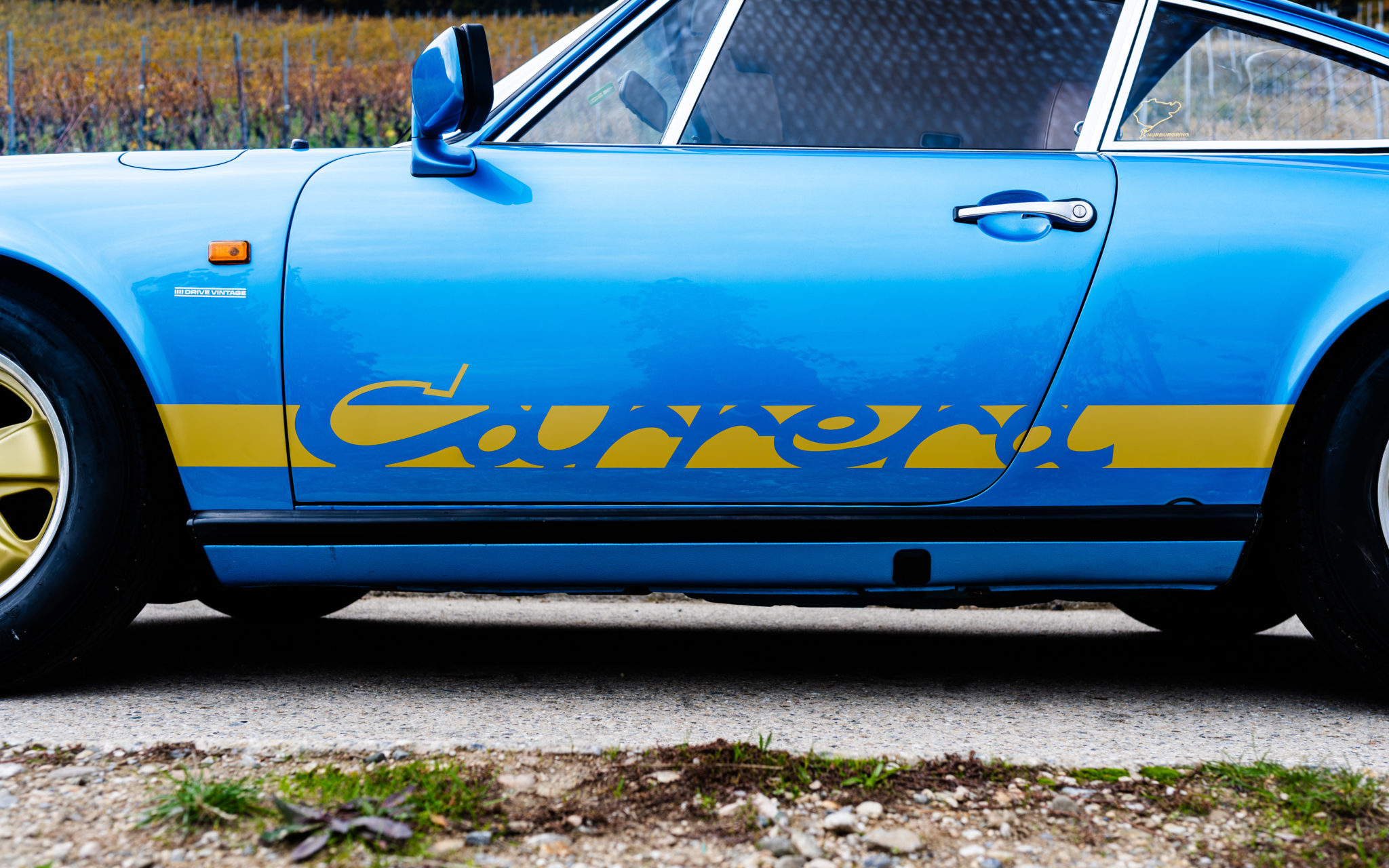
The 1976 Porsche 911 2.7 in these photographs is Minerva Blue Metallic with gold Carrera script down the doors. The wheels are gold, too. On a grey afternoon the rest of the landscape looks as though it’s been put in black and white.
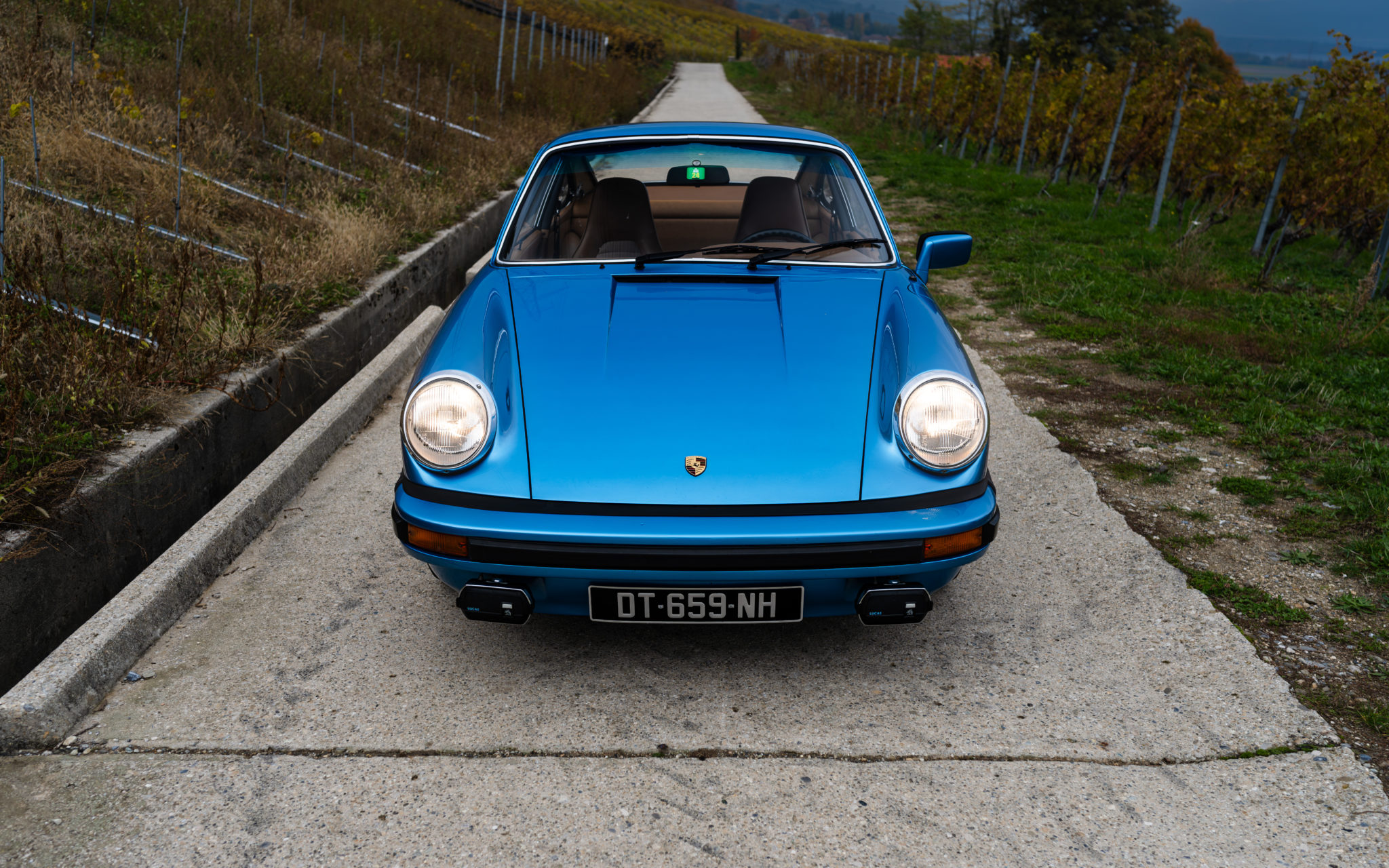
Then there’s the shape of the 911 2.7. Two round headlamps, a low roof and the engine all the way out back. Porsche spent the seventies making the 911 more civilised and somehow kept all the bits that made it gloriously peculiar.
1976 Porsche 911 2.7 in Minerva Blue Metallic
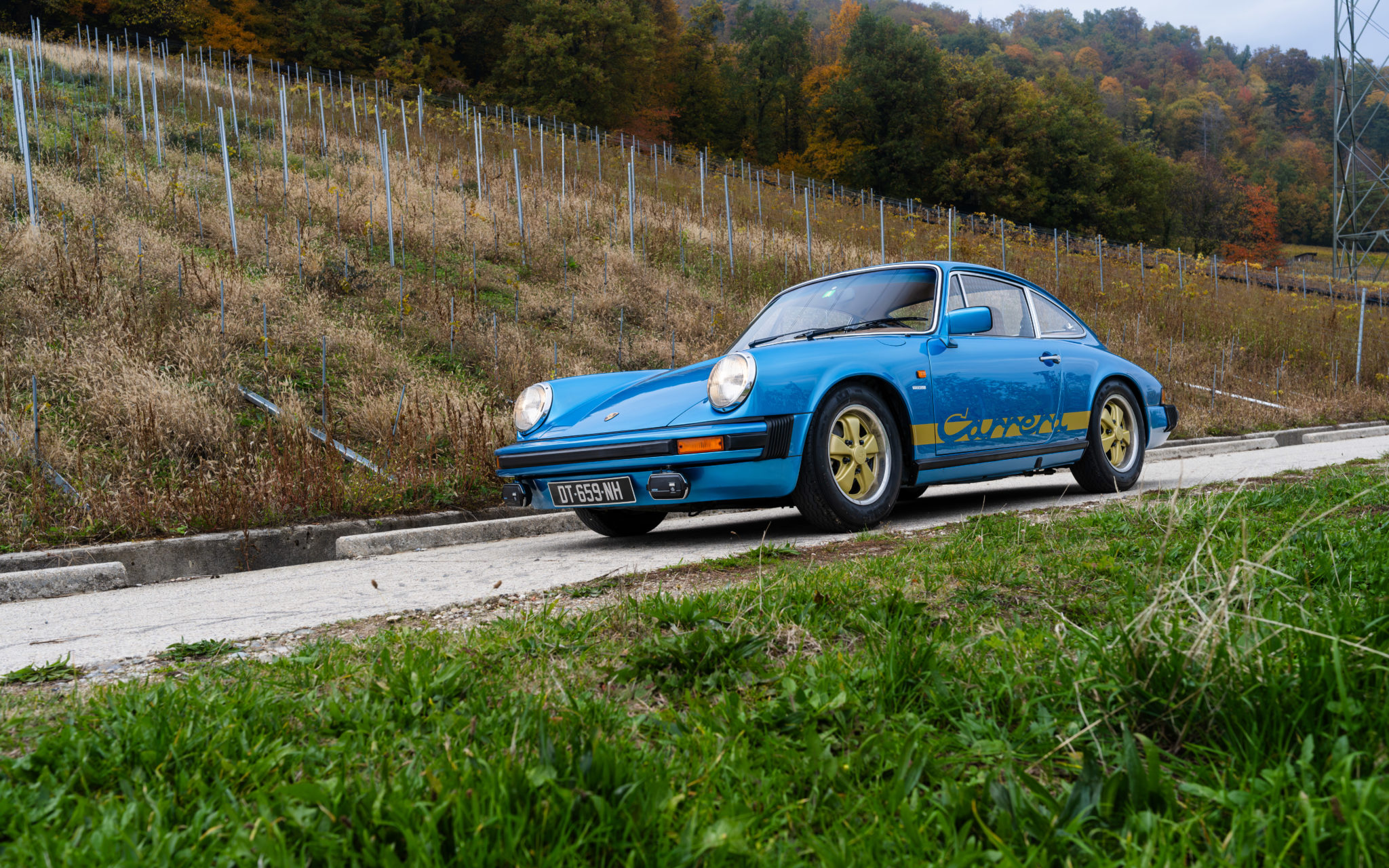
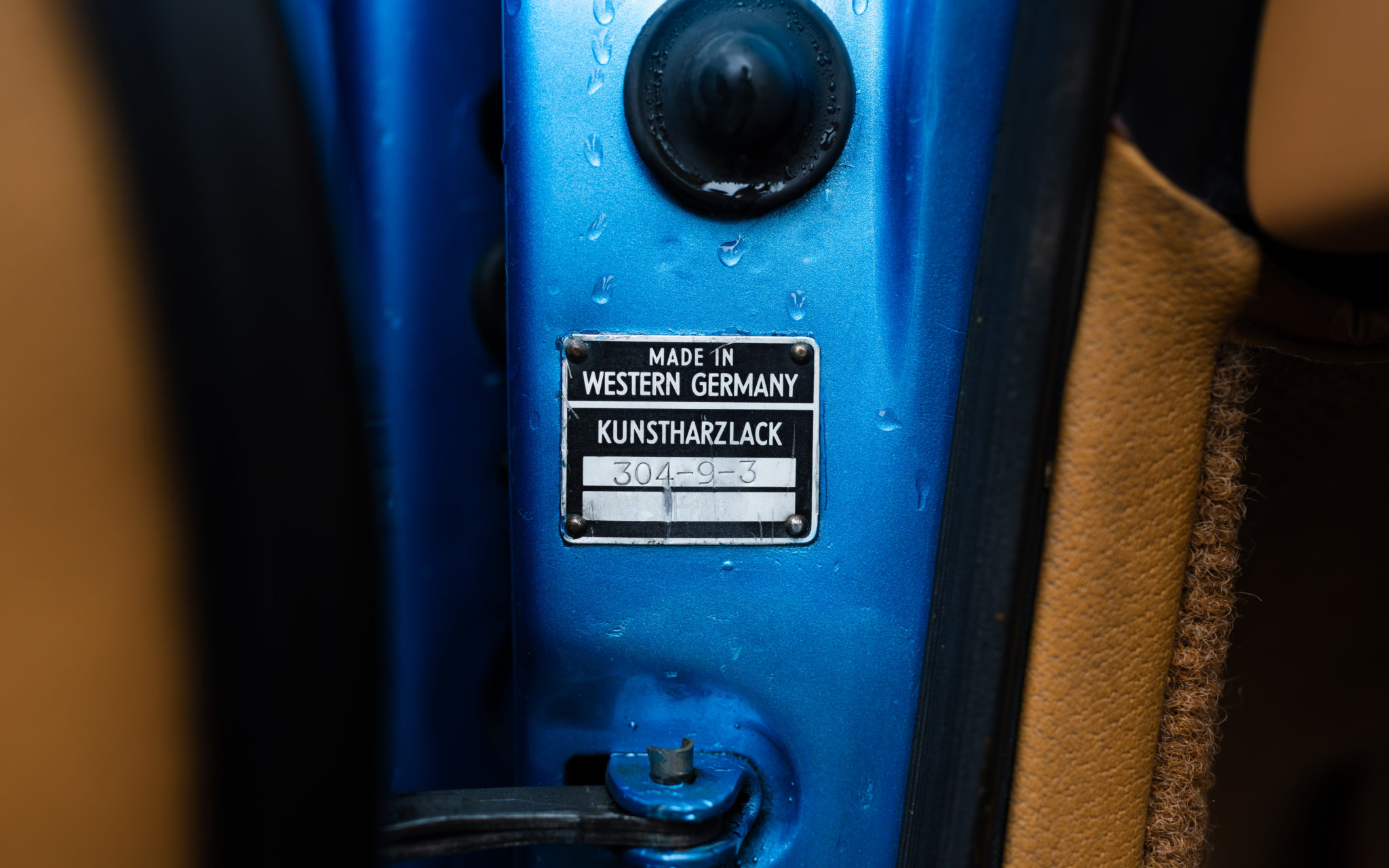
In profile, the 1976 Porsche 911 2.7 is unmistakable. The roof drops away in one clean sweep, the front wings rise around the round headlamps, and the gold lettering runs along the doors as though it has somewhere to be. The paint plate reads 304-9-3. Porsche’s period colour chart identifies code 304 as Minerva Blue Metallic. It’s a blue that makes the surrounding countryside look as though somebody has turned down the saturation.
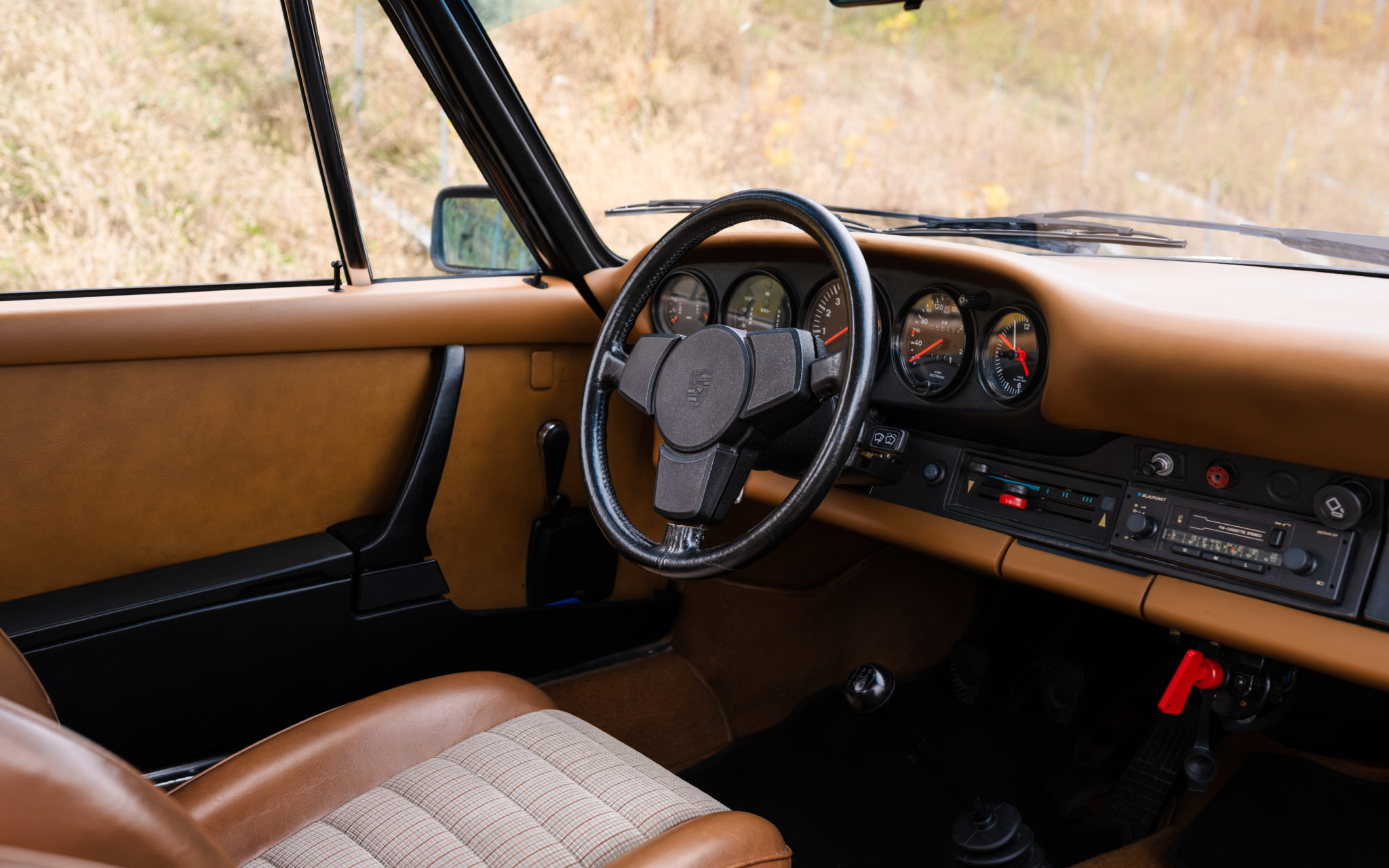
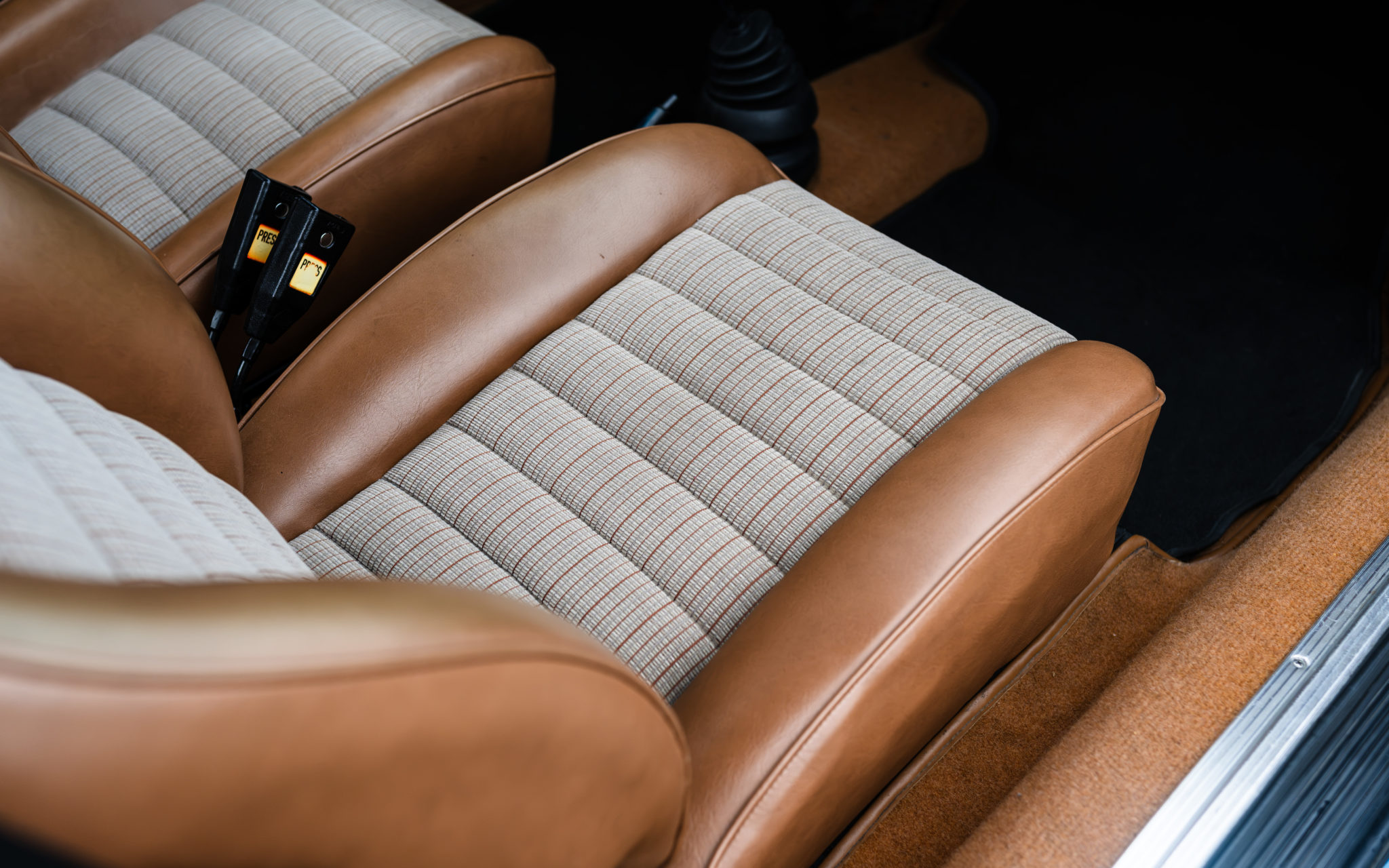
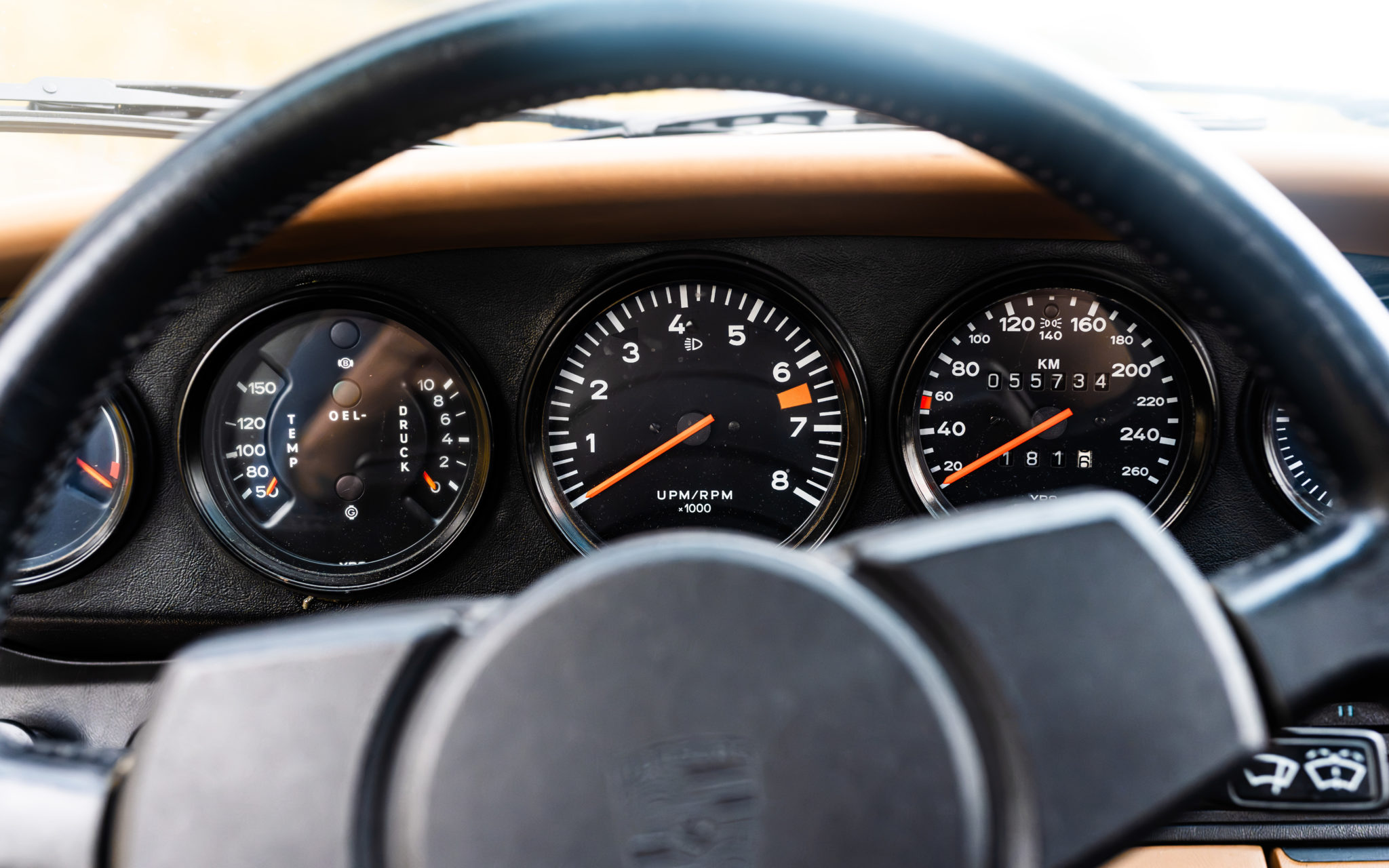
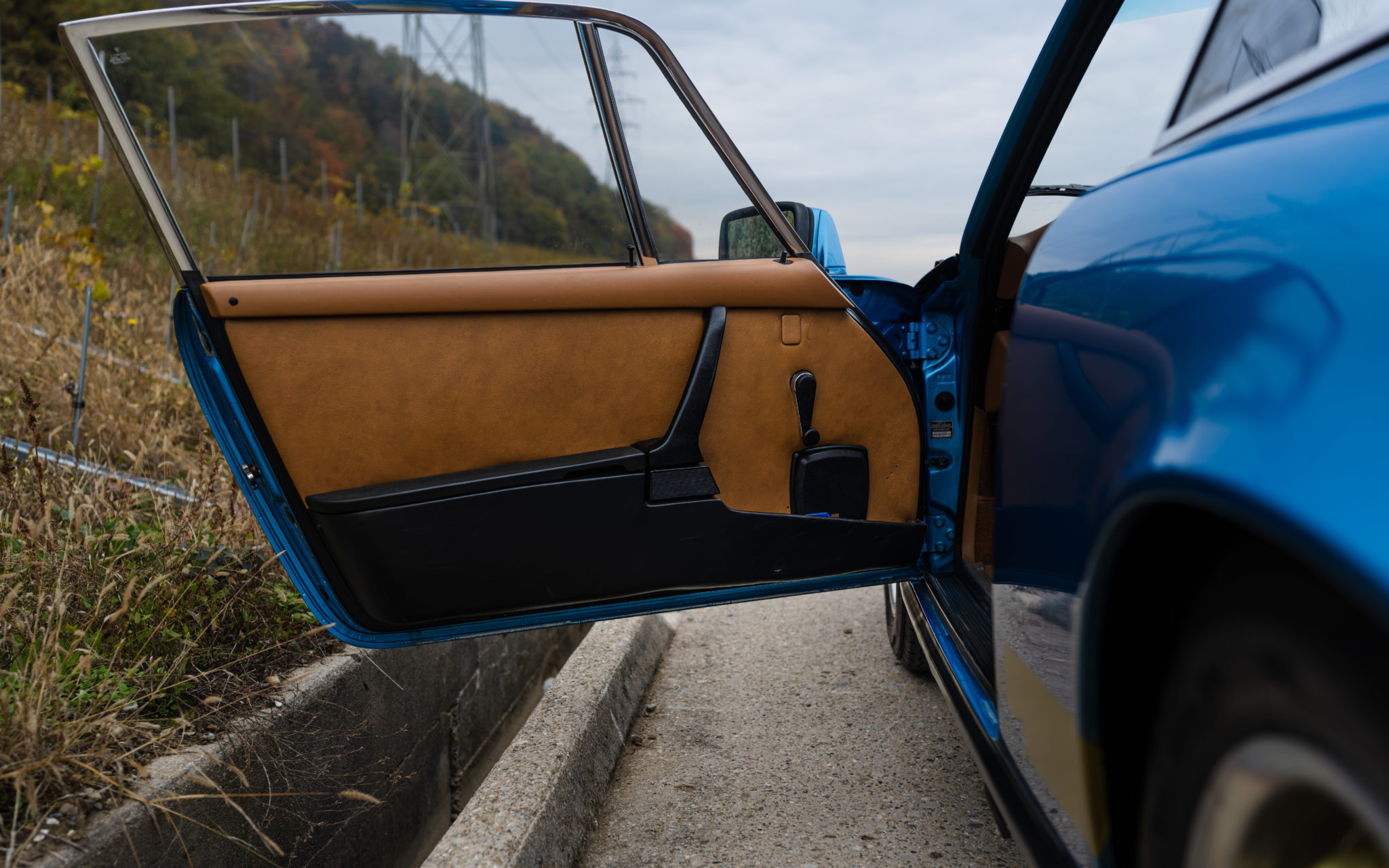
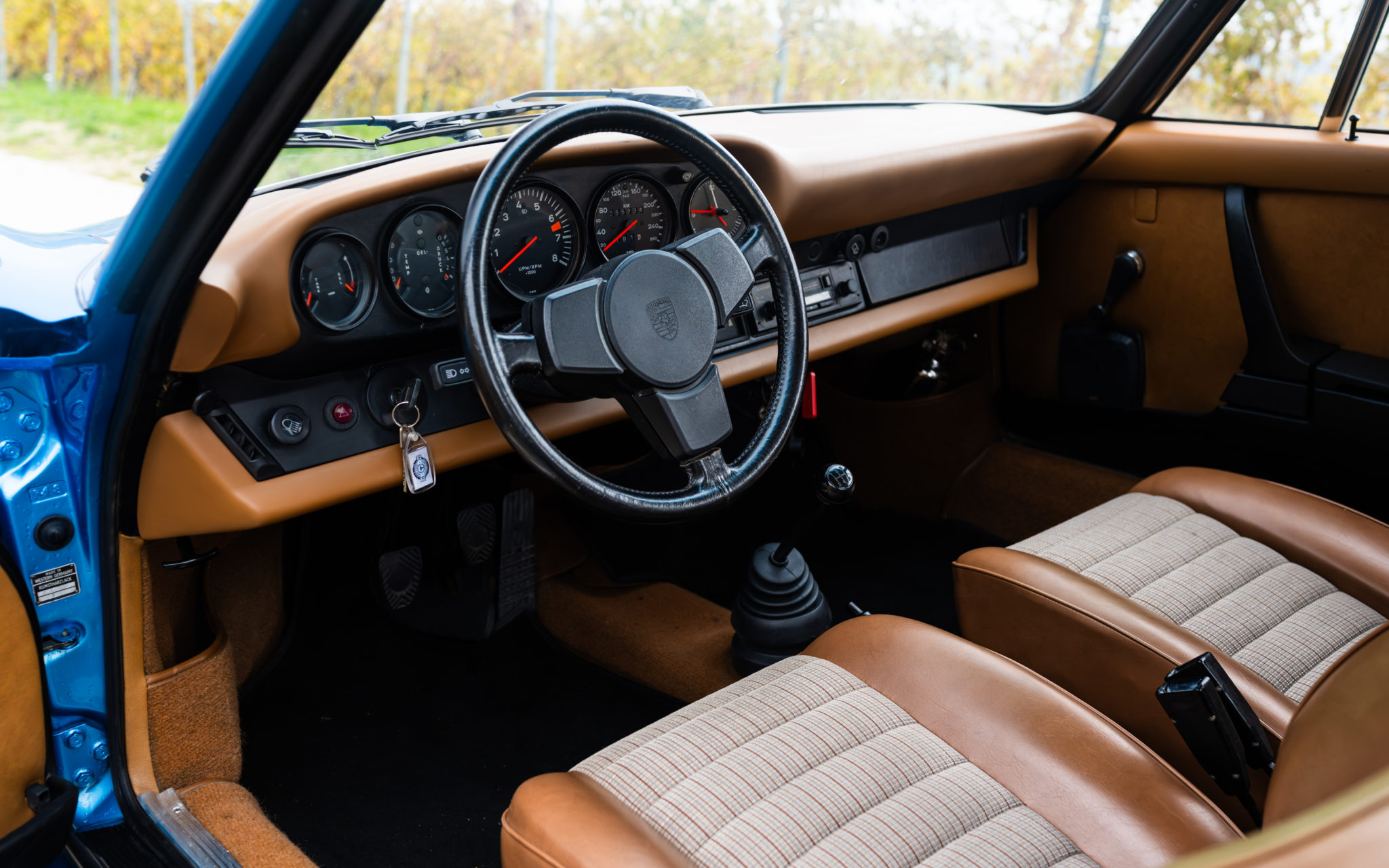
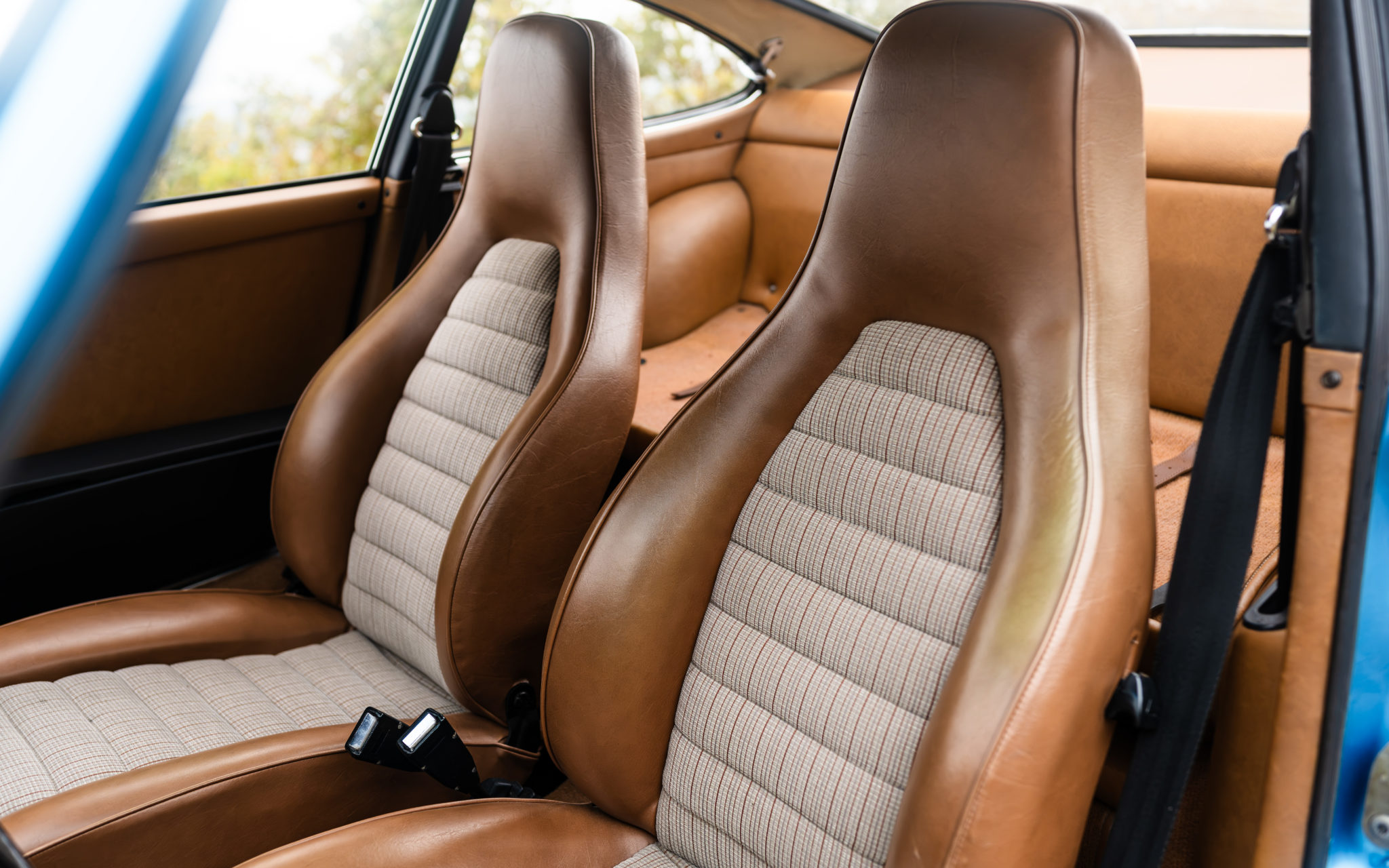
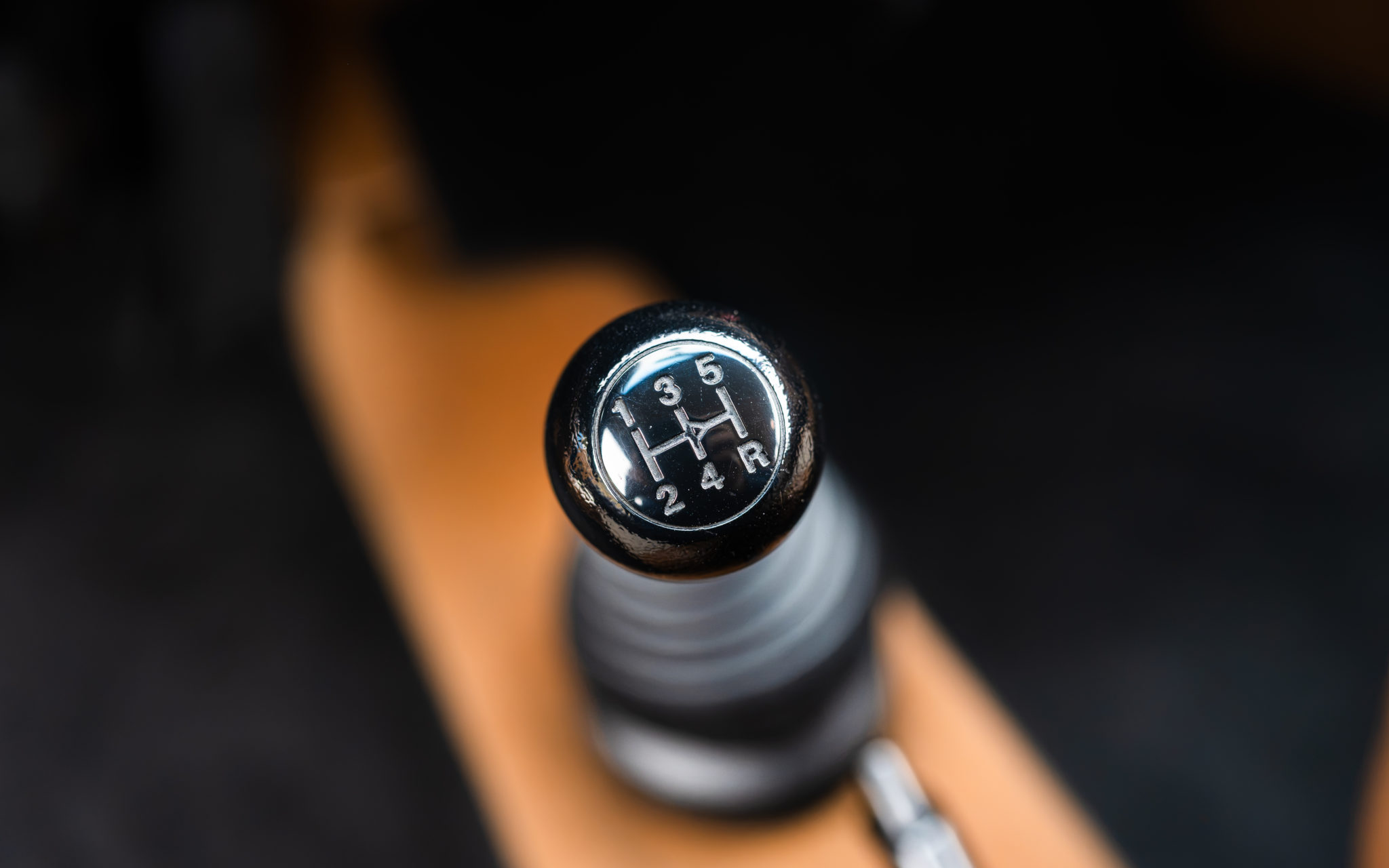
Open the door of this 1976 Porsche 911 2.7 and the palette changes completely. Tan trim wraps around the cabin, pale striped cloth fills the seat centres, and five round instruments sit behind the wheel. The tachometer takes centre stage. Even the dashboard knew what the driver would be paying attention to. This left-hand-drive 911 2.7 Coupé has a five-speed shift pattern. The factory wheelbase was 2,272 mm.
The 1976 Porsche 911 2.7 flat-six
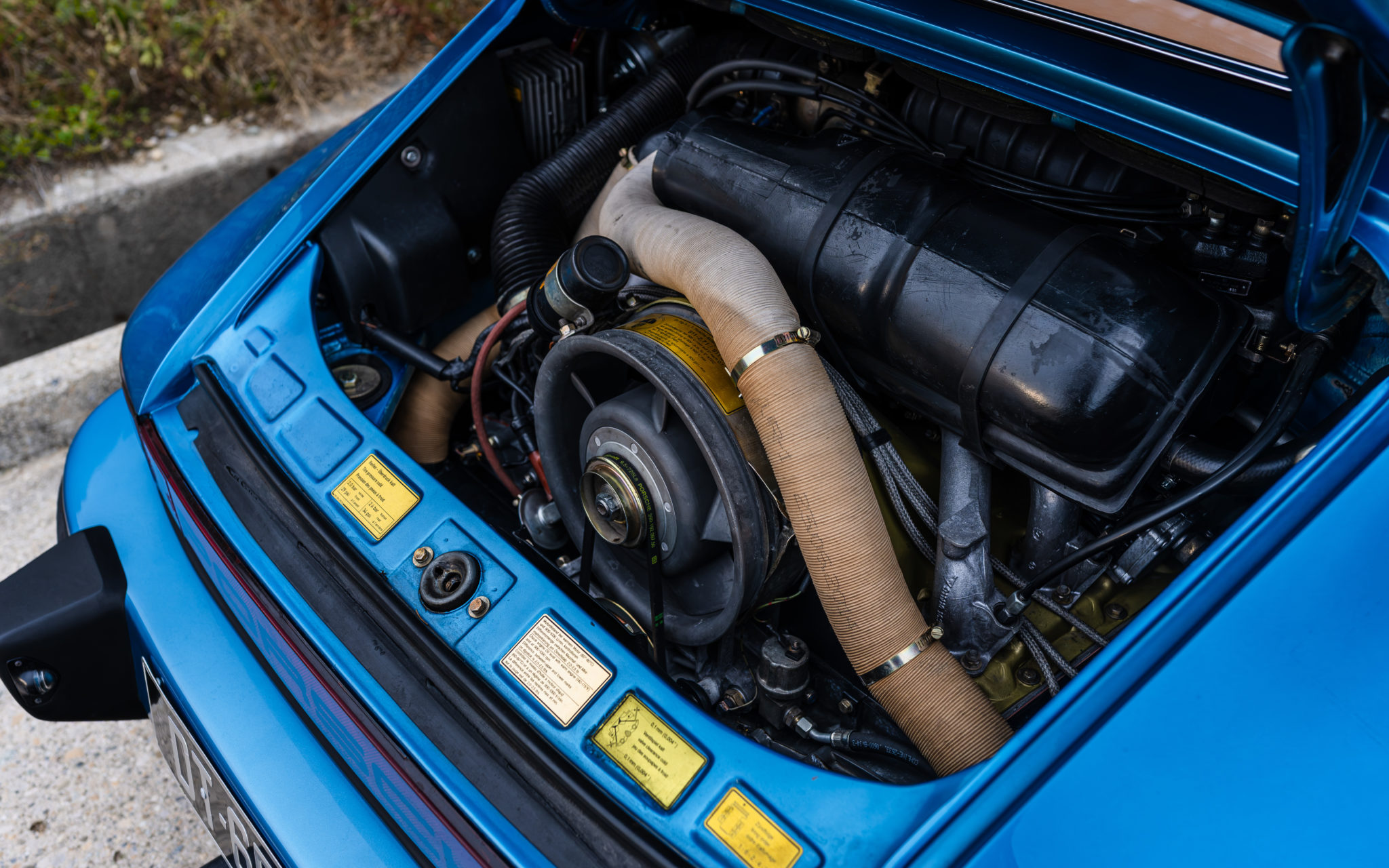
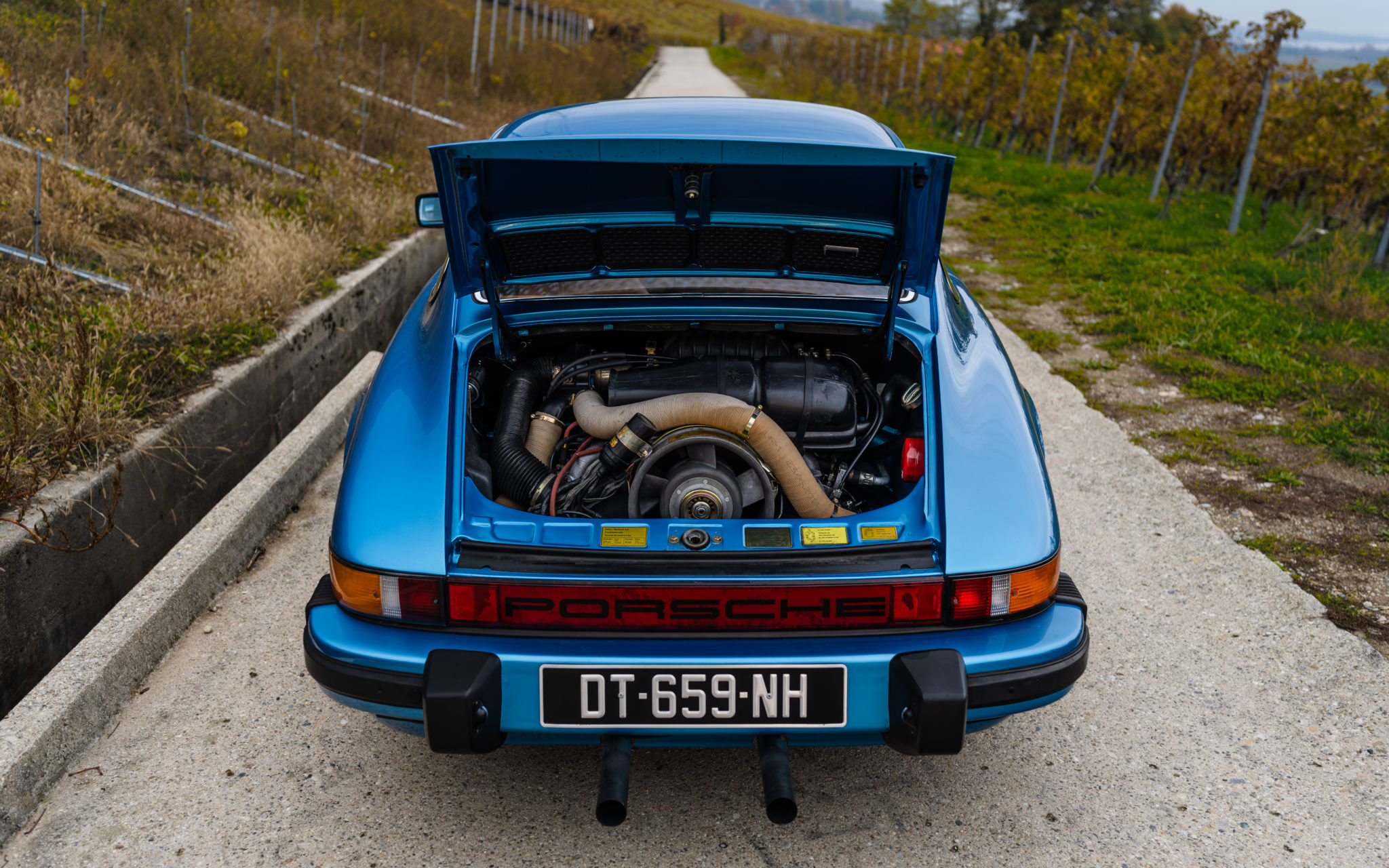
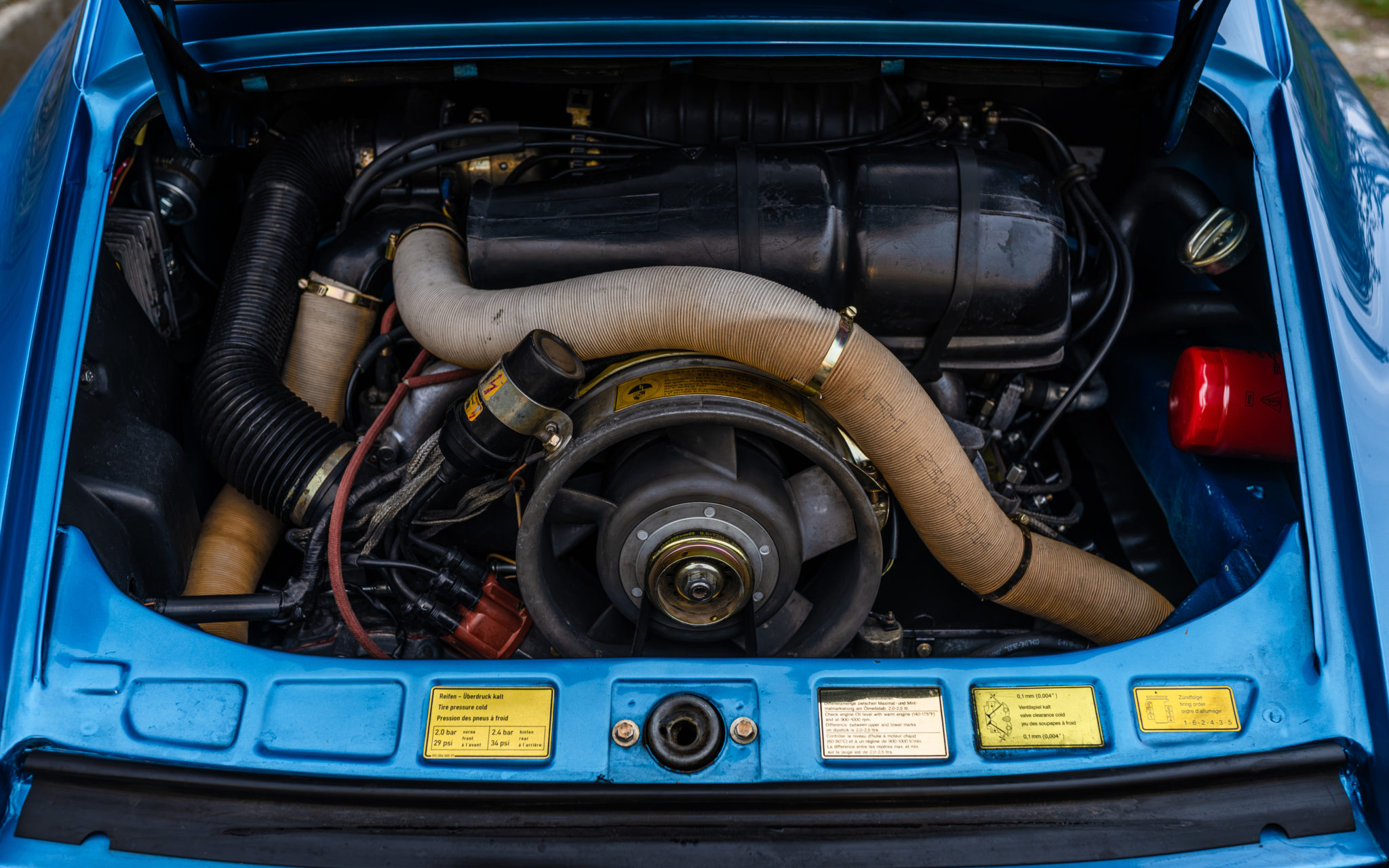
In standard specification, the 1976 Porsche 911 2.7 used a rear-mounted, naturally aspirated flat-six with Bosch K-Jetronic fuel injection. Porsche rated it at 165 PS, with peak torque of 235 Nm at 4,000 rpm. The 911 2.7 engine bay is worth a look in its own right. Lift the rear lid and there’s a fan, a tangle of ducting and enough exposed machinery to remind you exactly what the ignition key is for.
Porsche had already used the 2.7-litre displacement in the 1973 Porsche 911 Carrera RS 2.7, a first-generation homologation car. This later coupé brought 2.7 litres to the G-Series road range.
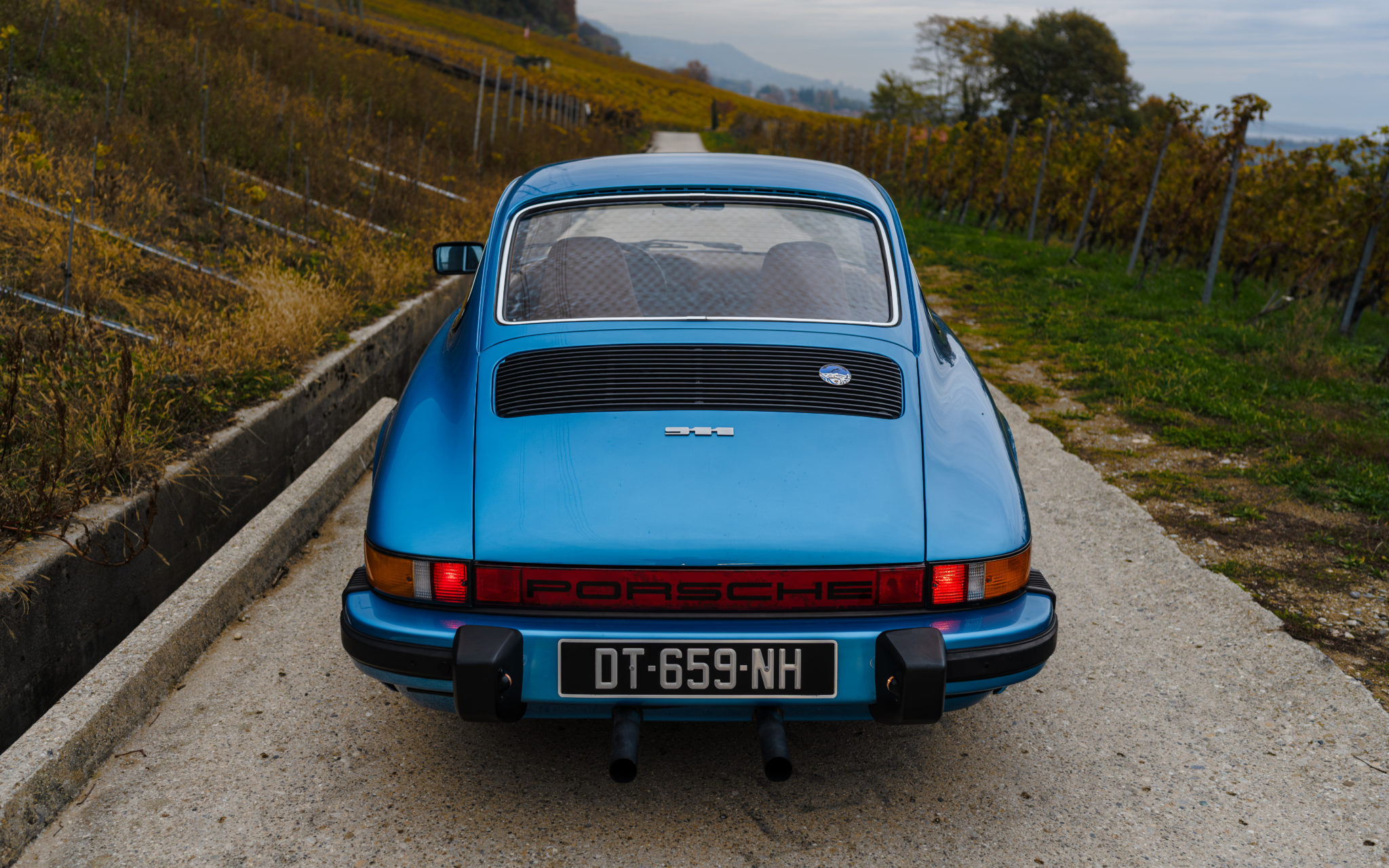
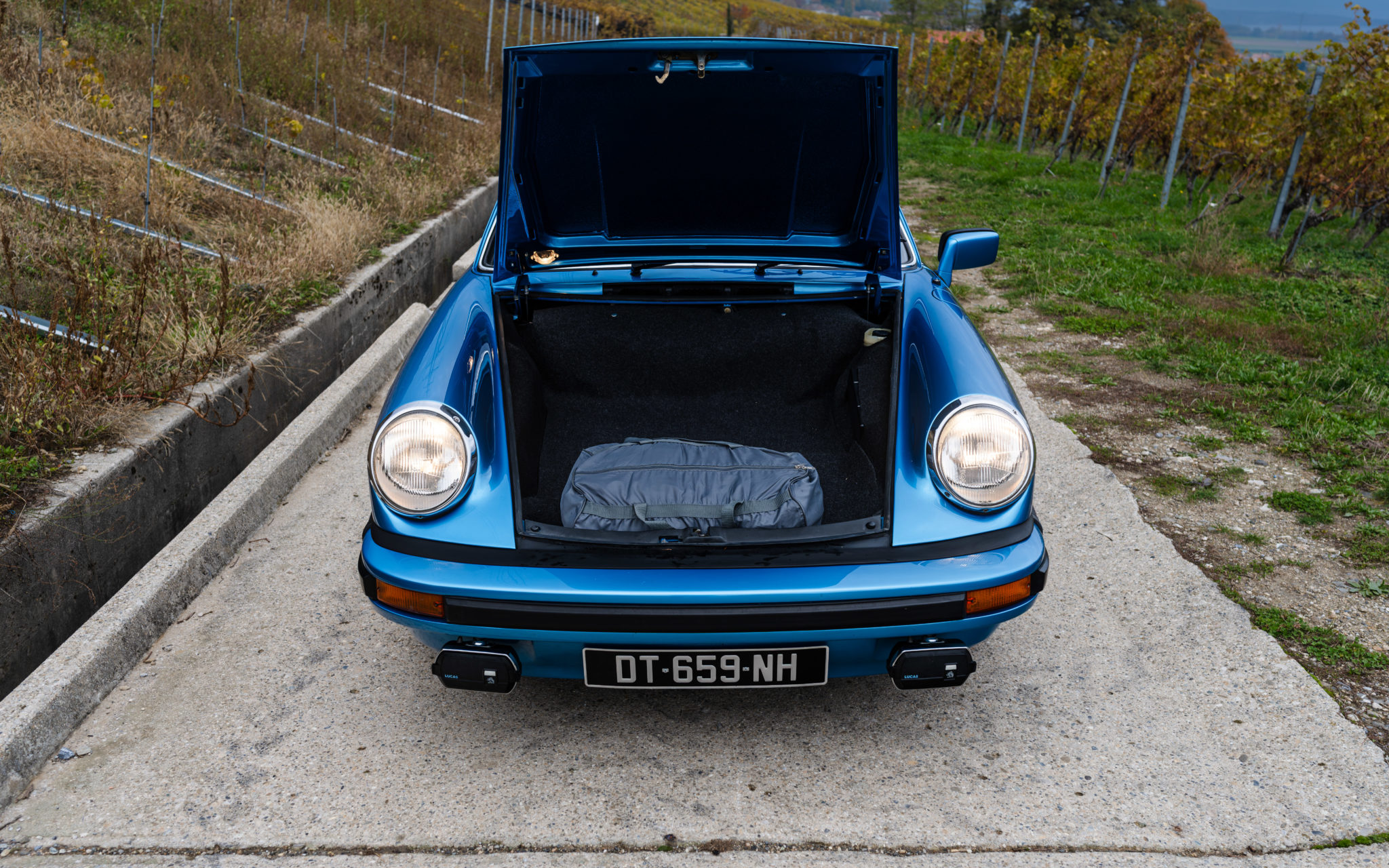
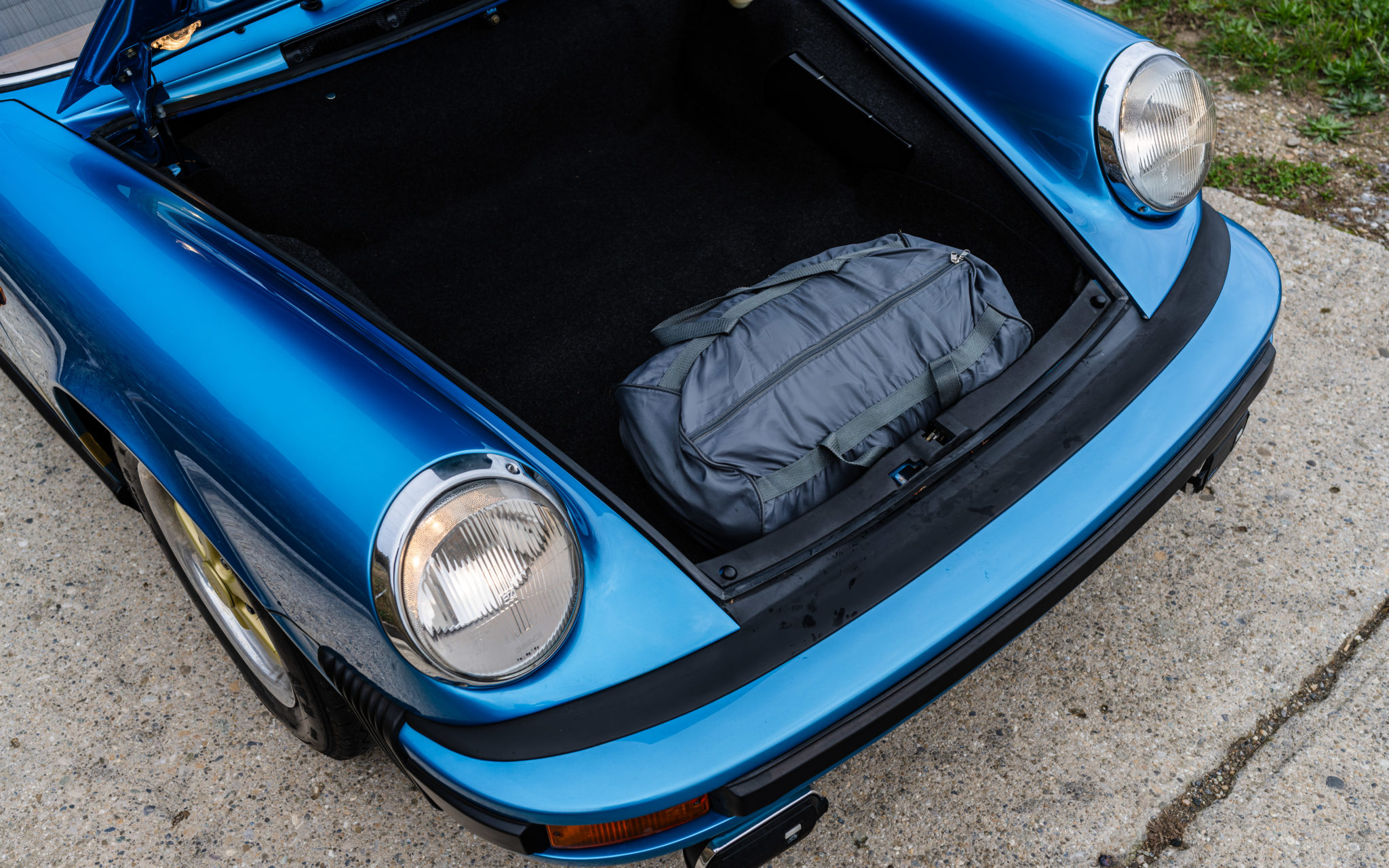
The 1976 Porsche 911 2.7 wears the impact bumpers and accordion-like bellows introduced with the G-Series. Look past them and the architecture is still wonderfully peculiar. The luggage compartment sits under the bonnet, the engine sits behind the rear axle, and the driver is somewhere in between, looking out over two wings that make it easy to place the nose. At around 1,120 kg in factory trim, the 911 2.7 has the dimensions and weight of a car you can place on a narrow road without sucking in your breath. A decade later, the 1986 Porsche 911 Turbo 930 still had its flat-six out back, with a turbocharger added to the proceedings.
Carrera graphics on the 911 2.7
The gold Carrera lettering is part of this coupé’s presentation. Chassis 9116301584 falls within the 1976 911 2.7 Coupé range in the Porsche Club Great Britain production register. The engine-bay label visible in the photographs also reads 2.7 litres. The mechanical figures below are Porsche’s period specifications for the 911 2.7. The number and specification of the engine currently fitted can be checked against the car’s documentation.
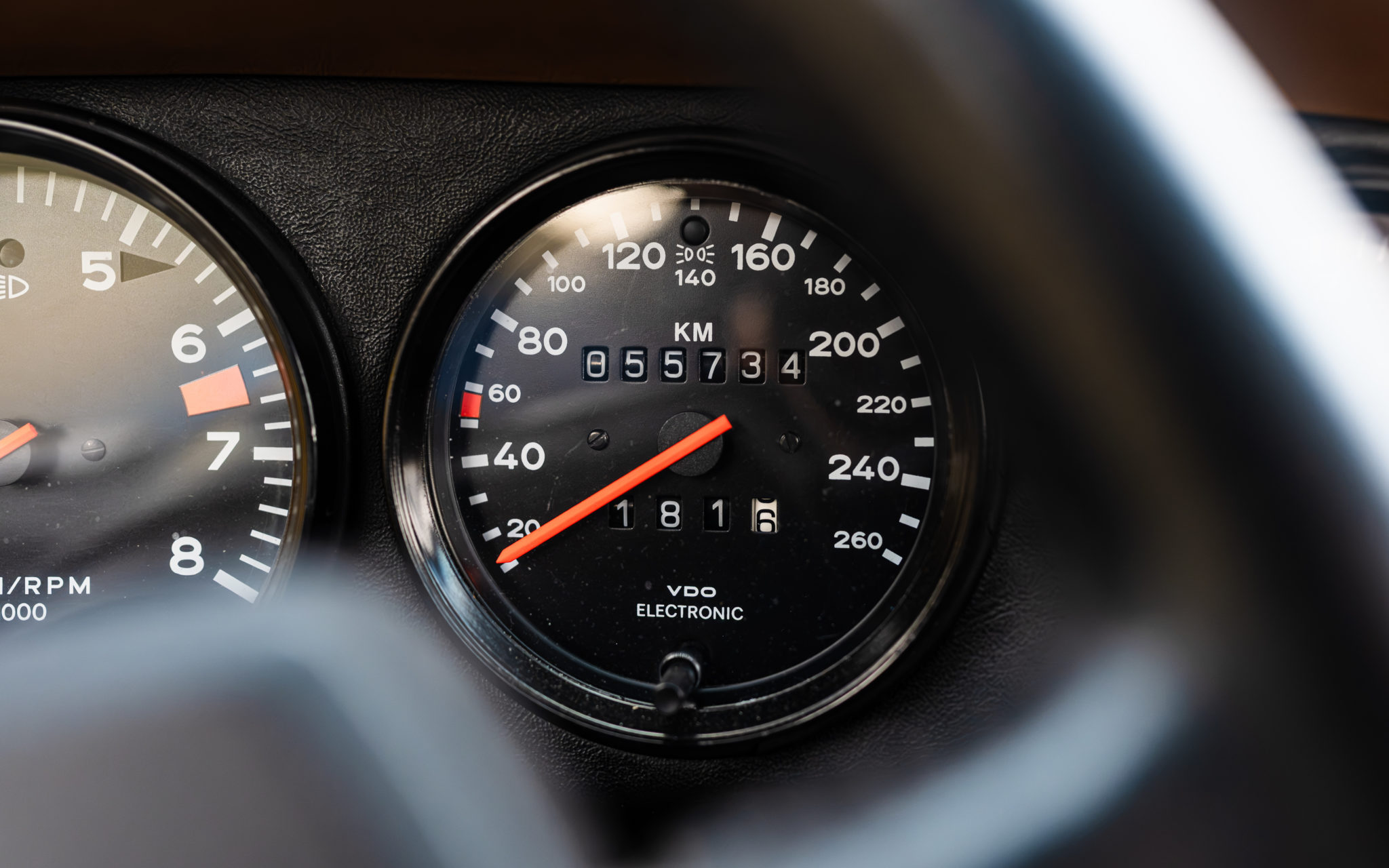
The odometer of this 1976 Porsche 911 2.7 displays 55,734 km in the photographs. The 911 2.7 gallery includes both sides of the body and close-ups of the instruments, paint plate, gear lever, engine bay and front luggage compartment. It’s worth lingering over those photographs. A set of gold wheel centres and striped seat cushions can tell you more about the seventies than an entire evening of television.
To see this 911 2.7 Coupé or discuss chassis 9116301584, contact Drive Vintage.
References for the 911 2.7 and its finish are available from Porsche Classic, the 1976 Porsche paint chart, the Porsche Club GB chassis register and the period Porsche technical specifications.

SPECIFICATIONS
NUMBER PRODUCED
1,858 coupés for the 1976 model year
PRODUCTION YEARS
1974–1977
CHASSIS TYPE
Steel monocoque, two-door G-Series coupé
LENGTH
4,291 mm (168.9 in)
WIDTH
1,610 mm (63.4 in)
HEIGHT
1,320 mm (52.0 in)
WEIGHT
Approx. 1,120 kg (2,469 lb), DIN kerb weight
ENGINE
2,687 cc air-cooled flat-six, Bosch K-Jetronic
POWER
165 PS (121 kW) at 5,800 rpm
TORQUE
235 Nm (173 lb-ft) at 4,000 rpm
0–100 KM/H
7.8 seconds
TOP SPEED
210 km/h (130 mph)
GALLERY