ALFA ROMEO
ALFA ROMEO
155 V6 TI DTM
ZAR16700000076655
ZAR16700000076655
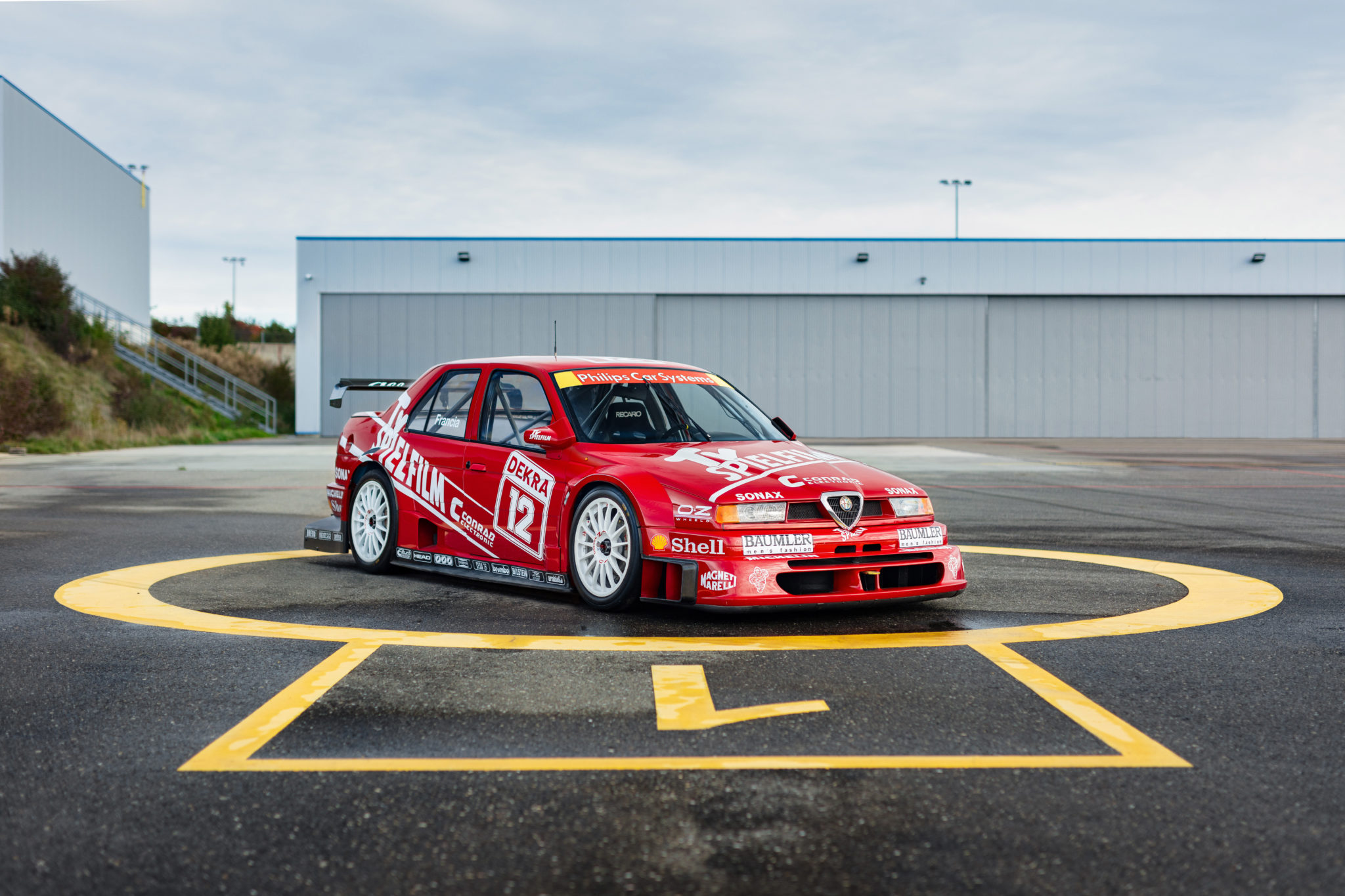
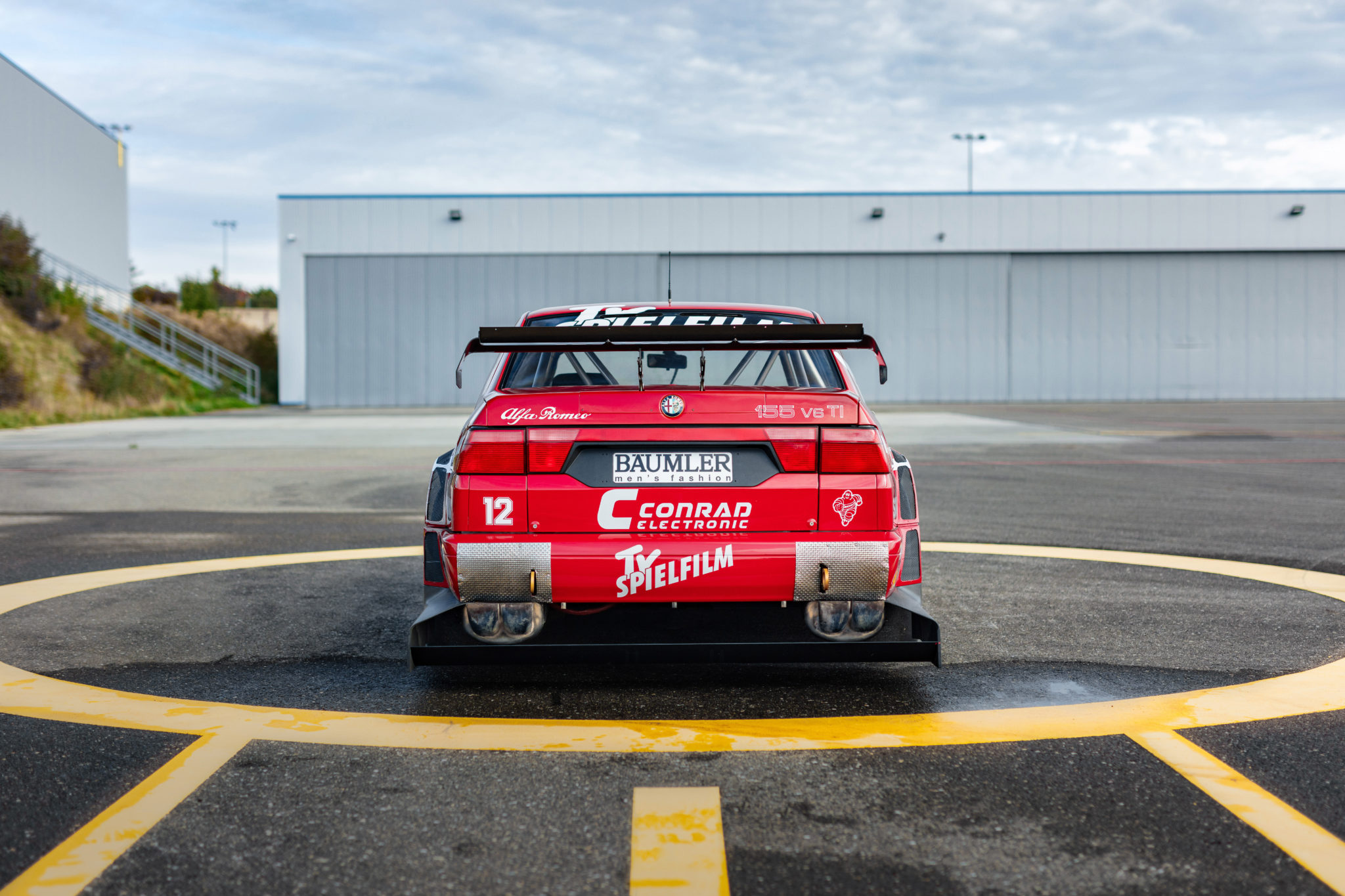
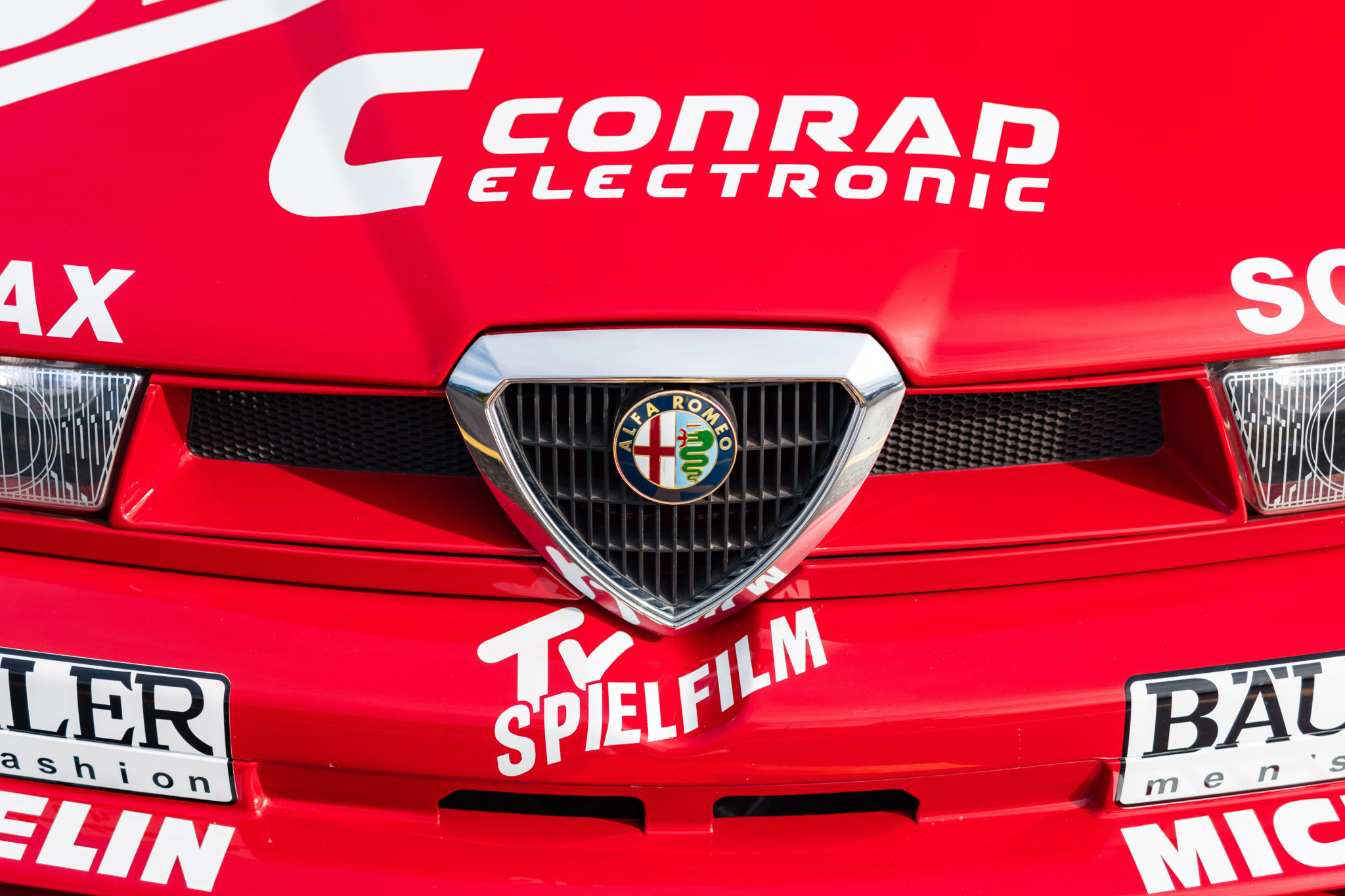
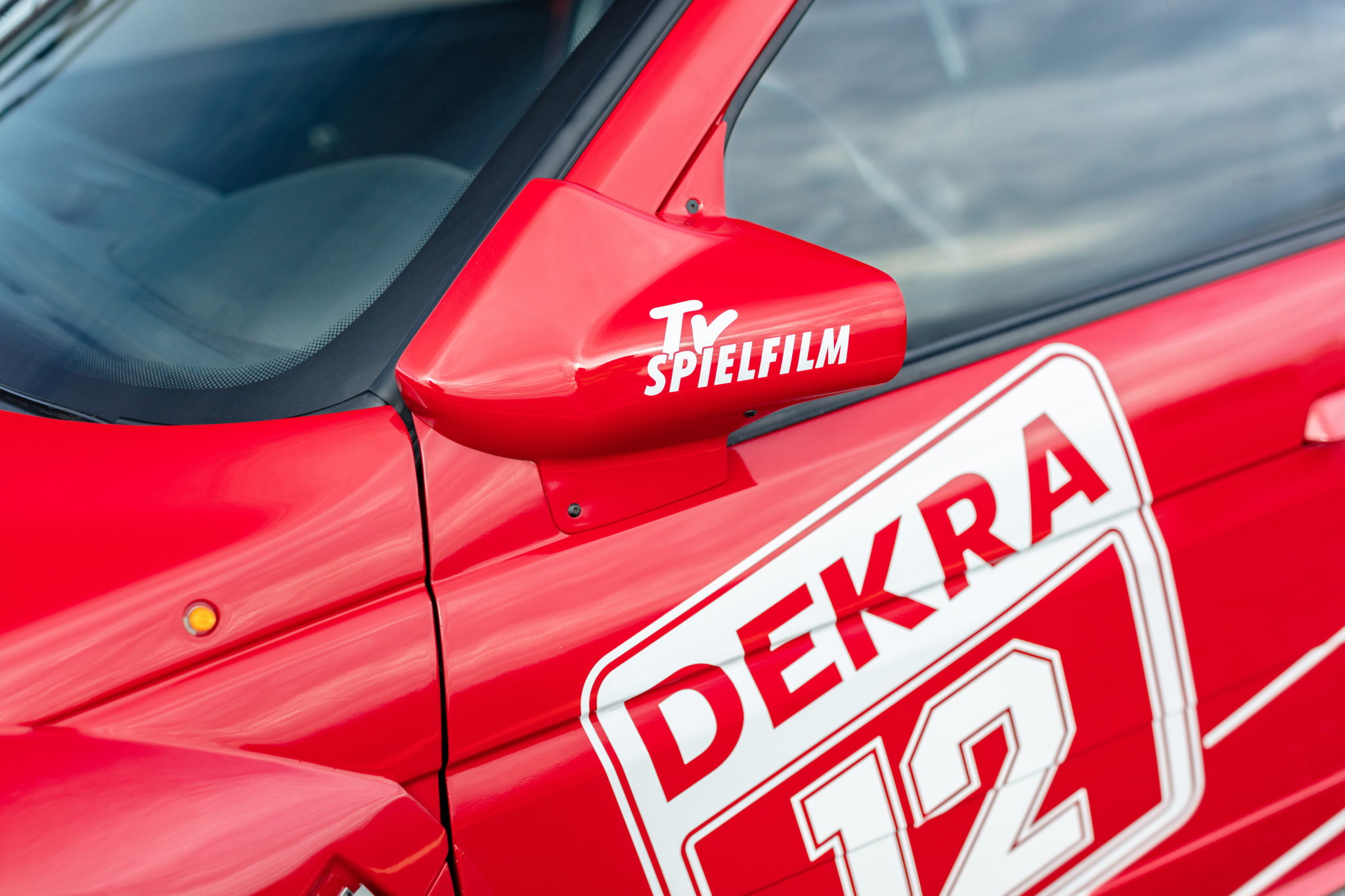
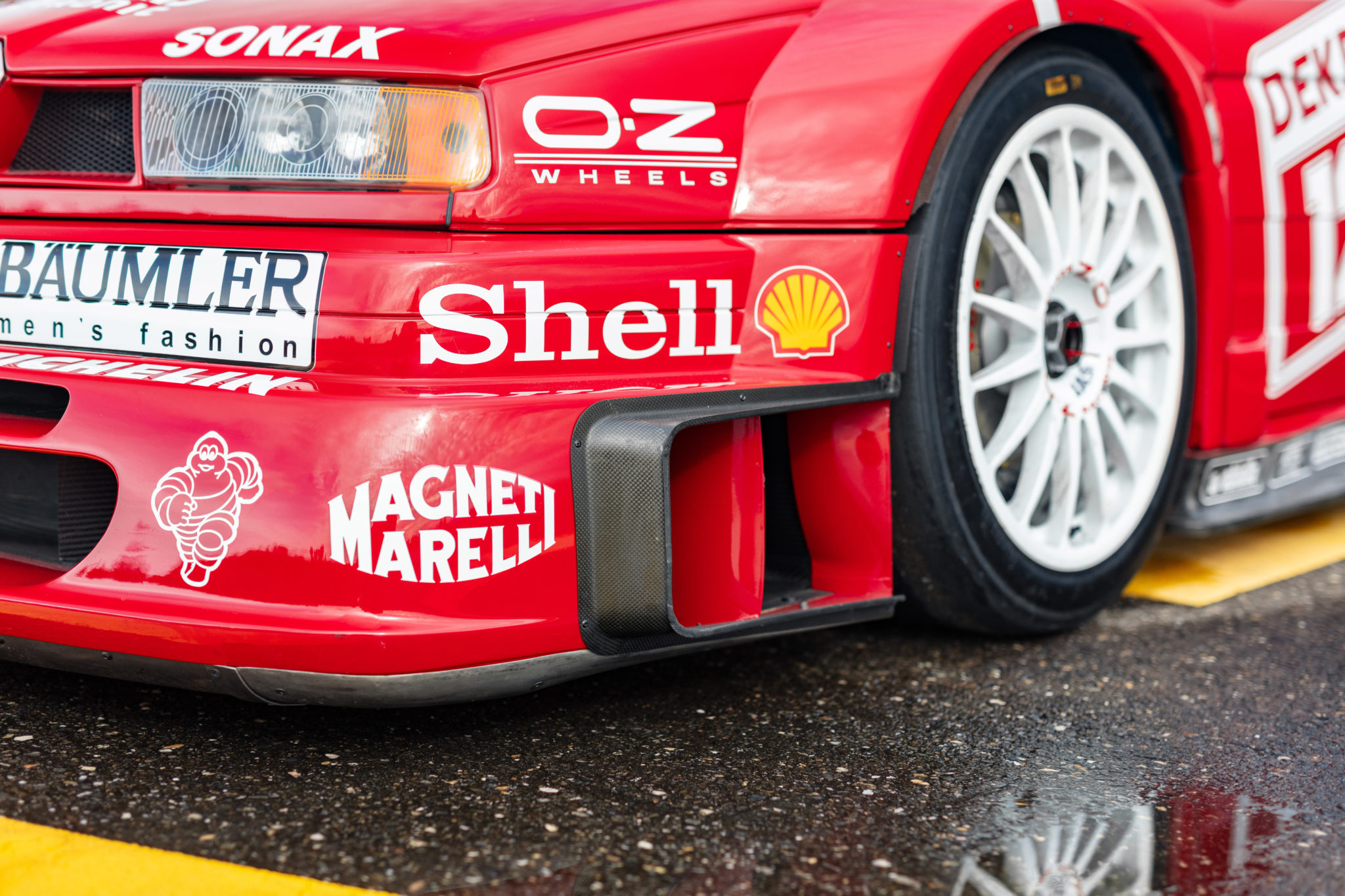
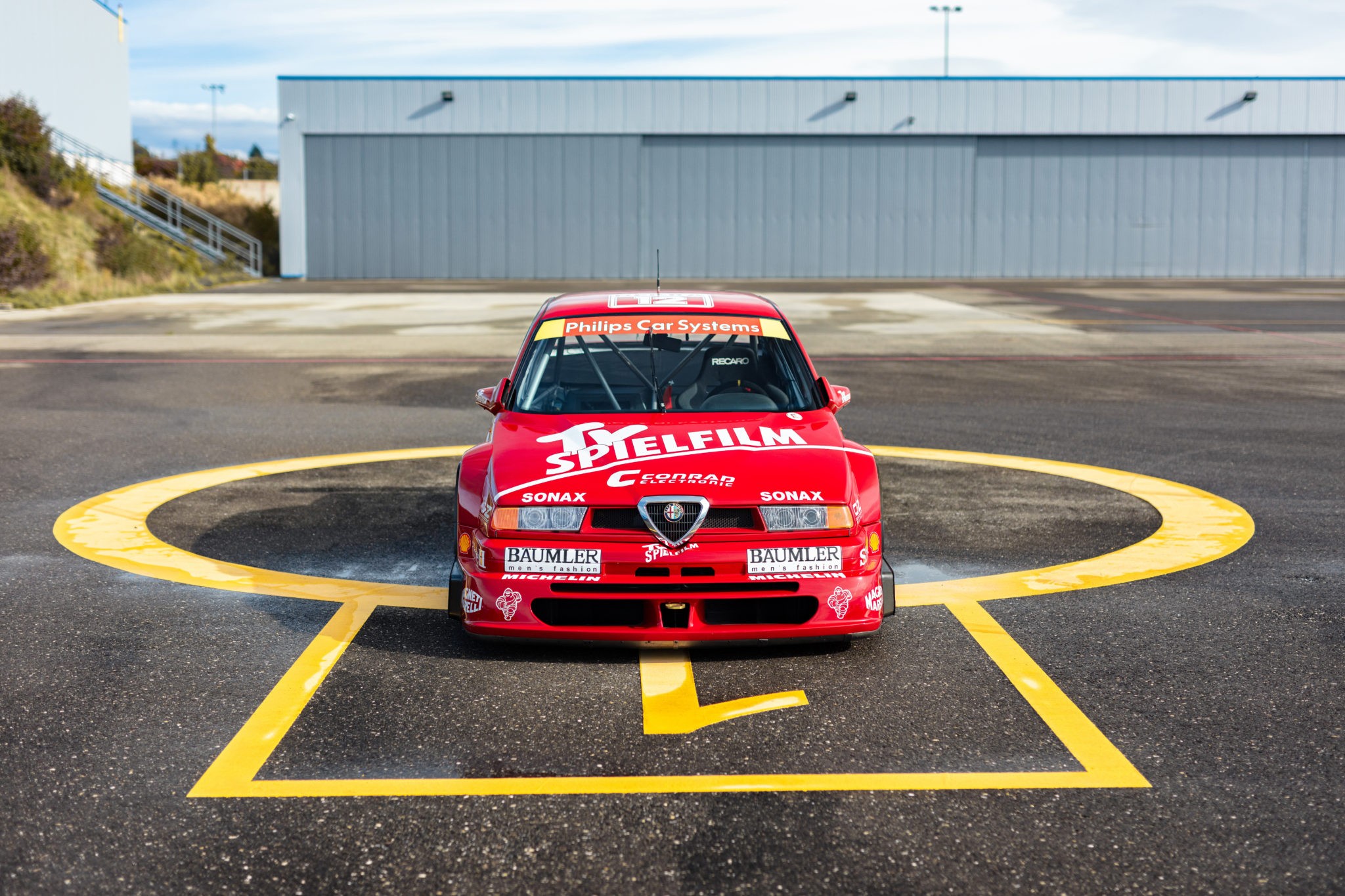
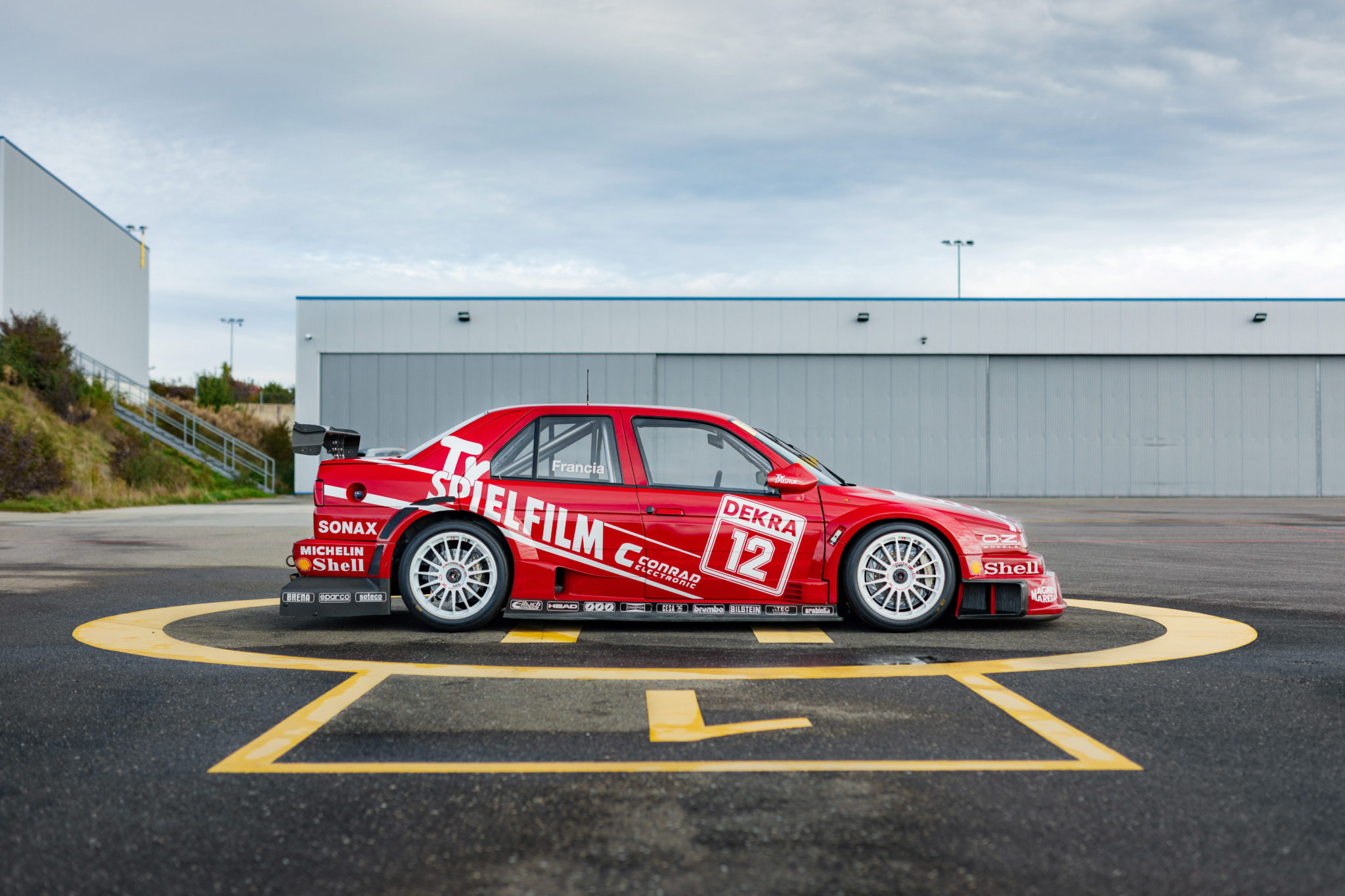
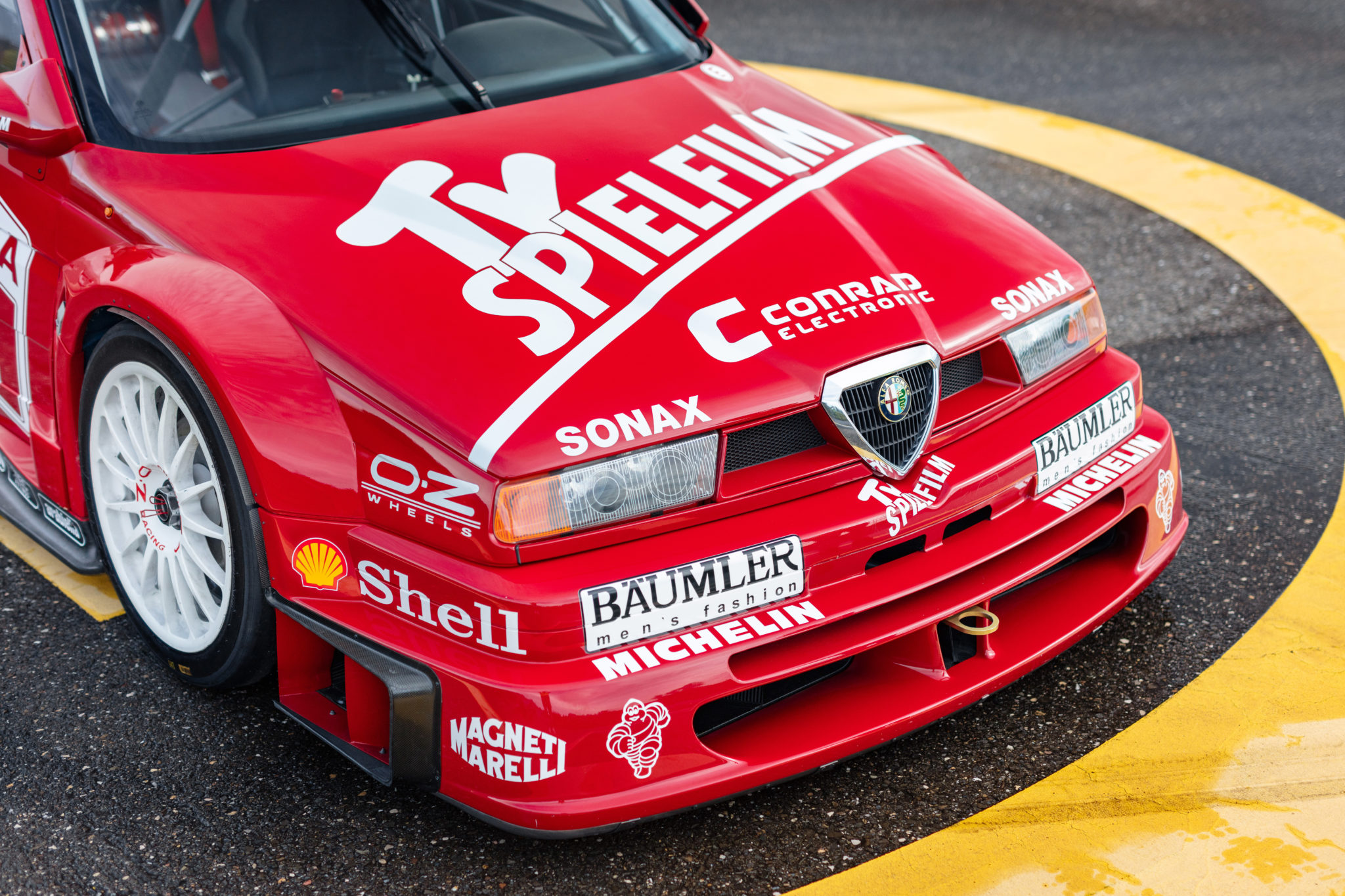
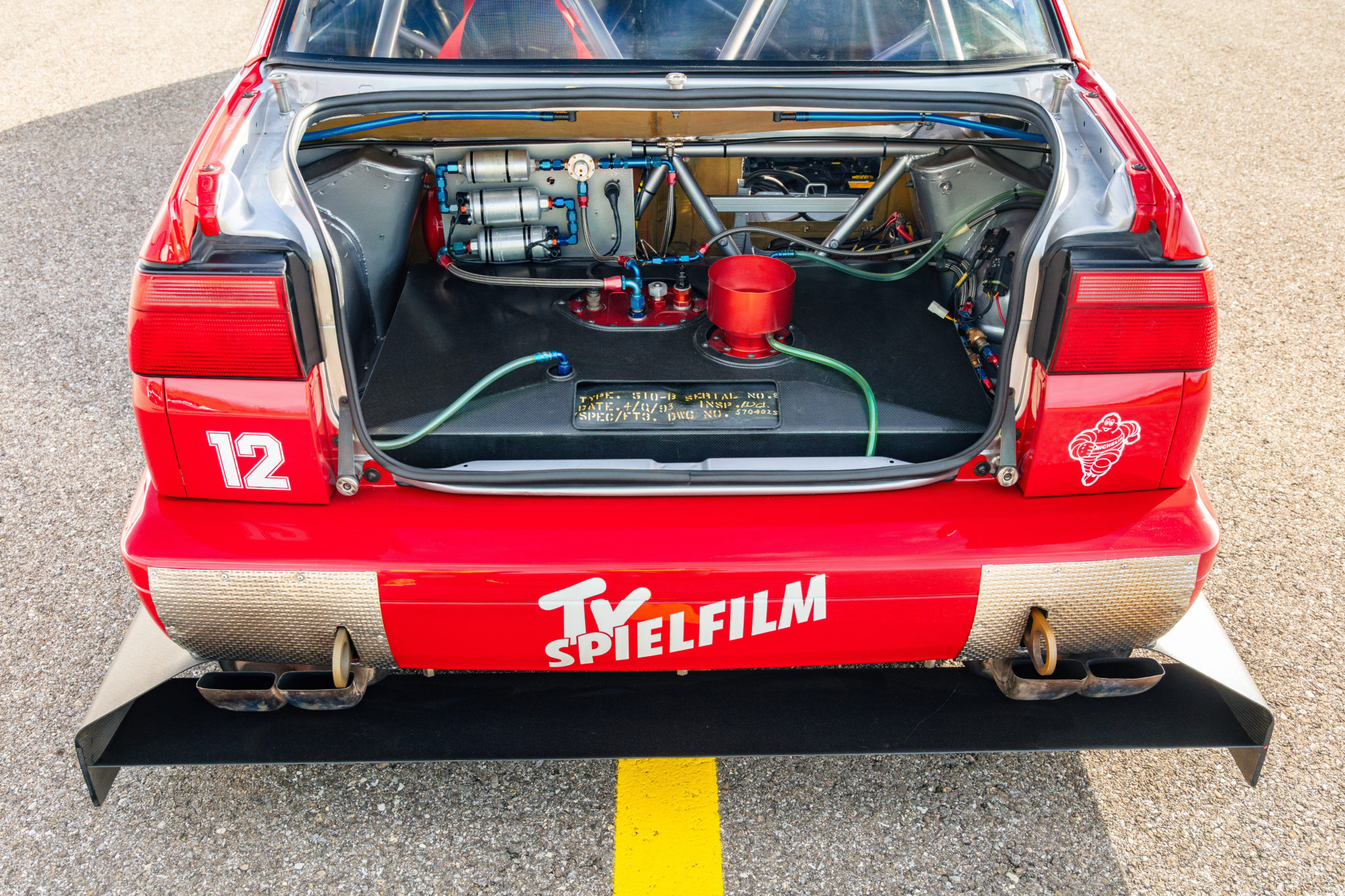
The 155 V6 TI DTM still has four doors, which is about the only concession it makes to everyday life. This 1993 Alfa Romeo wears the red TV Spielfilm livery of Giorgio Francia’s No. 12 entry from the 1994 DTM. There are white wheels, a front splitter close to the ground and a rear wing that takes up most of the view from behind. The door handles are still there. The boot carpet had rather less of a case.
How the 155 V6 TI DTM arrived
In 1993 Alfa Romeo arrived in the Deutsche Tourenwagen-Meisterschaft with the 155 V6 TI DTM and an unusually clear idea of how to use the new Class 1 rules. The four-door shape was familiar. Under it sat a longitudinal 2.5-litre V6, permanent four-wheel drive and a racing cockpit. Nicola Larini took the drivers’ title in its first season, and Alfa Corse topped the team standings.
A road-going Alfa of the same period would scarcely have prepared you for the rev counter. In the museum’s 1993 specification, peak power arrives at 11,800 rpm. Even peak torque comes at 9,000. The engineers plainly expected their drivers to keep busy. The Stellantis Heritage account of Alfa Romeo’s DTM campaign puts the debut and its results in context.
What Class 1 meant for the 155 V6 TI DTM
The early engine had a 60-degree bank angle, four valves per cylinder and a dry sump. Weber-Marelli electronic injection looked after the fuel. In the 155 V6 TI DTM, the dry sump let the engine sit low and kept the supply of oil under control in long corners. The big figures are impressive on their own. The more interesting achievement was getting the engine, transmission and the rest of the car to work together over a race distance.
The steel shell of the 155 V6 TI DTM carried an auxiliary subframe, and the four-wheel-drive system sent a greater share of torque to the rear in the early specification documented by Alfa Romeo. The six-speed sequential gearbox came in during the first season. Add a wide track and stiff competition tyres and the outline of a four-door saloon begins to seem rather misleading.
The 1993 model is the reference for the figures in the specifications below. Alfa Romeo continued to change the car through the DTM and the International Touring Car Championship. In the second half of 1996 the 155 V6 TI DTM programme introduced a 90-degree V6 with a stated 490 PS. Those figures describe a later development of the same programme. For the debut-era car, see the Museo Alfa Romeo technical record.
Giorgio Francia’s red No. 12
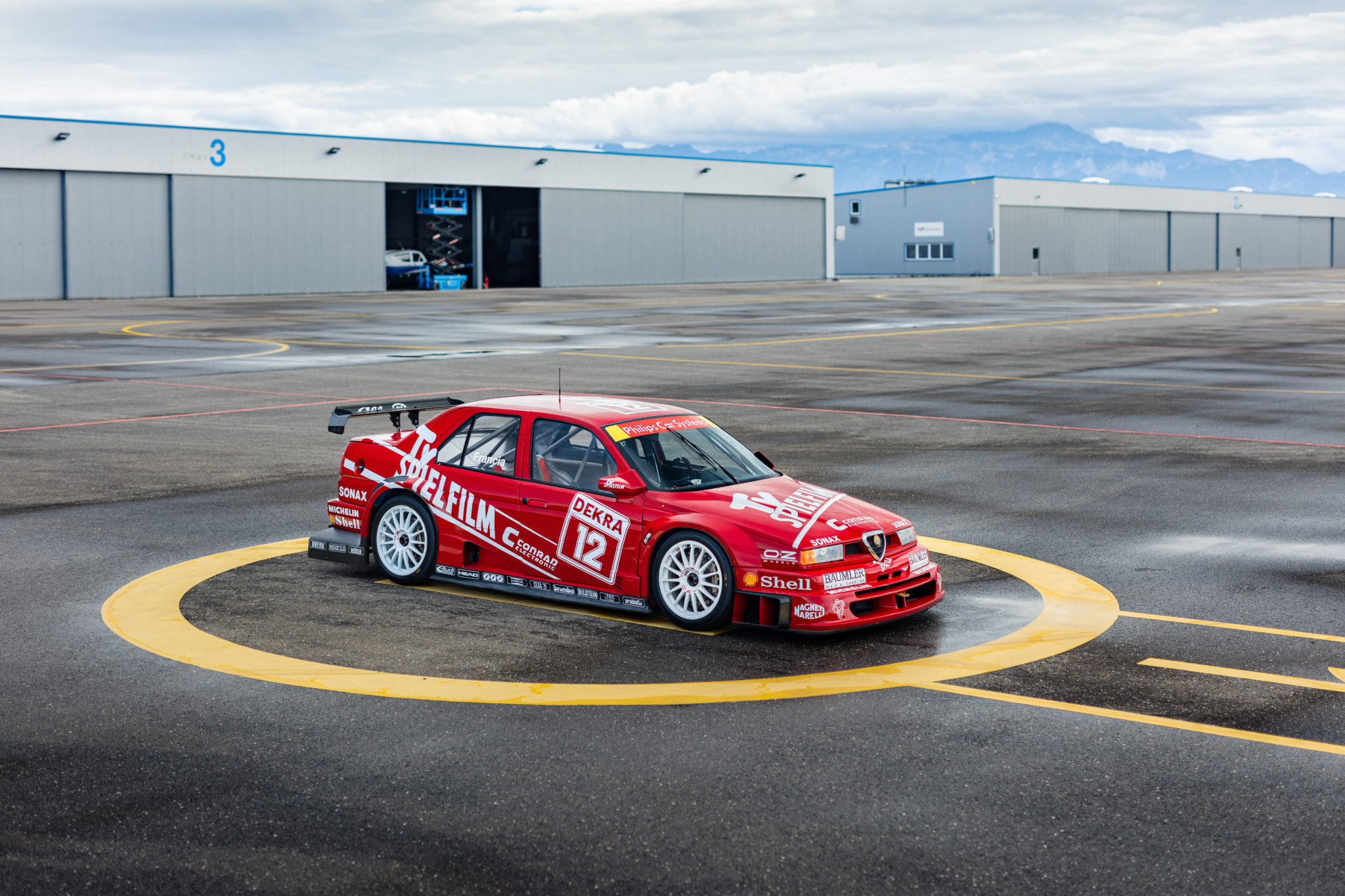
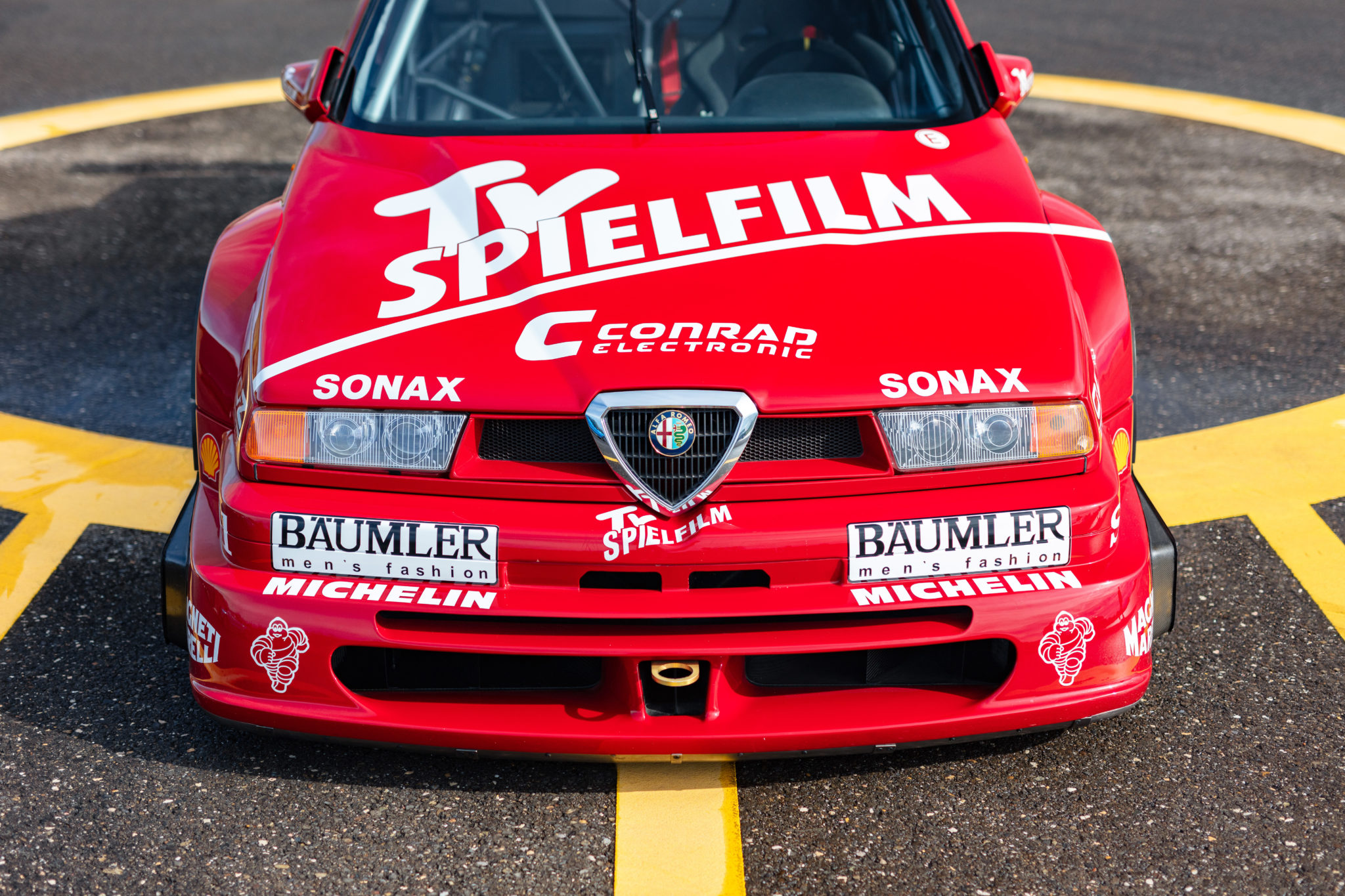
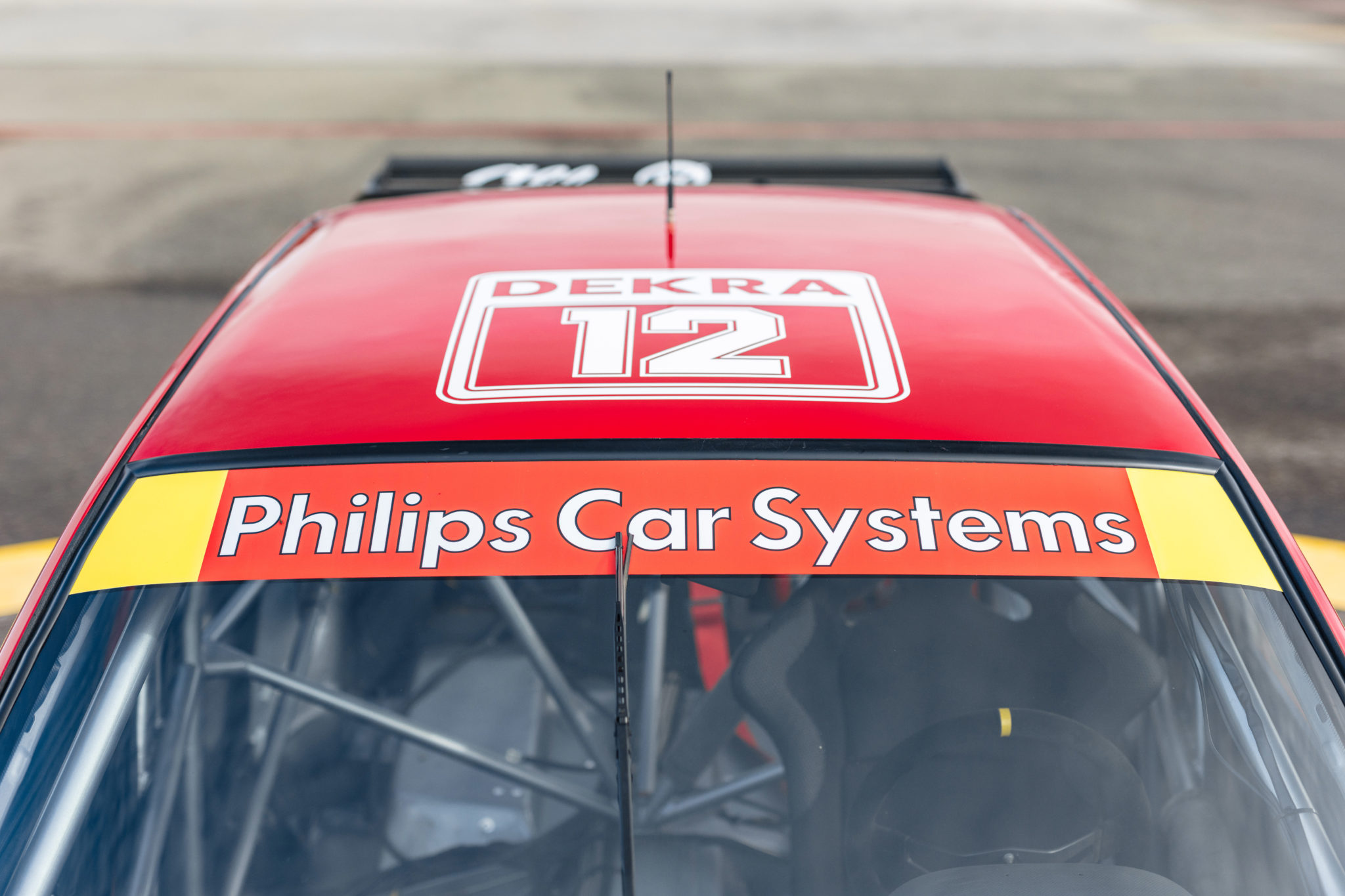
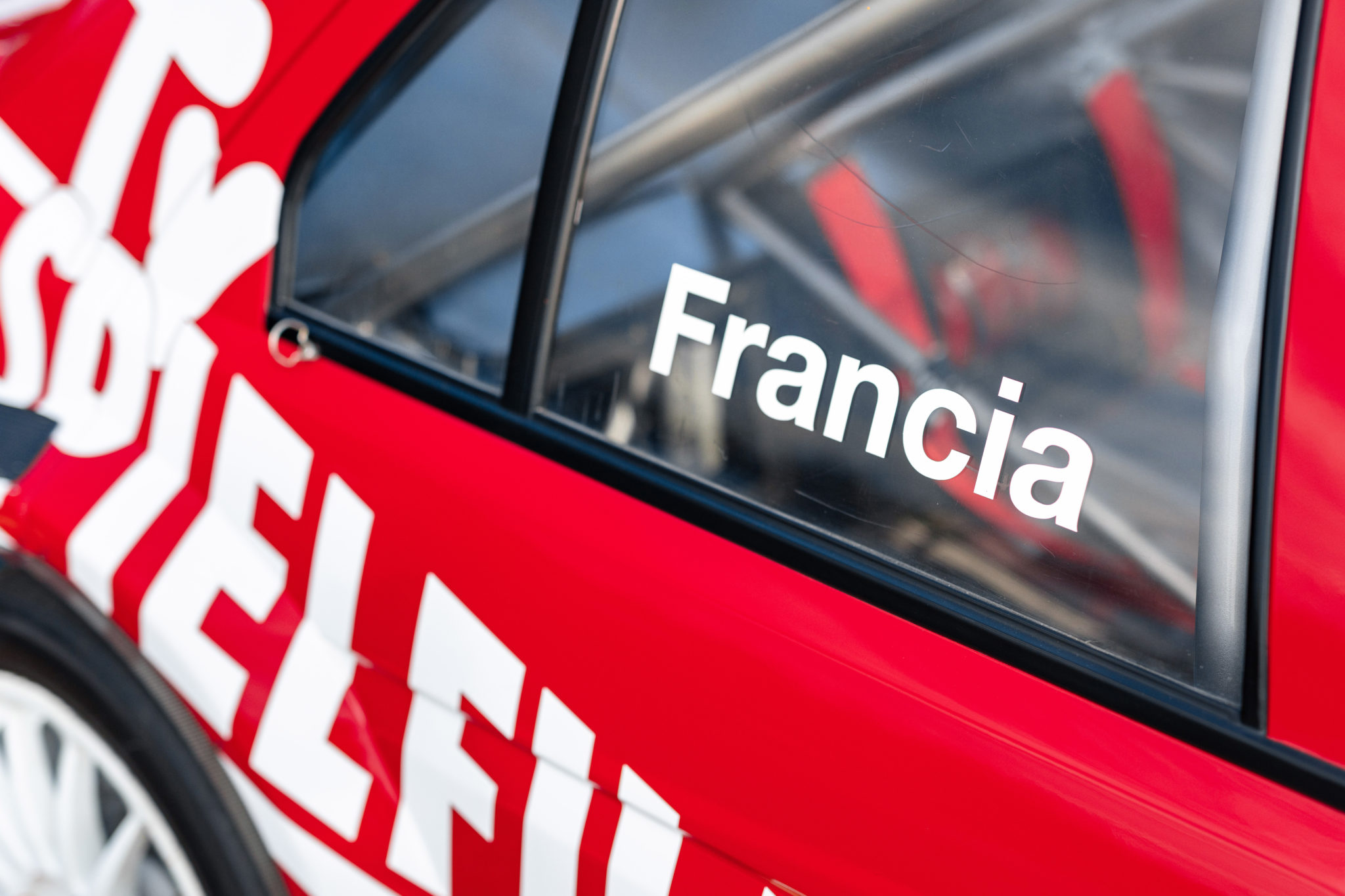
The 155 V6 TI DTM photographed here wears the number 12 and the TV Spielfilm colours associated with Giorgio Francia’s Schübel Engineering entry in the 1994 DTM. The name on the rear side window is picked out in white. The number is repeated on the roof, above a yellow-and-red Philips Car Systems windscreen strip. Conrad Electronic lettering runs across the bonnet, leaving just enough room for Alfa’s grille.
Francia finished third in both races at the 1994 season opener at Zolder. A period photograph of the Schübel Alfas at Zolder shows Francia following team-mate Christian Danner. This example dates to 1993. Its present livery depicts the following season’s entry. The race results belong to Francia’s No. 12 entry in the 1994 record.
The view through the open door
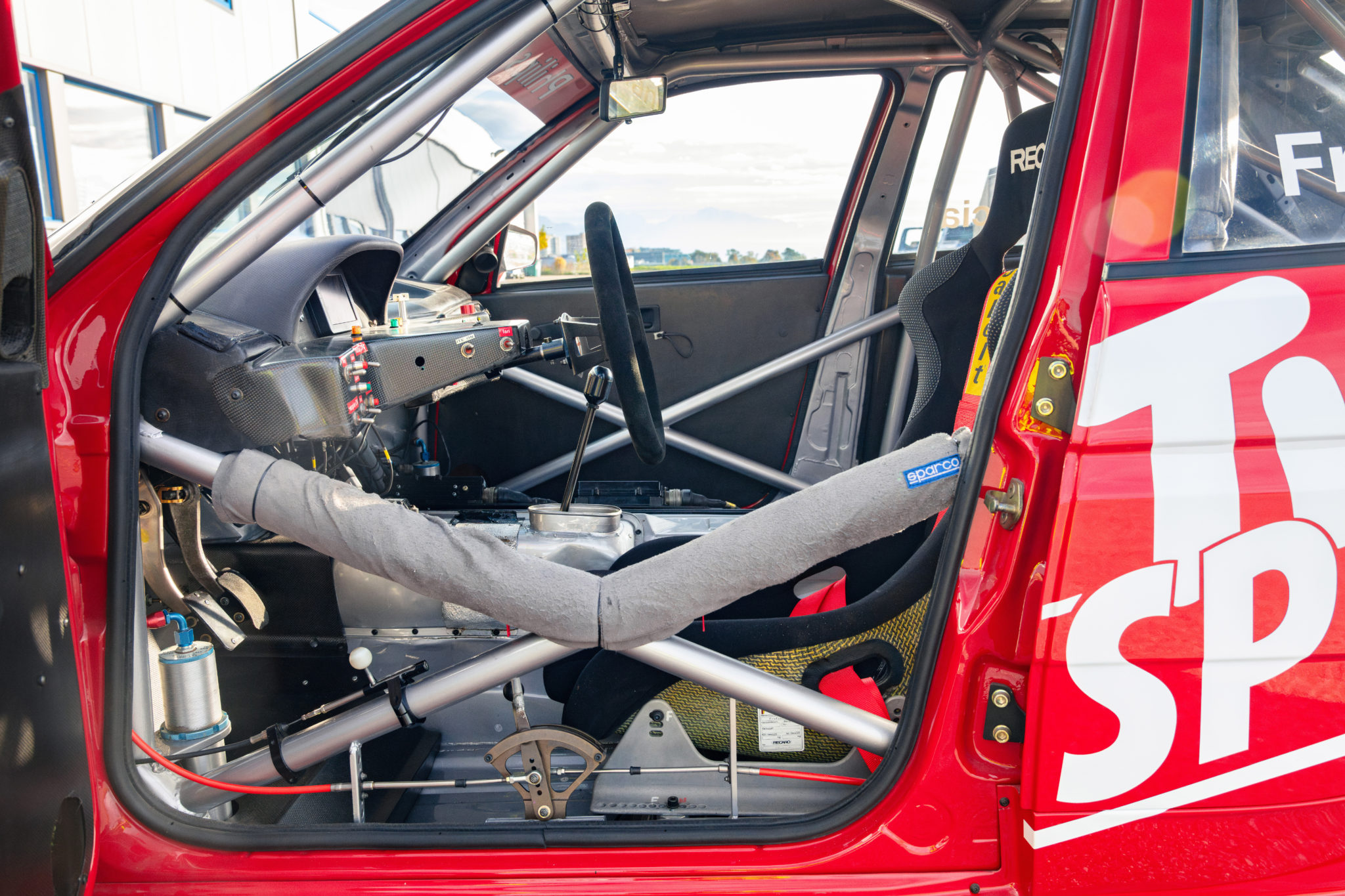
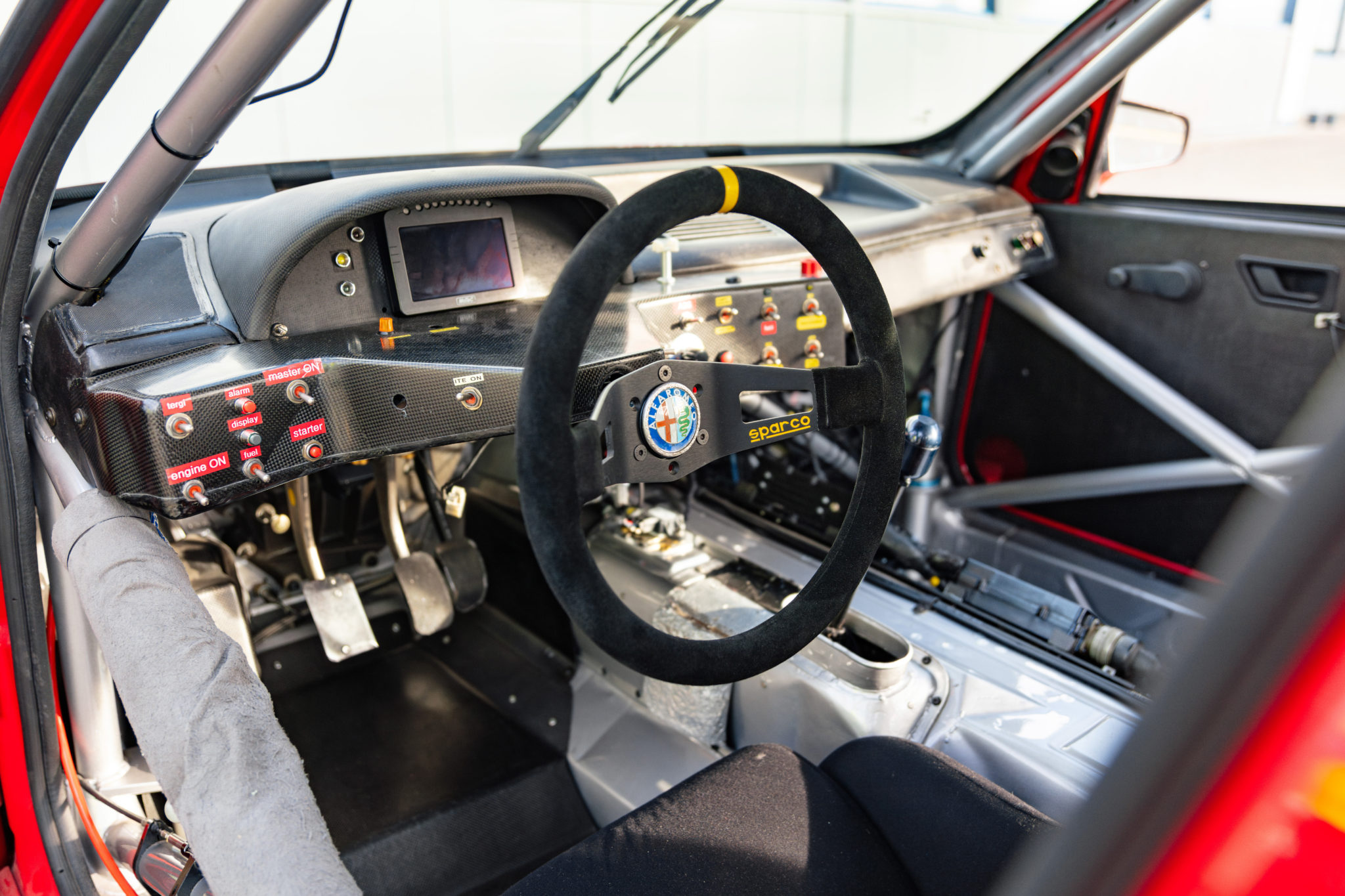
The gallery gives a better sense of the 155 V6 TI DTM than a single front three-quarter photograph ever could. With the driver’s door open, the cage bars run right across the opening. The steering wheel is small, the instrument panel is spare and the switches sit within easy reach. The fabric wrapped around the bars tells you something about the climb into the seat.
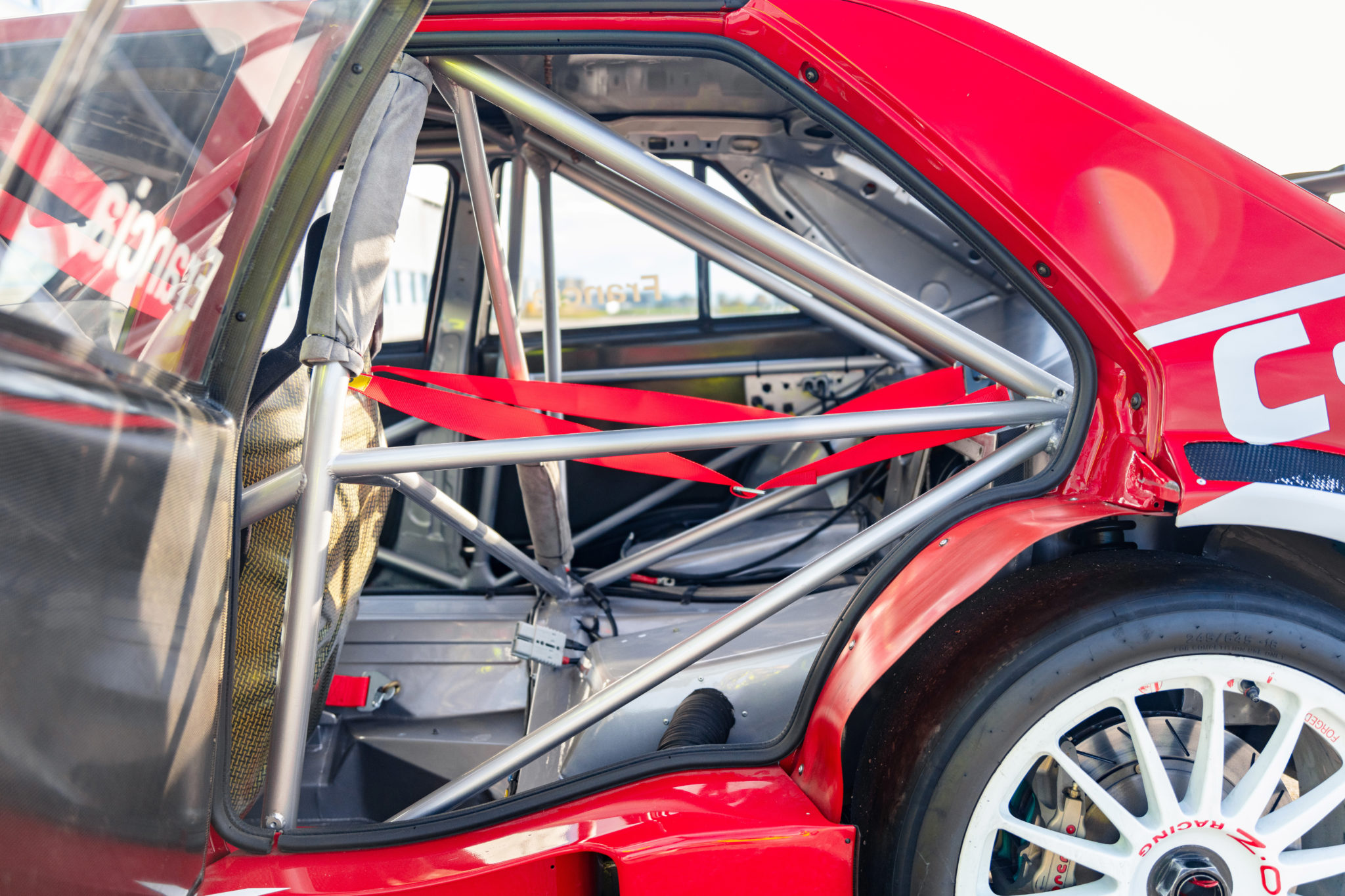
The back of the cabin is more steel tube and harness than passenger space. Open the boot and there is pipework and hardware where a set of shopping bags would usually go. Look from behind and the massive wing sits above a diffuser and two prominent exhaust outlets. Alfa kept the rear light clusters in a shape anyone with a 155 would recognise.
Where the 155 V6 TI DTM sits in the Alfa story
Alfa’s touring-car habit was already decades old. The Giulia 1750 GTV represents an earlier road-car generation, when the 1750 family supplied the basis for touring-car development. The later Giulia GTAm came at the idea from a modern road-car direction. The 155 V6 TI DTM belongs to the period in between, when the regulations let a manufacturer take the idea of a racing saloon to an extraordinary extent.
The Lancia LC2 GrC offers a different piece of Italian motorsport engineering. Its body was drawn around a Group C prototype. Here the designers still had to work with the outline of a saloon, then make room for the tyres, the cooling inlets and the aero. The juxtaposition of ordinary roofline and extraordinary lower body is part of what makes the Alfa worth looking at from the side.
A closer look at this 155 V6 TI DTM
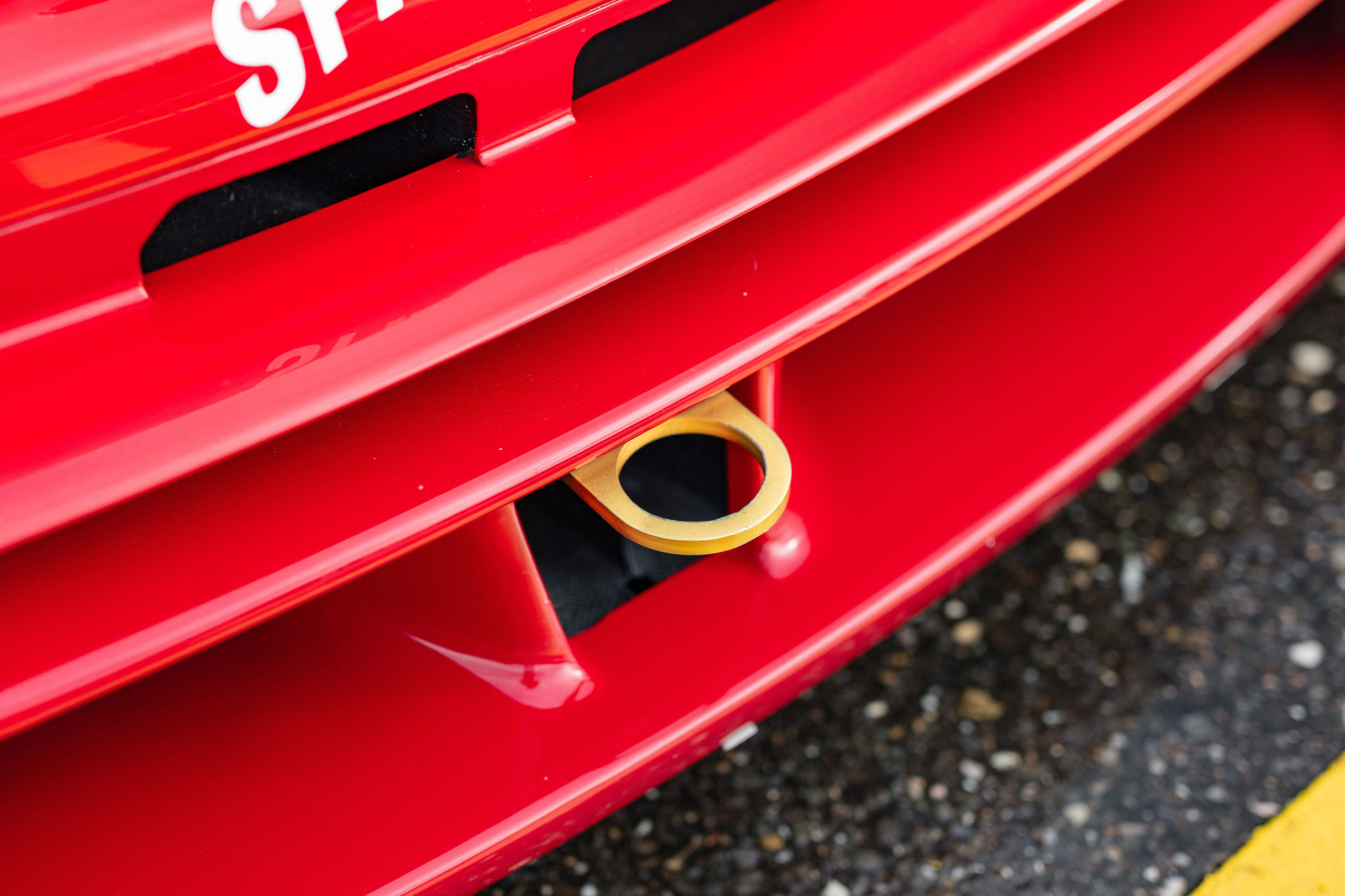
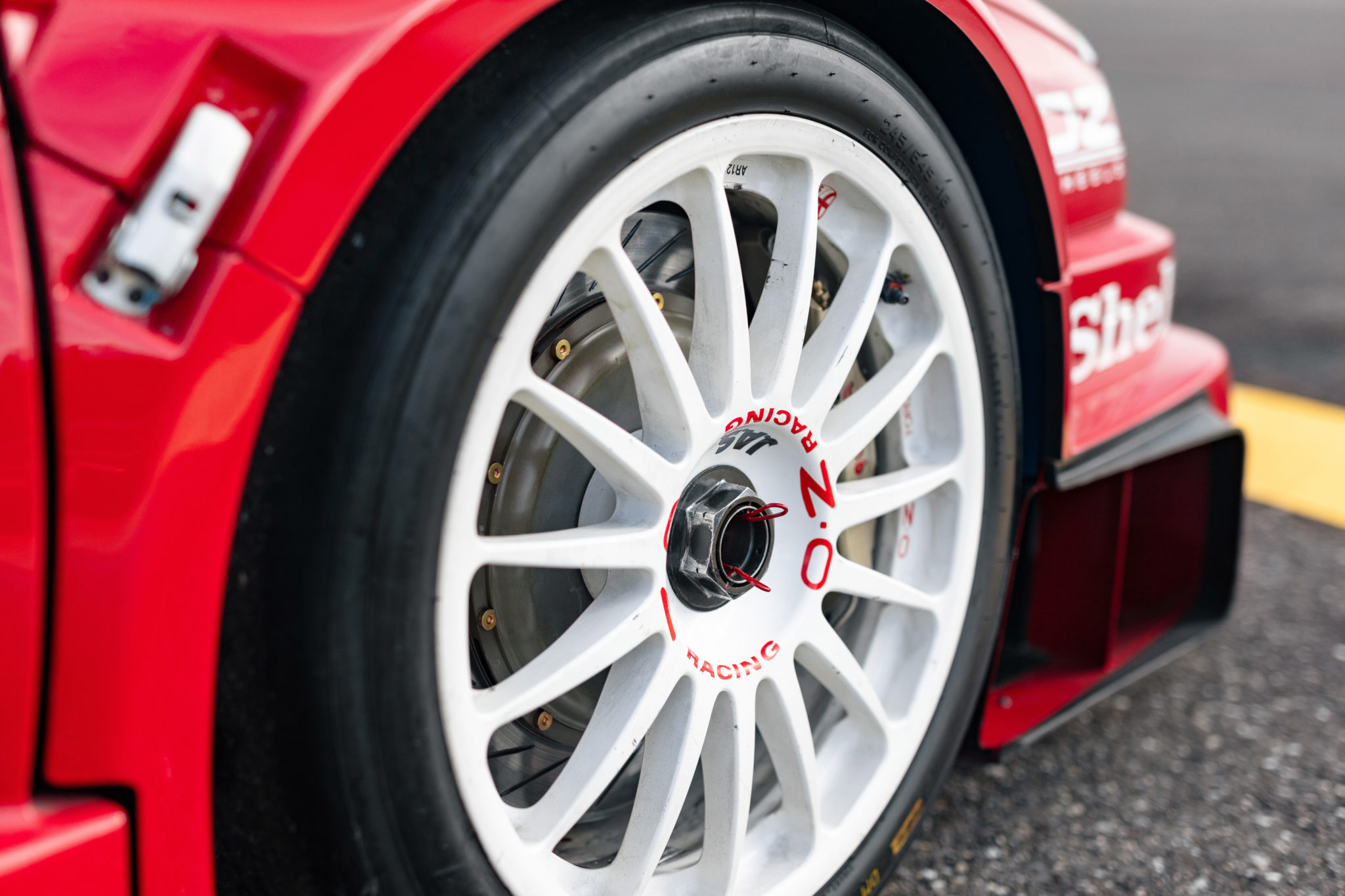
The photos were taken on an apron, where the yellow markings make the car’s low stance easy to read. Start with the side profile. The white wheels sit deep inside the broad arches and the front edge of the splitter is barely above the painted line. In the close-up of the nose, there is a yellow tow eye in the middle. It is pleasing to see a very complicated car retain one component whose purpose needs no explanation.
This 155 V6 TI DTM carries chassis number ZAR16700000076655. The production years shown below cover the model’s competition run, and the technical figures describe the 1993 reference specification documented by Museo Alfa Romeo. The photographs show this car as it stands today, from Francia’s name in the side window to the roll cage visible through the open rear door.

SPECIFICATIONS
CLASS
DTM Class 1
PRODUCTION YEARS
1993–1996
CHASSIS TYPE
Steel monocoque with auxiliary subframe
LENGTH
4,576 mm
WIDTH
1,750 mm
HEIGHT
1,410 mm
WEIGHT
1,100 kg dry
ENGINE
2,498 cc naturally aspirated 60-degree V6
POWER
420 PS at 11,800 rpm
TORQUE
294 Nm at 9,000 rpm
GEARBOX
Six-speed sequential
DRIVETRAIN
Permanent all-wheel drive
GALLERY